Chris Dreyer:
Most trial lawyers think they have to choose, build a reputation in the courtroom or build a marketing machine. But what if it's both?
Rachel Flood:
Sometimes you had some attorneys who would sort of make comments like, "Oh, I've never seen your type of firm on a billboard."
Chris Dreyer:
And when you commit to filing lawsuits on 95% of your cases, your entire firm has to be built for war. That means you have to systematically manufacture A players so you can win big in the courtroom.
Rachel Flood:
She had been an attorney for I think three years, and it was her first trial. It was a very difficult premises liability case and she got a $2.6 million verdict.
Chris Dreyer:
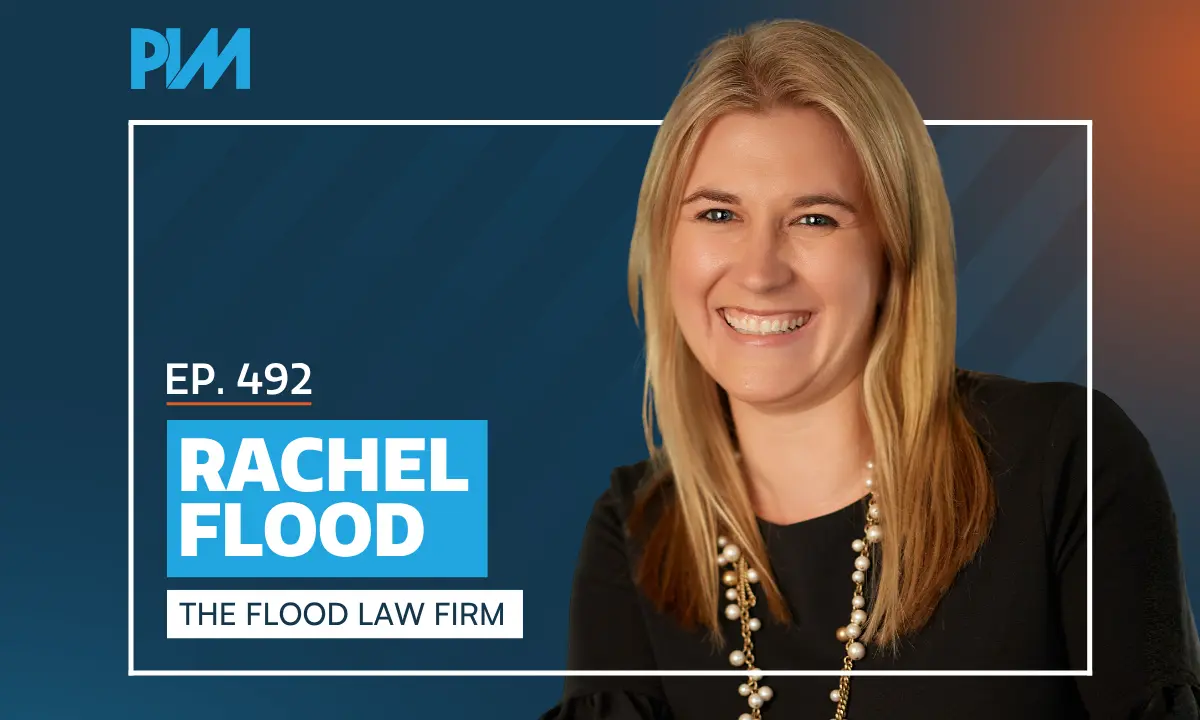
Today we're joined by Rachel Flood, the operational driving force behind the Flood Law Firm in Connecticut. Going from just four employees in 2014 to over 100 today, she's helped build an absolute powerhouse. We're diving into how committing 95% of your cases to suit fundamentally changes your front end operations, training A-level trial attorneys from the ground up and how to balance mass media marketing with your referral practice.
Rachel Flood:
We say that it's like dog years here, so one year is like seven years at another firm just because the sheer amount.
Chris Dreyer:
This is Personal Injury Mastermind. I'm Chris Dreyer, founder and CEO of Rankings.io, a legal marketing agency for elite law firms specializing in personal injury. We help firms sign more auto and premises liability cases. Let's get into it. Hey guys, I have another amazing guest. Rachel Flood, welcome to the show.
Rachel Flood:
Hi, thanks for having me, Chris.
Chris Dreyer:
I love having operators. I always talk about operating excellence, and it's like what makes or breaks the firm. And you guys have been growing at an incredible rate. I mean, going from, I think four employees in 2014, you're at the 100 or 100 plus today. So I like to start off with a win though, what's something current that comes to mind that you're excited about?
Rachel Flood:
I would say we're definitely excited about continuing to grow the team, but in particular, continuing to grow trial lawyers. That's something that we've been working on. And as you know, I work with my husband, who's a great trial lawyer, and his goal was always to be able to develop the next generation of trial lawyers. So I think the thing that's kind of exciting for us now is that we have a lot of great verdicts and big wins from other people on the team.
Chris Dreyer:
Yeah. And you guys are through and through trial lawyers. And I know we're going to dig into the 95% of the cases go to lit, and that's something I'm super excited to talk about. But everybody loves, the audience wants to know, hey, how do I get the cases? Just talk to me overall about just how you think about marketing and advertising today.
Rachel Flood:
Yeah. So we were not a firm that marketed when we first started. So we were essentially almost 100% attorney referrals for the first five or six years. And did very well with that, had a successful firm. We continued to grow. I think we probably had about 40 team members when we made the decision. We joined some different mastermind groups, met some different people that sort of opened up our eyes to maybe doing things a little differently, and made the decision at that point to start with traditional marketing. We started working with a marketing consultant, and started TV and billboards and started growing from there.
It was always something that we were reluctant to do because in our market and in a lot of markets, it's a little conservative, and trial lawyers don't generally advertise. So it was kind of like this big thing. And I remember Brian saying, "What's a jury going to think of me if they see me on TV, and then they're seeing me in a courtroom?" And we decided ultimately that after seeing so many people that needed a lawyer and didn't know where to turn, and we would see these sad stories of people who had very serious cases and they needed a trial lawyer, and they didn't know one and they hired the wrong firm and didn't get the result that they should have in the case.
So we made the decision that it was the right thing to do to just get our name out there and expand. And so that was the journey about five plus years ago of starting to grow the firm, but making sure that we were doing it in a sustainable way so that we could still provide the same quality representation to clients. And I think we kind of just took the approach, we work with Harlan Schillinger, that he's our marketing consultant. I know you know him very well.
And so he always says you want to talk to, when you're doing your advertising, you're talking to the public like you would talk to a jury. And so we just tried to take a different approach with our advertising. There's nothing that's gimmicky about it. We want people to feel, even somebody who's been involved in a very serious accident or they've lost a loved one, we don't ever want our advertising to be offensive to them. So we try to be very conservative and kind of authentic to who our firm is. And so I think it's different than a lot of the other marketing in our area. And so I think that that's kind of worked for us. So we've been able to really grow from there.
Chris Dreyer:
I have so many follow-up questions here. And again, I think the authenticity play, it's the most natural. And my first question is, when you decided to move from a referral, like a B2B referral firm, to advertise, how was that in the market? Did you have local firms sending you cases and that kind of dried up, so you had to think about capital allocation like, hey, we're probably going to lose these referrals when we start advertising, or did it just continue?
Rachel Flood:
It continued. We still probably get about half of our cases from attorney referrals. So it didn't really have the negative impact that we thought it would have. And even now, we started advertising, it sort of was around COVID, so the courts were closed in Connecticut. So finally when Brian got back into the courtroom and tried his first case, he has said he doesn't feel like it has any negative impact at all. It's been a great run of verdicts over the last several years.
So I don't think that there's anything to show that we've had any kind of negative repercussions. Sometimes you had some attorneys who would sort of make comments like, "Oh, I've never seen your type of firm on a billboard," or, "I've never seen that before." But then we've slowly been seeing that a lot of those firms are now starting to advertise too.
Chris Dreyer:
The old hug your haters, right? You get a lot of information.
Rachel Flood:
Yeah. Well, I think I saw you had something posted on LinkedIn the other day about why do you have to be good at just one thing? I think there's a lot of firms, I know a lot of attorneys that are really great trial lawyers, but they don't know a lot about how to run a business or grow their firm. And then I think you see a lot of firms that are really great at the business side of things, but maybe they don't have the trial lawyers, or they don't have the results or the legal skills. And that it's sort of been this thing like you can only be really good at one thing. And you had a post about why is that? Can't you be really good at both? And I feel like that's the approach that we try to take, not that we have at all figured out, but the idea is you want to try to be focusing on both of those things because they're both important.
Chris Dreyer:
Balancing business growth with elite trial skills is the dream, but what really separates the Flood Law Firm is their sheer aggression in litigation. When you commit to filing suit on 95% of your cases, you completely rewire your firm's cash flow and operations. It requires a massive upfront investment in talent, but it establishes a reputation that commands higher values and demands respect from adjusters. Let's look at how they structure their front lines to prepare for litigation from day one.
Rachel Flood:
We handle all different types of cases, and we pretty much take... Yes, there are certainly that smaller percentage of cases where it doesn't make sense to put the case into suit. But even on soft tissue cases, generally the insurance company is going to pay more when you put the case into suit and start the litigation process.
And we have cases all the time where, on paper, it doesn't look like it's that serious or it's that big of a case. But when you kind of get down to it and tell the client's story, a lot of times it ends up being some of those cases are the cases that we take to trial where somebody says this is only worth, there's a $30,000 offer, and it's a million dollar verdict.
So we also have a lot of bad faith cases where the insurance company won't pay the policy. And then as a result of that, it becomes bad faith where they're given the opportunity, the insurance company's given the opportunity to pay the policy in a certain timeframe, and then they don't. And so it basically becomes where we can collect the excess from the insurance company after trial. So there's a lot of cases like that where it might be a $25,000 policy, but it's a million dollar verdict.
Chris Dreyer:
I see a lot of these firms, the bigger advertisers that do, they'll have pre-lit, and then it gets to a certain point. And most of the time, case managers are dealing with the communications, the demands, and all those things. And then by the way, they probably have a huge volume of cases. And it's like it gets to a point and they're like, okay, well now we're going to file a lawsuit because we don't get the amount. But it seems like, I don't know how that would work if, especially in the 95%, does that just mean that, hey, we work differently, we have more paralegals and more lawyers, and you kind of get into each case a little bit more. I guess, how does that transition, I'm kind of going from intake over to the opposite, the delivery side?
Rachel Flood:
Yeah. So we do have a pre-litigation team, but our pre-litigation team is probably really different because it literally is pre-litigation. So there's an attorney and a paralegal assigned during the beginning phase of the case. And they're communicating with the client, making sure that everything is going smoothly. If it's a car accident, we're helping clients with their property damage. Sometimes you're helping people navigate medical treatment, or if they've lost time from work. There's a lot of issues that people are dealing with early on in those beginning days of the case.
So the pre-litigation attorney and paralegal are totally sort of dedicated to that phase and kind of building the foundation of the case. Sometimes there's cases where we need to get an expert involved early on, but they really kind of have the eye of the end goal is probably going to be putting this into suit, and maybe even taking the case to trial. So we have to sort of build this case even from the early days with that in mind.
And then at the six month mark post-accident, they're kind of evaluating. There's certainly cases where it doesn't make sense if it's a more serious case, and the client's having more surgeries, and maybe we need to delay it because we don't have the appropriate information. But for the most part, at that six month post-accident mark, we're looking at putting the case into suit then because we know that it's going to take a long time to move things along with the court system. So if we can get the case into suit sooner, then we can kind of hopefully expedite things for the client.
Chris Dreyer:
I think too, by doing that, since you guys are willing to file lawsuits on more cases, I guess that also facilitates the B2B referrals. I see so often, I work with a lot of personal injury firms, it's like they don't file lawsuits. They don't have a litigation team, and it's like, and they want to build their referral practice. I'm like, well, you really can't. I mean, I guess you can to some degree, maybe with the consumer base, but the B2B base, I mean, they certainly know who's going to get the values and who's going to try a case and all those things.
Rachel Flood:
Yeah, it definitely helps. We have a lot of firms that will refer cases to us just for that purpose that it needs to go into suit. Or even that it's a case that is already in suit, but they know it's probably going to trial and they want our team to step in. Brian's taken a referral only one time, but where somebody had already picked the jury, and they called him and asked him to try the case. So we've definitely gotten involved in cases at all kind of stages.
Chris Dreyer:
Was it they picked the jury and then just get cold feet like, oh, this is too big. We got to bring somebody in?
Rachel Flood:
Yeah, I think they thought it was going to settle and it didn't.
Chris Dreyer:
You cannot build a litigation juggernaut if you're the only one who tries a case. To scale, you have to manufacture A players. You don't just throw young attorneys to the wolves, you have to build the internal machinery and resources required to train them in real time. Rachel breaks down exactly how they run their internal mock trial program to forge their newest talent into heavy hitters. How does the firm go about nurturing trial attorneys?
Rachel Flood:
Yeah, so I think we do a lot of different things. One, we have a director of litigation who's a very experienced trial attorney. She was a trial attorney for 30 plus years. And now she's just in a role of working with our attorneys and mentoring them. So she's full-time, like a resource for people. So I think that helps the experienced attorneys, but it also helps obviously newer attorneys that they have somebody to go to and talk about case strategy and any little questions that come up. And even just sharing her experience and with dealing with different judges or defense counsel, having somebody who has a lot of insights into the Connecticut legal community is really helpful.
Brian runs trial school every year, which is basically like a mock trial program where everybody gets a case assigned to them. It's usually a case that he already tried, and there's all the materials there. And they kind of go through and they start at jury selection, opening, and take the whole case through to the closing so that everybody kind of gets that practice and he gives them feedback in real time. And that's really helpful for people. We have a lot of new attorneys that do it, but then even experienced attorneys like to do it every year to keep up with their skills and be able to get feedback from other people on the team.
But yeah, we kind of let people jump right in. And we say that it's like dog years here. So one year is like seven years at another firm just because the sheer amount of cases that we have, you have the opportunity that you're in hearings, you're covering depositions, you're shadowing other people and getting a lot of experience.
Yes, usually your first case is probably not a multimillion dollar case, but we had an attorney, she just joined the firm. She had been an attorney for I think three years, and it was her first trial. It was a very difficult premises liability case, and she got a $2.6 million verdict. So nobody thought that that was a multimillion dollar case, but it turned out to be one. And then we had another attorney who I think she had only been admitted for two months and she tried a soft tissue case and got over 100 grand. So you definitely don't have to wait at our firm to get that experience.
Chris Dreyer:
That's incredible. On the flip side of that, so you guys also have to have the tough skin. Because I'm sure some of the people that are green occasionally, and I've talked to other trial attorneys, I've talked to Brett Turnbull, a zero is just inevitable, right? You get defensed.
So in sales, and I've always wanted to ask this, in sales, they have a quota, they have to hit, our team has a quota, and it's sales and it's very objective. You don't hit it, there's path. And then even our client service team, we have you have to hit a certain retention percentage. If you don't, then you get trained up, and two quarters, you get a PIP. So what's the process like if somebody gets zeroed a couple times, and I have no idea how often that occurs, but what's the process look like for understanding if someone's really got it in them to be a trial lawyer or not?
Rachel Flood:
Yeah. So everything really has to be based on what's in the best interest of the client. So it's difficult to have quotas. Usually you can say there's the opportunity for everybody to try cases, but we don't say you have to try a certain number of... Sometimes there's a case that, from the firm's perspective, we really want to try it, but the client just isn't comfortable with it, and whatever, there's an offer. And to them, even if we feel comfortable with it, they don't feel comfortable moving forward. So sometimes that happens. And ultimately you kind of just have to do whatever is in the best interest of the client and what the client wants.
So that happens that there's all different kinds of results. And usually those are cases where it's a zero liability kind of thing where it's maybe you're just kind of going into it to take a shot at it. And I have to say our team has really great luck with difficult liability cases. But there's a place for, like I said, we have a pre-litigation team, so there's a place for people in our firm who don't necessarily want to be trial lawyers. But I think for the people that do, there's a lot of opportunities here for them to grow.
And the funny thing about this work is that, even just saying monetary quotas, it's very different than what you do in marketing and with sales. One person could settle a case for $100,000, and it's an amazing result because the case was probably only worth $10,000, and somebody else could settle a case for $100,000, but the case was worth $300,000. So even when you see numbers and marketing like that law firms talk about, you never really know is that a good number or not a good number?
So it's the same thing that with our team that it's really about maximizing the value and doing right by the client. And you can't always box that into you have to do X by certain timeframe. It really kind of has to be a feel for what's right for that particular case.
Chris Dreyer:
It's such an interesting perspective, and I've never thought of that way, but actually you do have to compare. And I was putting myself, when you're talking to in the consumer's shoes, when I go to a PI firm website and I see a case result, but I don't see context, I'm like, okay, well, was that good or was that bad? And I always like the ones that say $0 offer, and boom, big number, or some initial offer, big. And I think those really resonate, at least with a non-attorney like myself, they just hit a little bit different, but it kind of lines with what you're saying.
So I like to talk about the future too, just one softball, just think big picture. Connecticut's like, I don't know, it's probably, what, 25th to 26th in size. I think it's three to five million in pop, somewhere in there. Have you thought about, hey, at what point, because some attorneys are like, "Hey, we're going to multiple states. We're going expanding." How do you think about focused regional statewide strength versus maybe you lean over an adjacent state? How do you think about that?
Rachel Flood:
I don't think it's something that we have any plans to do, and I think it just has to do with what makes us so successful, and why we're able to do such a good job for our clients. A lot of it has to do with our reputation in Connecticut and our community ties. And I think that's what sometimes clients don't realize is when they're selecting a firm is knowing which court is going to be the best place to have a particular case, and knowing information about defense counsel and doctors and experts and all of those different pieces, that becomes so important.
And I don't know if we would necessarily have that if we went to some other location. So while we would know how to do the marketing and maybe the operation side, we would never expand if we didn't feel like we could kind of bring that same value and the same level of results and reputation. So for now, we're happy to just be in Connecticut.
Chris Dreyer:
Yeah. And you guys are growing like crazy, that institutional knowledge, I guess it compounds every year because the courts, and then you have this expert witness has been used before, and then you can kind of use that against them. And this has been really incredible. For our audience listening that has a case in Connecticut that wants a true trial firm, to send it to a true trial firm, what's the best way to get in touch with you?
Rachel Flood:
I guess our website is thefloodlawfirm.com or intakes@thefloodlawfirm.com is how you reach our intake team.
Chris Dreyer:
Amazing. Rachel, thanks for coming on the show.
Rachel Flood:
Great, thanks. It was great talking to you. Thanks for having me.
Chris Dreyer:
Rachel breaks down exactly how they run their internal mock trial program to forge their newest talent into heavy hitters. Rachel Flood proves that you don't have to water down your trial standards to scale to 100 plus person firm. By litigating 95% of their cases, investing heavily in an internal trial school, and running advertising that treats the public with respect, they built a machine that demands top dollar from insurance companies. They refuse to compromise their standards and the results speak for themselves. If you want to be the firm injured people call first for auto and premises liability cases, book a complimentary growth audit at Rankings.io. I'm Chris Dreyer. Thanks for listening to Personal Injury Mastermind. See you next time.