Chris Dreyer:
Over 30 murder cases, death penalty trials. When the stakes are life or death, you learn that convincing a jury always comes down to uncovering a deeply human story.
Jason Green:
I think of juries as truth machines. If you have a good client and a good story, they will typically get it right.
Chris Dreyer:
Jason Green brought those ruthless courtroom instincts to personal injury. By staffing his team to uncover that undeniable story from day one, he treats every case like it's going to trial, forcing massive settlements.
Jason Green:
You have to want to go to trial and you have to have done that work and then not be afraid to put it all on the line.
Chris Dreyer:
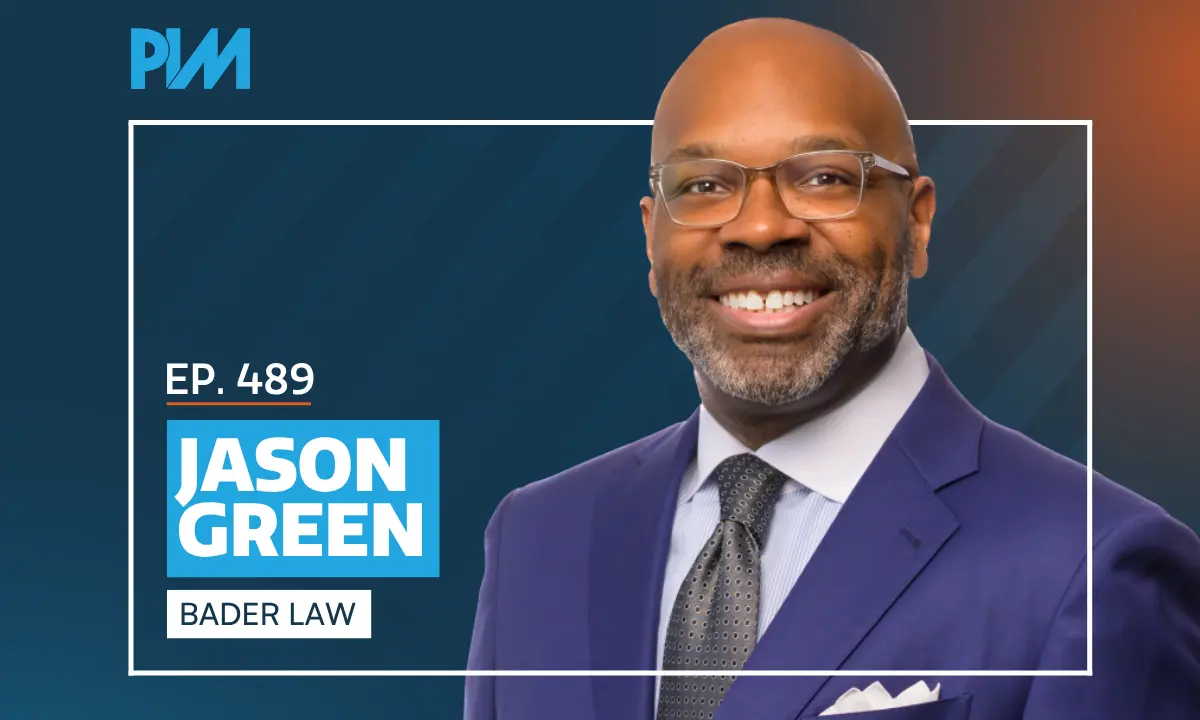
Today's guest is Jason Green, managing attorney at Bader Law in Georgia. He took the skills he built prosecuting homicides and he's using them to drive massive PI results. We cover why building every file for trial creates the ultimate settlement leverage, how a three to one case manager ratio uncovers compelling stories and why former athletes dominate the courtroom. This is Personal Injury Mastermind. I'm Chris Dreyer, founder and CEO of Rankings.io, a legal marketing agency for elite law firms specializing in personal injury. Let's get into it.
Hey guys, have another amazing guest, Jason Green, welcome to the show.
Jason Green:
Happy to be on with you, Chris.
Chris Dreyer:
I'm so pumped to chat with you. You've had a career that most lawyers only see in the movies. You've handled homicide, death penalty cases, even trying the first DNA case in Metro Atlanta. Now you're driving serious results in the PI space. So you got all this stuff going on that we're going to talk about, but what's a recent win for a client that something that just comes to mind that you're proud about?
Jason Green:
Probably the one that was not only one of the biggest wins, but it was one of the most personally satisfying cases that I had is there was a young man who was a professional boxer. I doubt seriously that any of your listeners or viewers have heard of his name. He was just beginning his career and he was a young black male, dreads, kind of fit the profile, if you will. He was on a dirt bike and he was riding down the street and he was actually hit by a police officer. The officer had done a U-turn, was responding to a call, and it went much the way that you or your viewers could anticipate. They cloaked themselves in the flag and behind the police shield and were, "Hey, we're doing business. And by the way, your guy had a little marijuana on him. He's on a dirt bike. He looks like he's up to no good."
And they completely deny things at first. And then when they eventually get around to making an offer, I mean, it's paltry. And we had to work it up, went to trial, did the whole workup, bringing in boxers he had trained with, that he had fought against, his coaches, family members, all of that. And long story short, we went to a jury trial and we got the seven figure result behind it and their top offer had been 60,000. So it was life changing for him because as a result of it, his main injury that derailed his career was he got a puncture wound through his left thigh. And so his balance was off. He was really never able to walk or stance the way that he did again. And so he was really... And his family were really grateful for that.
Chris Dreyer:
Let's go. I love hearing that. That's amazing. A lot of times we have guests on here and I'm always... I'm the non-attorney saying you got to take cases to trial. That's how you get the values. But there's a lot of different firms and the structures and the pre-lit models and the hybrids and then the just litigation model that leans on the referrals and there's pros and cons of all these. But I guess you being the managing attorney, how do you think just big picture about the importance of being trial ready and basically what that means at the firm? And I'll kind of just lob it up to you and you kind of go from there.
Jason Green:
I love that question. It's paramount. To me, it is literally the begin and the end. And let me expound on that if you will. When I say it's the beginning, I tell the pre-lit attorney, so our firm is kind of split between pre-lit attorneys and those who do litigation, but I tell the pre-lit attorneys, start building it assuming that it is going to trial because that is what them seeing you work the file up, you are creating leverage. And when you build up a file for settlement, it's medical records and a demand letter. And that's what they're used to seeing. But when you start coming in with experts or witnesses, witness statements, all of that, you look like you are getting the case ready to go to trial. It's more than what they are accustomed to seeing. Any demonstratives that might be particularly helpful, all of those things.
And worst case scenario, if it still does not settle, if you can't get to fair value, now you've handed off a file that the lit team can really sink their teeth into and get off to a running start. So that's why I say it's the beginning and the end.
Chris Dreyer:
Jason nailed a critical bottleneck. You can't just mandate trial readiness. You have to give your team the actual bandwidth to build the file. If attorneys are drowning in cases, they can't uncover the deep human stories that force those massive seven-figure settlements. I wanted to dig into this exact staffing structure Bader Law uses to give their team the ultimate leverage. Some of the big advertisers, which I know Bader Law advertise a lot, they'll do 100, 150 or they're really carry... Does that mean the case managers carry a smaller load or does that mean now you got also paralegals in the pre-lit, more paralegals in the pre-lit or more pre-lit attorneys from a ratio? What does that actually mean to try to do that?
Jason Green:
Yeah, absolutely. So no, we don't have paralegals working on it, but each pre-lit attorney has three case managers so that they can have that lower case load. So the attorney's caseload isn't necessarily higher, but their support staff's is lower so that they can work those files and give them the TLC and the workup that they deserve and I feel is necessary.
Chris Dreyer:
Yeah. And of course, AI has given you additional leverage to carry more. And so now you got this... I mean, it really is a tool. It just enhances efficiency. Talk to me about the talent. Going to verdict is a different ball game than even the litigation component of working up the depos and the what have you. How do you find the talent? How do you nurture the talent and develop to be ready across the board?
Jason Green:
Yeah, I think that's a very good question. So for me, I've been in the Atlanta legal market for 27 years, and so I know a lot of attorneys. So probably about actually a third of them are people I have worked with at different points in my career. And it's actually one attorney here I used to prosecute with. So it literally goes back to my criminal law days, others that I've worked with at previous firms. And then for the remainder of them, we try and literally advertise for litigation attorneys and then kind of slot them in to whichever side. I've had one who was like, no, I'm just not interested in pre-lit. But when I explain our philosophy and how we kind of go about it and they realize all my skills won't go to waste and I actually have something to contribute to this because we're trying to build it up with a trial first perspective, and so I'll be able to offer that, it gets a lot more of them interested and accepting.
Chris Dreyer:
Of course. And then that helps when you have these past relationships, you know their capabilities, what cases are best for them and you know their work ethic and values. Another question is, and I know Seth likes his work comp and you got multiple practice areas. Of course you got a big TAM for Atlanta and Georgia, the state, but what goes into the complexities of having a lot of cases on the work comp side and then just your auto PI, the work comp side specifically? Just very curious how you segment those types of practices.
Jason Green:
So here's what's interesting. I don't really know anything about the work comp space. And so we have an attorney who is over the workers' comp area, but where I do intersect with that is we have what internally we refer to as dual cases where they may have a workers' comp claim and a personal injury claim. And so then my lawyers will intersect with the workers' comp team and it's really the exact same thing. And what we will use as our turbo boost, the little energizer is we'll let the workers' comp team get going and you have all of that information they're building. So we're able to pull from the workers' comp file, look at the treatment, get the statements, all of that stuff. So we're hitting the ground running on the PI side. So that's almost invariably the marching orders is let workers' comp get it going.
Let's see what we have here and then build on top of that. And I do have one attorney in particular who actually transferred from the personal injury side to the workers' comp side. And so he is literally able to kind of translate.
Chris Dreyer:
Yeah, that's incredible. I was just curious and that was kind of a deviation from my question set here, but I thought that'd be helpful for the listeners too. And I kind of want to talk about building on that trial readiness. And look, you've had over 30 murder cases as a prosecutor, a ton of trial room experience. Somebody's listening, they're fresh out of law school, they want to become a trial attorney. First of all, how do you get the opportunity to try cases? Is it focus groups, mock trials, second chair? What do they got to do to try to get these opportunities?
Jason Green:
For sure. So the very first thing, you have to want it because if you do a good job, many times the insurance company will get to something that you can justify taking. And maybe even it's within the realm of reasonableness, but you have to want to go to trial and you have to have done that work. That's the first part. Like I said, building it for trial so you know what you have and then not be afraid to put it all on the line. What I tell, and this dovetails into what you were just saying about if you're fresh out of law school and you have no experience, and I mean no offense to any of your audience, but I think lawyers overcomplicate things. The people on your jury are regular people. They wait tables, they carry mail, they work at the mall. They're just regular people.
And I think the mistake that a lot of lawyers make is trying to prepare the case for opposing counsel or for the judge. I think about that human story and the joke that I tell clients is nobody's going to pay you for sitting on the couch watching Netflix. And what I mean by that when I expound is I need that human story. Let's talk about how you're not able to coach your daughter's soccer team anymore or you get so much passion from dance. Whatever your thing is, you like to travel and climb. And many times that is not done on the pre-lit side. For sure, by the time you get to lit and it's like, oh, we've got a pretrial order or something due, I got to disclose witnesses. Maybe then years in, the attorney was asking the client for, give me a list of witnesses.
But I tell the pre-lit team, start doing that from the initial client interview. We actually bring them in, let's talk to them, let's find out what their passions are, who their people are, let's develop that story. And how that ties back, put a bow on all of this is then I know I have a compelling story here, so I don't have to take your little bottom line offer below value or just right at it. I can push the envelope. And so you have to have that desire, not be afraid of the jury. I think of juries as truth machines. If you have a good client and a good story, they will typically get it right, but then you have to have done the work to find out if you have that good client and good story.
Chris Dreyer:
Juries really are truth machines, but trying a case requires a serious nerve. A lot of attorneys are terrified of a bad verdict, but the only way to build elite courtroom muscle memory is to actually take the shots. Thriving under that kind of win or lose pressure demands a relentless competitive fire. And I was curious where Jason finds litigators with the right personality to step in the arena. If you want to be a good three point shooter, you don't just watch someone shoot threes. You got to actually get the reps in. So what does that mean? Maybe those C, D, and F cases, maybe as the managing attorney, you're letting them, "Hey, you didn't get your value. Hey, take it to court. Let's go." Is that what it basically means?
Jason Green:
Yeah, put up the shots and I'll probably bungle it, but Michael Jordan had a quote that I love. I used to have when I was single, the poster literally on my wall about how many times he's failed and how many games he's lost, how many shots he's missing. And then it ends with, "And that's why I win." You can't be afraid to lose. You have to get in there. You might get some things wrong. The judge might get frustrated with you. You get the objections. That's all part of building it up. And then pretty soon you get comfortable with it and then a few more times and then it becomes muscle memory. And then pretty soon you're on autopilot. You've got it. You don't even really have to think about it anymore. And then like I said, in terms of the results, what I have found, I mean, obviously every client is different, but most clients see the fight and they really appreciate it.
And so even when it's a loss, if we didn't get everything I was hoping for whatnot, the client has literally seen me. They've had the conversations with me. They've come in, they saw me in court and some of the biggest hugs I have gotten and hams at Christmas and everything have come from cases where I was personally disappointed. I thought we could have maybe done a little better, but the client is so grateful because they wanted somebody to believe in them and fight for them. So I would say for anybody who's interested in this work, don't be afraid to put them up. And like I said, juries are truth machines. They typically get it right.
Chris Dreyer:
I think that's well said. And I think you learn from your mistakes and you look for people with those values that want to improve and try different things. When you're looking at talent, and I'm not trying to put everybody in a little box here. Of course, being a prosecutor means you got the experience there and that's one thing. My sales people, and it seems like the trial attorneys, they have a background in sports where they weren't on just a team, but actually thrive. Brian Panish in Los Angeles was like, I think he was a D-1 football player. And it just seems like that sports, it's a zero-sum game. There's a winner and there's a loser. There's a lot of the trial lawyers, do they have those same characteristics?
Jason Green:
Yes. I love former athletes, whatever level, high school, college, because you're used to that competition. You understand it. I got to practice, I've got to work with a team, all of those things. So I definitely think that's part of it. But here's what I tell people, even if they haven't done that. Look for that moment where you can kind of get mad, where you hear something that the client has been deprived of and use that for your fire or your motivation for those who it doesn't come naturally to. I mean, not every attorney, I do have quite a few former athletes, but for those who aren't, find that motivation. If you talk to them long enough, there's something there that usually when you hear it, you're like, "That's not right or that's a shame. You missed out on the graduation or you weren't able to hold them then or you had to travel, but sit out on all of that."
When you get to that moment where you are feeling indignation for them or anger for them or whatnot, harness that and let that be your north star and kind of pushing you forward and everything. So whether you come to it naturally or you have to find it, yeah, I think that helps tremendously.
Chris Dreyer:
One of the questions kind of adding onto this and just continuing on the trial side is I've been asking recently, what's a force multiplier role? If you're a trial firm, is it like, "Hey, I've got my in-house investigators." Is it someone that specializes in helping with depos? Or maybe there's a person that they're not very good at doing the documents, but they can go in and they're a great order. What are some of those maybe force multiplier positions you think about that really can enhance the trial team?
Jason Green:
So for me, what I have found across the different support roles is a great paralegal or case manager, depending on which side of the operation you want. I've used investigators and experts and they all add value, but that paralegal or case manager, they talk to the client more. And a lot of times, at least in my experience, the client will feel comfortable talking to me, but the person they're calling with all of the little questions are who's going over the discovery responses with them, who they really build that rapport with is that case manager or paralegal. And a really good one will get those old nuggets, ask them about this, talk to her about that. They catch all the documents. And of course, we as lawyers are moving and we're thinking about cases and legal arguments, but they'll seize on little things. "Hey, I was looking through the medical records and I saw they had a trip."
I mean, just whatever it might be, so many nuggets that I have been handed have come from either a case manager or a paralegal. And I think going back to your earlier question or comment rather, I mean, AI is important and I'm on board with it. I recognize what a tool it is, but that human dynamic, somebody who's resourceful and can kind of think where you're going and I know what you like to do with things, I don't know that there'll ever be a replacement for that.
Chris Dreyer:
They basically, it's one plus one equals three, the cliche. I guess going to yourself and your method of using stories, and I guess they're probably looking for those because they know that you would use that in trial and those types of things really give you something to use in court.
Jason Green:
Exactly. I mean, a lot, it seems, I haven't done any study on it, but just anecdotally, it seems like a lot of it really comes out in that initial questionnaire when we are doing the inventory of injuries and all of that. Or on the lit side, the discovery phase as they're going through with the rock responses or whatnot and just as questions come up. Because again, they're in that organic conversation with them for hours, maybe even over the course of multiple days. And so they hear a lot of those comments and frustrations and little things that the person would think like, "Oh, let me not bother my lawyer with that. He doesn't want to hear all of that." But they get those things. And yeah, I think you're absolutely right because my staff knows that's how I am and that's how I want the attorneys to be. They funnel them all of those things that we can circle back on.
Chris Dreyer:
Jason, this has been like a masterclass on being trial ready and basically these little areas that can tactically really enhance the listeners and help them be trial ready. If someone had questions for you about the pod, they wanted to send you guys a case in Georgia, what's the best way to get in touch?
Jason Green:
Like most lawyers, I live by email. So JasonGreen@baderlaw.com. B-A-D-E-R-L-A-W.com.
Chris Dreyer:
Amazing. Jason, thanks for coming on the show.
Jason Green:
Loved it. Thank you for having me.
Chris Dreyer:
Excellence in the courtroom is no accident. By treating every case like you're going to jury from day one, Jason forces the defense's hand. He leverages a strict three to one case manager ratio to ensure his team can dig deep and find the relatable human story that maximizes case value. Relentless consistency and a serious operational leverage are what ultimately build real traction and transform a practice. If you want to be the firm injured people call first for auto and wrongful death cases, book a complimentary growth audit at rankings.io. I'm Chris Dreyer. Thanks for listening to Personal Injury Mastermind. See you next time.