Estate planning marketing is more than just channels and tactics—it's about building a comprehensive strategy that connects with clients who need your expertise most. Marketing for estate planning attorneys requires understanding that more than two-thirds of Americans don't even have a will, and even older Americans are increasingly likely to skip creating an estate plan. Yet today's retirees are on track to transfer over $36 trillion to their beneficiaries in the next three decades.
This represents a massive opportunity for estate planning attorneys who implement effective marketing for estate planning strategies. From targeted estate planning ads to innovative estate planning marketing ideas, the firms that succeed are those with a coherent approach to reaching their ideal clients.
But how do you know what works?
If you want to drive more qualified leads to your estate planning law firm, you need to look at the big picture and find strategic ways to connect with your target clients. Here's how successful estate planning attorneys are doing exactly that.
How to Market an Estate Planning Law Firm
Marketing an estate planning law firm requires a strategic approach that builds trust and demonstrates expertise in a highly personal area of law.
Estate planning clients are making decisions about their family's future, their legacy, and their final wishes—making trust and credibility paramount in your marketing efforts.
1. Start with Market Orientation
A winning law firm marketing strategy for an estate planning firm starts by orienting yourself to the market.
All great strategies need a winning aspiration. But to figure out what your aspiration should be, you need to understand your market landscape.
That means thinking about things from your ideal client’s perspective. Too many lawyers over-index on marketing their services in general without thinking about who they’re trying to reach.
A better way is by thinking about the problems your clients face. Then connect your services to those problems as solutions.
Defining what winning looks like to you is far easier when you know what problems your clients have. And setting your winning aspiration gives you clear parameters to meet their needs. There are 2 core elements to any winning aspiration:
- Winning in a specific market
- Winning is a way that is unique to you
For example, an estate planning lawyer could set a winning aspiration of helping people with blended families define their inheritance plans. Another firm may focus on helping people plan long-term care for special needs dependants.
What you choose depends upon who you want to serve and where you think you will win.
Knowing who you need to reach and the problem you solve allows you to tailor your messaging to them. It will help you in every other step in marketing. And it will give you a touchstone to check all of your work against.
2. Use Market Research to Define Your Audience
You must know who your clients are and how they think if you want to win them over. Just orienting yourself to the market isn’t enough. Market research helps you dig in and refine who you help and how.
You have 2 standard options for market research:
- Quantitative research
- Qualitative research
A mass online survey is an example of quantitative data, but it can be difficult to get someone to fill out the whole thing.
Qualitative data like one-on-one surveys can provide richer and more in-depth data but can be time-consuming to collect.
Quantitative research also costs more. Most law firms use qualitative research to get a firm handle on their target market.
But there’s a 3rd option called backwards market research.
To do this kind of research, start by defining the outcome you want to provide to your estate planning clients. Then determine the group of people who will benefit the most from that service. Then use your determinations to develop your positioning and messaging to talk specifically to those potential clients.
Interview people from that group to become crystal clear on the best ways to reach them.
3. Dial in the Positioning for Your Estate Planning Firm
Now that you understand your audience, you can position your firm and craft messaging that meets them where they’re at.
Positioning helps you determine what your law firm stands for, which means diving into:
- What your prospective clients want and need
- What you can offer them
- What the competition is doing so you can make yourself stand apart
Positioning yourself in the market boils down to 2 options:
- Differentiation
- Operational efficiency
Differentiation involves creating a unique selling point so that you stand out to your clients.
The trick here is to find something that you can offer that the competitors in your practice area either can’t or won’t do.
Take New Jersey estate lawyer Neel Shah, for example. He differentiates himself from his competition by rolling in asset protection planning and wealth planning. This narrows his firm's target market by providing more services for a select niche, making him a go-to professional for financial and retirement planning considerations, which often connect well with estate planning.
Positioning yourself on operational efficiency involves making it so that you can offer your services at a better cost than the competition.
This kind of positioning is best in markets where clients think of your services as a commodity. The goal here is to offer a better value to your clients by streamlining your cost structure. Some methods for doing this include things like automation or better processes.
4. Consider the 4Ps of Marketing
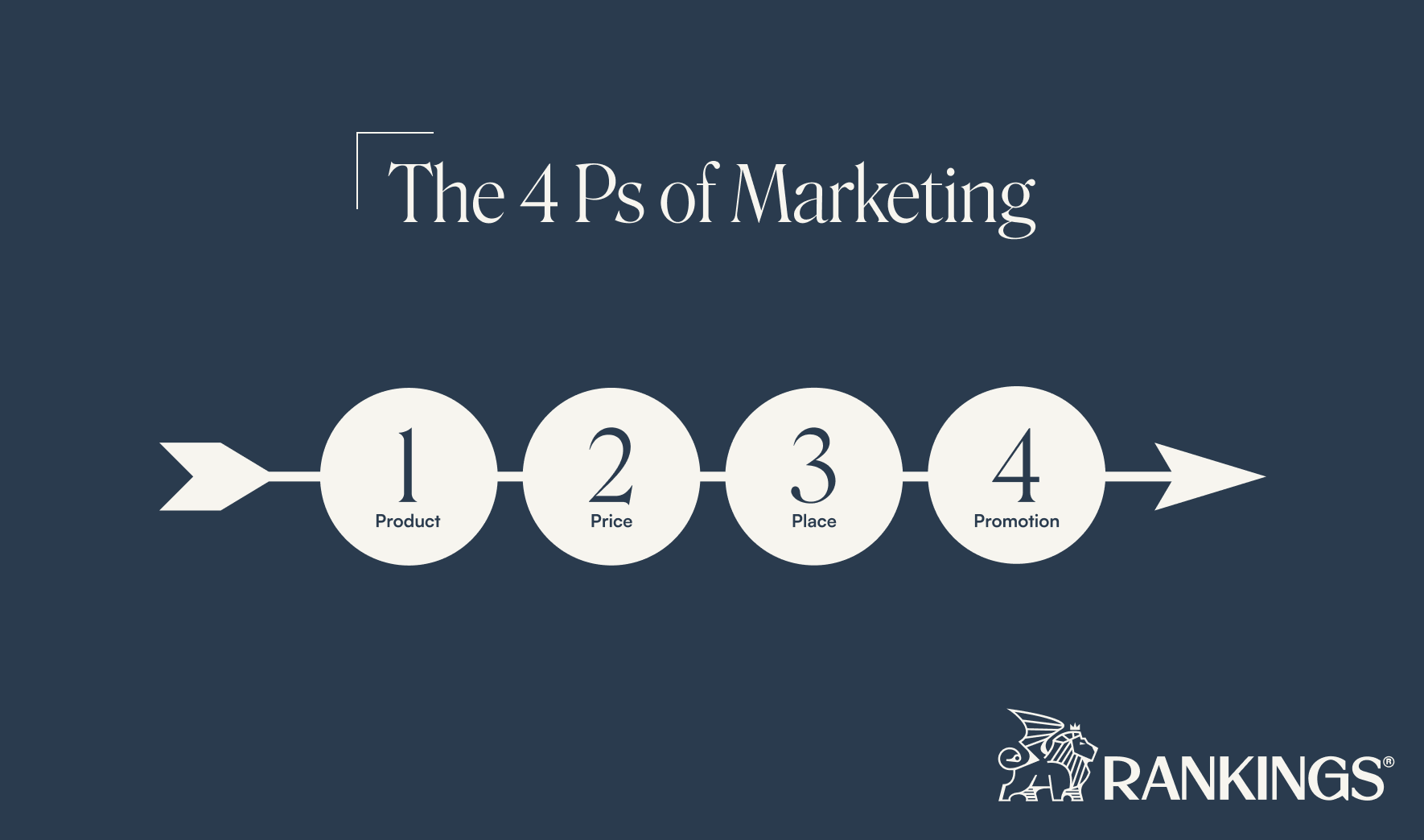
With your firm’s positioning dialed in, you're almost ready to bring your product to the market. The most effective way to do that is by thinking through the 4Ps of marketing.
The four Ps include:
- Product
- Price
- Placement
- Promotion
Define Your Product
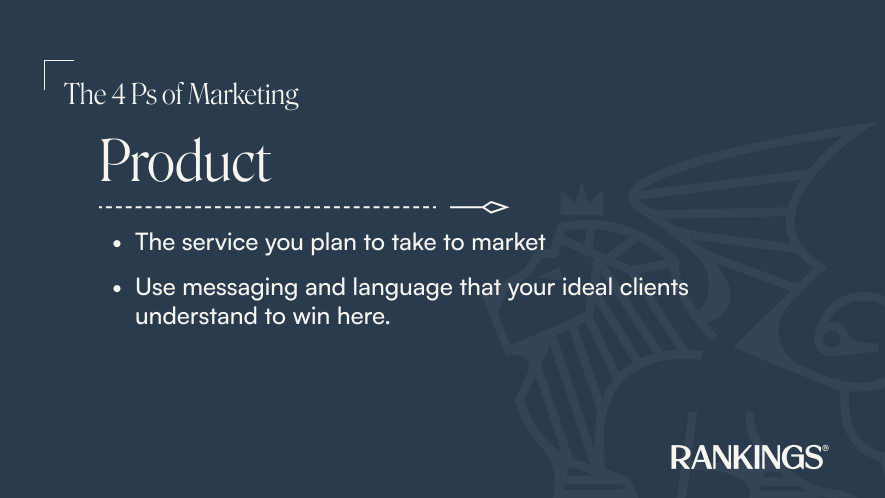
Your product is what you actually sell—your specific services.
It could include things like estate planning through will and trust creation, trust administration, elder law and Medicaid planning, or asset protection.
But, no matter what you offer, 1 thing matters above all else.
The language you use to describe what you offer is critical. Use messaging that resonates with your market. That means thinking in the terms your audience uses.
For example, talk about keeping money safe from creditors to make it easier for someone to understand the purpose of asset protection planning.
Talk about wills and trusts instead of estate planning tools.
Use simple, common terms that people understand in your marketing. You can always use your in-person meetings to break down the legal terminology for them after you’ve reeled them in.
Set Your Pricing

Establishing your price is a crucial part of marketing.
Most law firms don't take the time to think about the strategy behind their pricing. Instead, they set prices based on the competition or an educated guess.
But you don’t have to do that.
There are simple tools you can use to help you set your prices.
Use the Van Westendorp Price Sensitivity Meter to get a handle on where you should set your prices. This tool will allow you to find the optimal price point for your services. It’ll also show you at which price things get too expensive and where people start to think your prices are too good to be true.
All you need to get started is a survey form and a spreadsheet.
You can create a survey using Google Forms asking questions like:
- At what price point would it no longer be worth it to work with a lawyer on an estate plan?
- At what price point would the service be priced so low that you'd be genuinely concerned about quality?
- At what point would you really have to think about paying for the service before making a commitment?
- At what price point would you consider estate planning services a bargain?
Send this to past clients and collect their responses. Then add their answers to a spreadsheet to graph it out. Here’s what that looks like:

The point labeled “OPP” is the optimal price point. You can also find the price of marginal cheapness (PMC) and the price of marginal expensiveness (PME). Between those 2 points is your acceptable price range.
Choose Your Promotion Tactics
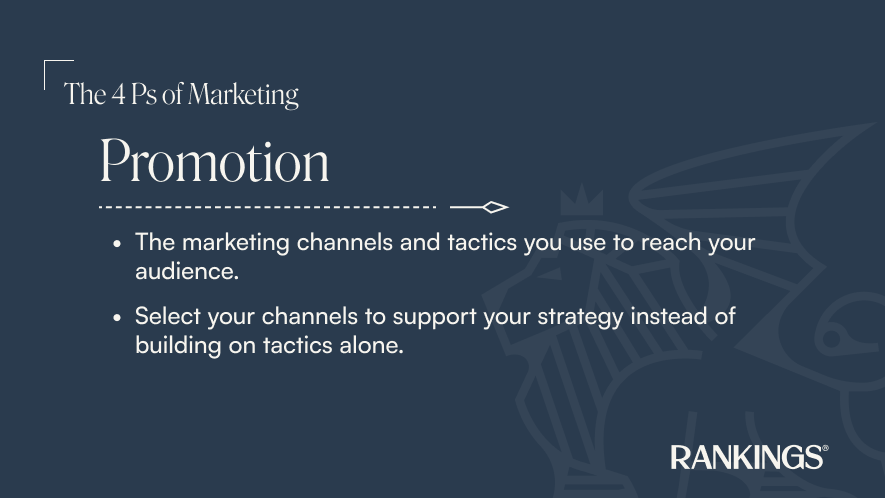
Promotion involves selecting the marketing channels you will use to reach your audience.
This is where you choose which tactics will support your strategy.
There are many potential places your clients could hang out. All of the market research and positioning you’ve done will help you select the right channels to reach your target audience.
The channels you for your marketing campaign depend on your strategy, but some promotion tactics for estate planners include:
- Search Engine Optimization (including both local SEO and targeting national keywords)
- Social media marketing (on platforms like LinkedIn, TikTok, Facebook, or Instagram)
- Paid search ad campaigns (like pay-per-click advertising through Google ads)
- Local service ads
- Email marketing
- TV Advertising
- Radio Advertising
- Billboards/Outdoor Advertising
- Direct Mail
Many people try to separate digital marketing from traditional marketing. The truth is, both of them are just marketing. Whether you choose a so-called traditional tactic or a digital one depends on your strategy.
But having a solid law firm website is a critical marketing tool no matter which channels you select.
It's where you capture the demand for your services, whether they find you through organic search, positive reviews on your Google My Business profile, PPC ads, or through a referral. A good law firm website functions like a central hub for prospective new clients. Your site should convey who you are and who you help (your positioning and messaging).
Follow Through with Placement
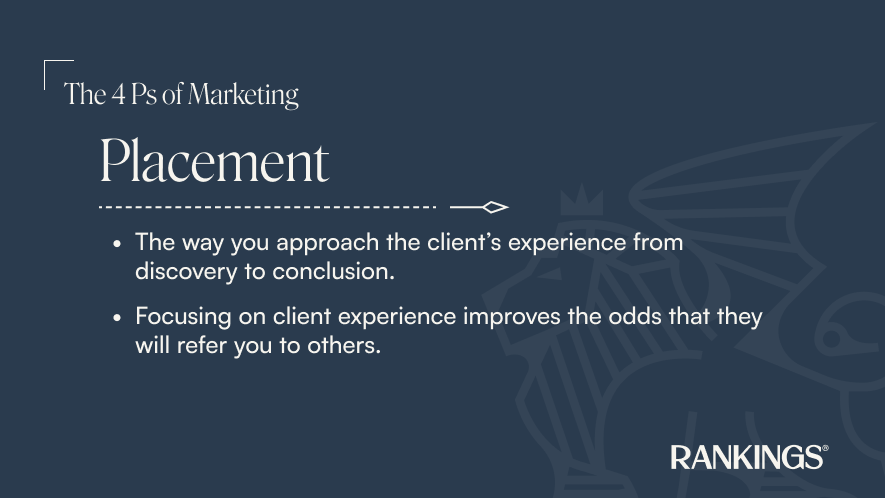
Placement is all about how you approach the client experience.
This involves thinking from your client’s perspective from the moment they start looking for an estate lawyer all the way through the conclusion of their engagement with you.
The first step is by making it easy for them to find and contact you for an initial consult.
If someone can't contact you from your website, for example, they'll just hit the back button and hire someone else. Every interaction they have with you or your firm should solidify the relationship.
Make your phone number prominent in your web design so people know how to contact you. Use testimonials to reassure them that you’re the right firm for the job.
It doesn't matter if the client finds your business listing through local search or comes over from social media. Providing them with a consistent, positive experience makes them more likely to follow through on hiring you.
A good experience throughout their entire time with you also makes them more likely to refer you to other people.
5. Build Enabling Management Systems to Support Your Efforts
One of the most common ways for law firms to fall off the wagon with their marketing strategy is when they fail to select and implement an enabling management system.
This system keeps your marketing strategy on track to win in the estate plan market.
There are three categories of effective systems:
- Systems that involve an asymmetric resource investment
- Systems that involve the distribution of decision-making authority
- Systems that involve the use of unique methods for collecting and tracking data
Your enabling management system is one that's unique to you. This system reinforces promises made in your marketing and differentiates you from other firms.
These systems ensure that you can follow through on the winning aspiration you set all the way at the beginning.
With asymmetric resource investment, you put a disproportionate amount of resources into your capabilities.
For example, your winning aspiration may be to create wills and trusts for people with massive portfolios and a high net worth. In that case, you may invest in creating a boutique experience that caters to all of their needs. The money you put into maintaining this system keeps other high net worth individuals returning to and referring your firm.
When your system involves delegating decision-making authority, you remove some of the work from your own plate and empower others.
For example, you might train your intake staff to tell the difference between a basic will creation client who just wants to avoid probate and someone with more complex needs, like trust, estate tax impacts, and asset protection planning.
Your intake staff can then provide resources to help make the will-creation client process smoother and faster. That would allow you to spend more of your time working on custom plans for the other clients.
Systems that rely on unique methods for collecting and tracking data rely on finding opportunities where competitors do not.
You can use your own client cases as an existing database to help you make decisions more quickly. For example, you can use data to see which marketing methods led to the highest-value cases or which services provide the most consistent revenue. This may help you lean more into what works without just taking a shot in the dark.
8 Estate Planning Marketing Ideas That Generate Quality Leads
Estate planning attorneys face unique marketing challenges—clients often delay creating estate plans, and the topic can feel uncomfortable or overwhelming. These seven proven estate planning marketing ideas help you connect with prospects, build trust, and convert leads into long-term clients.
1. Educational Webinar Series
Host monthly webinars addressing common estate planning concerns and recent law changes. Topics like "5 Estate Planning Mistakes That Cost Families Thousands" or "New Tax Laws: How They Affect Your Estate Plan" attract motivated prospects who are actively seeking solutions.
Make webinars interactive with Q&A sessions, and always include a clear call-to-action for a free consultation. Record sessions to create evergreen content for your website and email marketing campaigns. This approach positions you as an expert while generating warm leads from people already interested in estate planning services.
2. Strategic Partnership Program
Build relationships with professionals who regularly encounter clients needing estate planning services. Target financial advisors, CPAs, insurance agents, real estate attorneys, and wealth managers for mutual referral partnerships.
Create a formal referral program with clear processes and incentives. Provide partners with educational materials they can share with clients, and consider hosting joint seminars or workshops. These partnerships often generate the highest-quality leads because they come with built-in trust and credibility.
3. Life Event Trigger Campaigns
Develop targeted marketing campaigns around major life events that typically prompt estate planning needs. Create specific campaigns for:
- New parents needing guardianship planning and basic wills
- Newlyweds combining assets and planning for their future
- Business owners approaching retirement and needing succession planning
- Recent retirees focusing on legacy planning and asset protection
Use targeted Facebook and Google ads, direct mail, and email sequences tailored to each life stage. This approach catches prospects when they're most motivated to take action.
4. Community Education Initiative
Position yourself as the local estate planning expert through consistent community education efforts. Offer free seminars at libraries, community centers, senior centers, and religious organizations.
Develop a rotation of popular topics like "Avoiding Probate," "Planning for Long-Term Care Costs," and "Protecting Your Family's Financial Future." Always provide valuable takeaways like estate planning checklists or planning worksheets that keep you top-of-mind after the event.
5. Content-Driven SEO Strategy
Create comprehensive, educational content that addresses specific estate planning questions and concerns. Develop in-depth guides, comparison articles, and local resources that demonstrate your expertise while improving search engine rankings.
Focus on long-tail keywords like "how much does estate planning cost in [city]" or "difference between will and trust for young families." This content attracts prospects researching estate planning options and positions you as a knowledgeable resource before they're ready to hire an attorney.
6. Client Success Story Campaign
Develop case studies and testimonials that illustrate the real-world benefits of proper estate planning. Focus on stories that resonate with your target audience:
- How proper planning saved a family thousands in taxes
- A business succession plan that preserved family wealth
- Healthcare directives that honored a client's wishes during a medical crisis
Share these stories across multiple channels—your website, social media, newsletters, and marketing materials. Success stories help prospects visualize the benefits of working with you while building trust and credibility.
7. Retainer and Maintenance Marketing
Develop ongoing relationships with existing clients through estate plan maintenance and update services. Create annual review programs, send newsletters about law changes affecting estate plans, and offer family plan updates as life circumstances change.
This approach generates revenue from existing clients while creating natural referral opportunities. Satisfied long-term clients become your best marketing asset, referring family members, friends, and colleagues who need estate planning services.
8. AI-Powered Marketing Automation for Estate Planning
Artificial intelligence can transform your estate planning marketing by automating client interactions and personalizing outreach at scale. Implement AI-powered chatbots on your website to qualify leads 24/7, answering common questions about wills, trusts, and estate planning costs while capturing contact information from interested prospects.
Estate planning attorneys can leverage various AI platforms for content creation and client communication. Tools like ChatGPT, Google Gemini, Perplexity, and Claude can help generate educational content, draft email sequences, and create social media posts while maintaining professional standards and accuracy.
AI can also personalize your marketing content—young families receive guardianship planning materials while business owners see succession planning resources. Additionally, AI optimizes your Google and Facebook ad campaigns by continuously analyzing performance data and adjusting targeting to improve conversion rates and reduce cost per lead.
This technology handles time-intensive marketing tasks automatically, allowing you to focus on consultations and client service while maintaining consistent, personalized marketing efforts.
Work with a Marketing Professional to Get the Best Results

Creating a marketing strategy for an estate planning practice and then executing it requires time, skills, and experience. Most estate planning attorneys don't have this time and are far better off working in their own zone of genius in serving clients.
You can make your life much easier and likely get even better results with the help of a law firm marketing expert.
Working with someone who understands the legal market will allow you to develop a marketing strategy and leverage their help for execution. A legal marketing agency will be familiar with what works and what doesn't in online marketing. This gives you the best chance of finding the channels and marketing efforts that make the most sense for your strategy.
A good partner will work with you to build and execute your strategy.
They’ll also provide you with reporting so you can see how things are working in real time. That's more time you can use to focus on what you do best while still ensuring a strong offline and online presence for your firm.
Ramp Up Your Estate Planning Marketing
When you know who you serve, how you'll define winning, and the unique ways you can help clients, estate planning marketing is easy.
It takes time to develop a thorough and effective estate plan law firm marketing strategy. But even when you know what to do, it's hard to keep up with everything in a marketing strategy. The best way to get support when building a strategic plan and executing on all aspects of your marketing is partnering with an outside pro.
Rankings.io knows the legal marketing landscape and how to find new business for estate attorneys.
We've worked with lawyers for many years and help create comprehensive marketing plans with your firm's unique positioning in mind. Contact us today to learn about our marketing services and how we can help take marketing off your hands.
Estate Planning Marketing: Frequently Asked Questions
What are the best localized marketing strategies for estate planning attorneys?
Focus on local SEO by optimizing your Google Business Profile, getting reviews from local clients, and creating location-specific content. Partner with local financial advisors, CPAs, and insurance agents for referrals. Sponsor community events, host seminars at local libraries or community centers, and join local business organizations and estate planning councils.
How much should an estate planning law firm spend on marketing?
Estate planning firms typically spend 2-5% of gross revenue on marketing, with newer firms investing 5-10% to build their client base. For a solo practitioner, this might mean $2,000-$5,000 monthly, while larger firms may invest $10,000-$20,000 monthly across digital advertising, content creation, and networking events.
How to get estate planning clients?
A: Build a referral network with financial advisors, CPAs, and insurance agents who regularly encounter clients needing estate planning. Create educational content addressing common concerns like avoiding probate and protecting family assets. Use targeted Google Ads for searches like "estate planning attorney near me" and host free educational seminars to generate qualified leads.
What marketing strategies should estate planning attorneys use to target seniors?
A: Use traditional media like local newspaper ads and radio sponsorships, as seniors still consume these channels heavily. Host seminars at senior centers, retirement communities, and libraries on topics like "Protecting Your Assets from Long-Term Care Costs." Partner with financial advisors who specialize in retirement planning, and create direct mail campaigns with educational materials about estate planning updates and Medicare planning.