Last updated: April 16, 2026
Key Takeaways
- SEO is the highest-ROI marketing channel for law firms in 2026, delivering an average 526% return over 3 years compared to just 2x for PPC, but only with 6–12 months of consistent investment.
- AI Overviews have changed the game. They now appear in up to 60% of searches and drop organic clickthrough rate (CTR) by 61% unless the Overview cites your content, in which case cited pages earn 35% more clicks.
- Local SEO is non-negotiable for most practice areas. 42% of legal searchers click a result inside the Google local 3-pack, and those firms capture 93% more conversion actions than competitors ranked 4–10.
- E-E-A-T is the #1 ranking lever in Your Money or Your Life (YMYL) verticals like legal. Attorney-authored content, visible bar credentials, case results, and verifiable expertise are required, not optional.
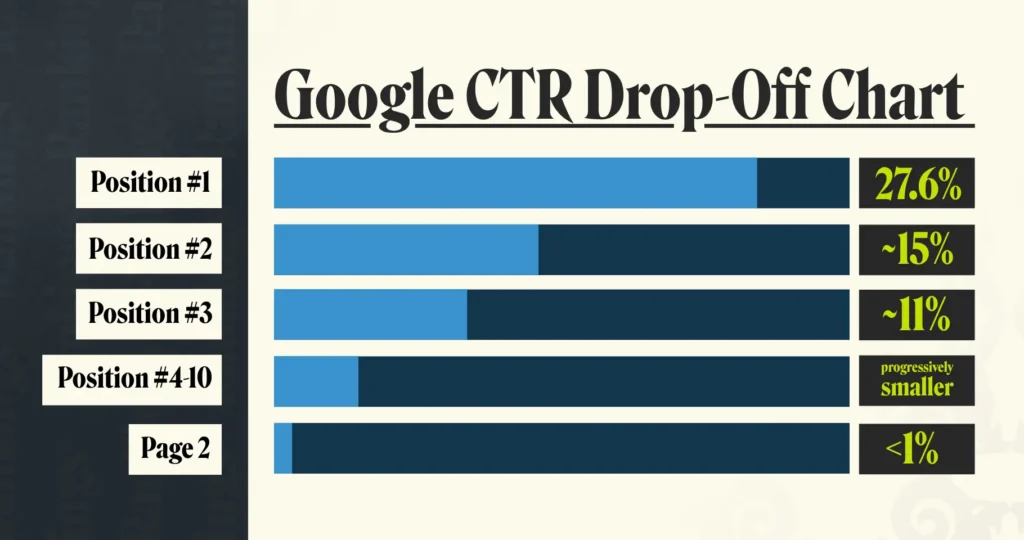
- The #1 organic result captures 27.6% of clicks. The top three capture 76%. Anything beyond page one is a rounding error.
- Personal injury is the most competitive SEO vertical on the internet, with CPCs exceeding $150 in major markets, making organic rankings more valuable than ever.
- Most firms that fail at SEO confuse tactics with strategy. 95% of law firms never see real results because they publish blogs without a documented plan for audience, practice areas, and geo-markets.
If you're reading this, you probably came to this page through a Google search. When your potential clients need services, they'll (hopefully) find you the same way.
In a nutshell, that's what SEO for lawyers is all about. Whether you specialize in personal injury, family law, criminal defense, or another niche, potential clients still turn to search engines to find the legal services they need.
In this comprehensive law firm SEO guide, you'll learn about attorney SEO and how you can harness it to elevate your law firm's visibility and drive its success, both online and offline.
What Is SEO for Lawyers?
SEO for lawyers is the practice of optimizing a law firm's website so it ranks higher on Google and other search engines for the terms potential clients actually search, like "car accident lawyer near me" or "family law attorney in [city]."
Unlike paid channels like Google Ads, SEO drives compounding, unpaid (organic) traffic that keeps generating qualified leads long after you complete the initial work. Whether you run a solo practice or need a dedicated SEO agency for law firms, the goal is the same: show up when high-intent prospects are ready to hire.
The stakes have never been higher.
According to Hinge Marketing, SEO ranks as the second-highest marketing priority for high-growth law firms, trailing only content creation, as AI-powered search and zero-click results reshape how prospective clients find legal representation.
A strong SEO for law firm strategy isn't one-size-fits-all. A personal injury practice competing on city-level keywords requires a very different playbook than SEO for family law, where trust signals, practice-area depth, and local intent dominate the SERPs.
Done right, attorney SEO combines technical health, authoritative content, local optimization, and link building into a system that turns your website into your firm's most reliable case-acquisition channel.
Why is SEO for Law Firm Websites Important?
More people than ever turn to Google, and increasingly AI-powered search, when they need to hire a lawyer. According to Clio's 2025 Legal Trends Report, more than half of consumers now begin their legal journey online or with AI tools, and AI directs 28% of users to contact a lawyer. That's qualified intent flowing straight into search, and the firms on page one capture it.
The competition is fierce. The U.S. personal injury market alone hit $61.7 billion in 2025, with 164,000+ attorneys fighting for the same cases. Mobile "near me" searches for legal services increased 500%, and 96% of people seeking legal advice start with a search engine. Meanwhile, the #1 organic result captures a 39.8% CTR. Anything beyond page one gets less than 1%.

Ranking isn't easy. Legal is one of the most competitive SEO verticals on the web. CPCs for "personal injury lawyer" exceed $150 in major markets, and Google's algorithm now rewards real E-E-A-T while AI Overviews reshape the SERPs.
But the payoff compounds: Organic traffic keeps generating cases long after the work is done. If your firm isn't on page one when high-intent prospects search, you're handing the case to a competitor.
That makes SEO non-negotiable for law firms.
Does SEO Work for Law Firms?
Yes, and it's one of only two marketing channels that compound over time (the other being word of mouth). The moment you stop paying for ads or posting on social, your traffic disappears. SEO does the opposite: It takes time to build, but once it's running, the traffic keeps growing.
The math behind it is just as strong. According to Backlinko study, 27.6% of Google clicks go to the #1 organic result, and more than 76% go to the top three. Everything past that is a rounding error. This compounding effect is even more powerful in specialized verticals like personal injury, where AI tools can amplify SEO efforts while meeting Google's quality standards.
Across the 100+ law firms we work with, the personal injury attorneys alone pull in an estimated 183,000 monthly organic visits, traffic that would cost them $1.6M per month to replicate through Google Ads. That's nearly $20M in annual traffic value generated through SEO.
When paired with other proven personal injury marketing strategies, SEO becomes the single highest-ROI channel a law firm can invest in.
5 Google Rankings Factors in SEO for Lawyers
SEO for lawyers isn't just about visibility, it's about positioning your firm so high-intent prospects can find you the moment they search. Google's algorithm has shifted dramatically over the past two years, with recent core updates and AI Overviews now appearing in nearly 48% of all tracked queries (Ahrefs, 2026). The fundamentals still matter, but the weight behind each one has changed.
Here are the five ranking factors that move the needle in 2026.
1. Experience, Expertise, Authority, and Trustworthiness (E-E-A-T)
In the legal field, where the stakes are often high for potential clients, content that showcases your expertise and authority is crucial.

Licensed attorneys should write or review articles, practice area pages, and FAQs, with visible author bios, bar credentials, case results, and verifiable expertise.
Google's own guidance is explicit: It filters out generic content that doesn't demonstrate first-hand experience.
2. Identify Your Target Audience & User Intent
Understanding your target audience and their search intent is foundational to creating relevant content.

Are your potential clients looking for detailed guides on specific legal processes, or do they require general advice on common legal issues?
Tailoring your content to answer these search queries not only aligns with user intent but also increases the likelihood of your website being found during relevant searches.
3. Keyword Optimization
While stuffing your content with keywords is a dated and penalized practice, strategically incorporating keywords into your content is still vital for lawyer SEO.
Learning how to optimize keywords for law firm content ensures you're following best practices that help search engines understand your expertise without compromising readability or user experience.

Focus on long-tail keywords that potential clients might use when searching for legal advice within your specialty.
Use these keywords naturally in titles, headings, and throughout your content to improve search engine rankings without sacrificing readability.
4. Engaging and Shareable Content
In an era where social media plays a significant role in information dissemination, creating content that is not only informative but also engaging and shareable can extend your firm's reach.

Include compelling case studies, informative infographics, or short, informative videos that can easily be shared on social platforms. Engaging content not only helps retain users on your site longer but also encourages backlinks and social sharing, amplifying your online presence.
4. AI Search Optimization (GEO / AIO)
This is the biggest shift of 2026, and the one most law firms still ignore. AI Overviews now trigger on as many as 60% of searches, and research from Position Digital shows organic CTR drops 61% on queries where AI Overviews appear unless the Overview cites your content In that case, cited pages earn 35% more organic clicks and 91% more paid clicks.
For law firms, that means optimizing for both traditional rankings and AI citation across Google AI Mode, ChatGPT, and Perplexity. The winning formula: self-contained 50–170 word answers, clear question-based H2s, FAQ and attorney schema markup, fresh verifiable stats, and genuine first-person expertise. Google and AIs will systematically filter out thin, generic blog content, the kind most law firm sites still publish.
6 Fundamentals of SEO for Lawyers
SEO is all about getting to the top of the search engine results pages (SERPs). To do that, SEO efforts usually go into one of five main categories:
- Keyword Research. Figure out what topics people search for.
- Content. Create high-quality content that people can find when they search online that demonstrates your expertise.
- On-page SEO. Make your content easy for people and search engines to understand.
- Link Building. Get endorsed by other websites with high-quality backlinks.
- Technical SEO. Make it as easy as possible for search engines to discover, crawl, and index your website.
- Local SEO Strategies. Get a Google Business Profile set up so you're eligible to rank in the local search results.
We break down each of these in separate chapters within this guide.

If you need to hire an agency that specializes in law firm SEO services, these are what they should provide.
It's worth noting that these are all tactics and should not be confused with your law firm's SEO or marketing strategy.
In our years of working with firms, fewer than 5% have ever had a documented strategy to win.
Nearly every article you find on the internet shows their lack of understanding by confusing tactics with strategy.
If you don't have a well-defined strategy for winning, you should start there first. To learn how to develop a real strategy, read Law Firm Marketing Strategies: A Coherent Guide.
How to Start a Law Firm SEO Strategy
Most law firms fail at SEO for the same reason: They start with tactics instead of strategy. They publish blogs, chase random keywords, and wonder why nothing ranks six months in.
A winning law firm SEO strategy works in the opposite direction: It starts with a clear picture of who you want to reach, where you stand against competitors, and which pages can actually move the needle on case acquisition.
We use the five steps below when onboarding personal injury, family law, and multi-practice firms, and they're built for the 2026 search landscape of AI Overviews, E-E-A-T scrutiny, and hyper-local competition.
1. Run a Technical SEO & Website Audit
Before writing a single blog post, you need to know what's broken. A technical audit surfaces the issues that silently cap your rankings: slow page speed, poor Core Web Vitals (especially the newer INP metric), crawl errors, missing schema, thin or duplicate content, broken internal links, and non-indexable pages.
Google won't rank a site it can't efficiently crawl and trust — and in a YMYL vertical like legal, technical health is non-negotiable. Tools like Google Search Console, Screaming Frog, and Ahrefs Site Audit give you the starting map.
2. Define Your Target Audience, Practice Areas & Geo-Markets
SEO without a defined audience is just guessing. Map out exactly who your firm serves: car accident victims in Miami, high-net-worth divorce clients in Atlanta, wrongful death cases statewide. Build the strategy around those segments. Each practice area and geographic market gets its own dedicated page, keyword set, and intent match.
"Lawyer" doesn't rank anymore. "Miami motorcycle accident lawyer" does. Firms that try to serve everyone end up ranking for no one.
3. Conduct Keyword & Competitor Research
Once you know who to target, reverse-engineer what's already ranking. Identify your top 5–10 organic competitors (not just the firms you think are competitors, the ones actually winning your target keywords) and audit their content, backlinks, site structure, and topical depth. Pair that with keyword research focused on commercial-intent terms ("[practice area] lawyer [city]"), long-tail informational queries ("what to do after a rear-end collision in [state]"), and question-based searches that trigger AI Overviews. This is where you find the gaps your firm can actually win.
4. Build a Content & On-Page Optimization Plan
Content is how you turn keyword opportunities into rankings and cases. Your plan should include three content pillars: (1) practice area landing pages optimized for commercial intent and local modifiers, (2) city/location pages for every market you serve, and (3) educational blog content that captures top-of-funnel searches and feeds AI Overviews.
Every page needs proper on-page optimization: unique title tags, H1/H2 hierarchy, schema markup (Attorney, FAQ, LocalBusiness), internal linking, and author bylines that signal real attorney expertise.
5. Build Authority Through Local SEO & Link Building
Rankings follow authority, and authority comes from two places: local signals and backlinks. On the local side, fully optimize your Google Business Profile, build consistent NAP citations across legal directories (Avvo, Justia, FindLaw, Martindale), and actively earn client reviews. Our Google Business Profile study found review volume and GBP category are among the strongest local pack ranking factors for personal injury firms.
On the link-building side, focus on quality over quantity: earned media, legal industry publications, guest contributions, scholarship campaigns, and digital PR. One link from a law school or a Tier-1 news outlet outweighs 50 directory submissions every time.
Tracking the Results of Your SEO Campaign
Everything we've discussed previously covers the basics of SEO: what you should do to grow and what you need to do to get there.

We'll dive into the specifics of how to measure the results of your search engine optimization efforts in Chapter 9, but it's worth noting the key things you should be mindful of now.
Organic Traffic Compounding Monthly Growth Rate
You can easily track this in Google Search Console (GSC) for free. If you don't have GSC already set up, learn how in Guide to Setting Up Google Search Console.

You can easily track this in Google Search Console (GSC) for free. If you don't have GSC already set up, learn how in our Guide to Setting Up Google Search Console.
Target Keyword Rankings
Most pages you create will have a target keyword and a few supplementary secondary keywords. Track how your search engine rankings improve over time using Search Console or third-party rank tracking tools like Ahrefs or Accuranker.
Total Search Visibility
Visibility represents your coverage across your market. You can increase your website visibility by ranking higher on Google for more keywords. Measuring how your visibility trends over time is a great indicator of your overall SEO success.
Share of Branded Search
Share of Branded Search is the single most powerful leading metric you can track. It's the only metric that correlates with market share.
If you see your Share of Branded Search growing, your market share will grow too. If you see your Share of Branded Search diminishing, your market share will decrease too.
Note: The only caveat here is if your Share of Branded Search is growing because of something negative that the media is saying about you.
We'll cover how you can calculate your Share of Branded Search in Chapter 9.
Leads & Signed Cases
Keyword rankings and organic traffic are leading indicators that you're doing the right thing. Getting appointments and cases are ultimately the primary revenue metrics you want, though. These are your lagging indicators to pay attention to if you want to understand your real ROI.
You can track how well organic traffic is converting for you in Google Analytics (GA4).
Learn how by reading Chapter 9: How to Measure Results of SEO for Law Firms.
Local SEO for Law Firms
For most law firms, local SEO isn't just part of the strategy, it is the strategy. According to the Whitespark 2026 Local Search Ranking Factors report, Google Business Profile signals remain the single most influential category for local pack rankings. Backlinko's research found that 42% of searchers click on a result inside the local 3-pack when local results appear, and those businesses receive 93% more conversion actions (calls, direction requests, website clicks) than firms ranked 4–10.
For a personal injury or family law practice competing on "[practice area] lawyer near me," invisibility in the local pack is functionally the same as not existing.
Here's how to fix that.
1. Optimize Your Google Business Profile (GBP)
Your GBP is the single biggest lever in local SEO. Whitespark's 2026 data confirms that primary category selection is the #1 local pack ranking factor, and picking the wrong one is the most damaging negative factor.
For a personal injury firm, that means "Personal Injury Attorney" as your primary category, never the generic "Lawyer." Add secondary categories like "Law Firm" and "Trial Attorney," fill out every service (car accidents, truck accidents, wrongful death, slip and fall), and use the full 750-character description to explain what sets your firm apart.
Then keep it alive.
Post weekly, upload fresh photos of your office and team, update hours for holidays, and respond to every review within 48 hours. Google's 2026 algorithm heavily rewards profiles that "look alive." The local pack and AI-generated answers now filter out stale GBPs.
2. Build NAP Consistency and Legal Citations
Make your Name, Address, and Phone number identical across every directory, your website, GBP, Avvo, Justia, FindLaw, Martindale-Hubbell, Super Lawyers, local bar associations, and Yelp.
Even minor variations ("St." vs. "Street") create confusion and hurt rankings. Google now evaluates what the industry calls digital consensus: The more consistent your NAP is across authoritative legal directories, the more Google trusts you as a verified local entity.
3. Build a Review Engine (Volume + Recency + Response)
Review volume and recency are climbing fast as local ranking factors in 2026. 82% of people check reviews when looking for legal services, and 40% say reviews directly influence which firm they hire (My Legal Academy, 2026). Google's 2026 algorithm now weighs review recency alongside volume. It treats a firm that earns 12 reviews over three years very differently than one earning 12 reviews in the last three months.
Build review generation into your case closeout workflow, request within 24 hours of settlement, respond to every review (positive and negative) within 48 hours, and avoid batch review requests, which Google can detect and penalize.
4. Create City and Practice Area Landing Pages
The single highest organic local ranking factor in Whitespark's 2026 survey was having a dedicated page for each service. For a multi-city PI firm, that means individual pages for "Car Accident Lawyer in Miami," "Truck Accident Attorney in Orlando," "Slip and Fall Lawyer in Tampa," not a template with the city name swapped in.
Each page needs substantive, locally relevant content: references to local courts, state-specific statutes of limitations, common accident types in that area, local hospitals, and embedded Google Maps. Google's 2025 and 2026 core updates now penalize thin location pages.
5. Earn Local Backlinks & Mentions
Local authority builds through local relationships. Sponsor community events, contribute guest articles to local bar association websites, partner with local news outlets on legal commentary, and earn links from chambers of commerce, scholarship programs, and university law schools. One link from a local news site or law school outweighs 50 directory submissions every time.
Google Ads vs SEO for Law Firms
Most law firms ask the wrong question: "Should I invest in SEO or Google Ads?" The real answer is both, but for different reasons. Google Ads delivers immediate visibility and leads the moment your budget activates, while SEO builds compounding, long-term traffic that keeps generating cases with time.
A smart personal injury or family law firm will use Google Ads to capture demand while SEO is still ramping up, then let organic rankings carry the heavier share of traffic once they mature.
Here's how the two channels actually compare:
| Factor | Google Ads (PPC) | SEO for Law Firms |
|---|---|---|
| Time to results | Immediate (same day) | 3–6 months minimum, 12+ months for competitive markets |
| Cost structure | Pay per click — ongoing, scales with volume | Fixed monthly investment — compounds over time |
| Average CPC (PI keywords) | $150–$250 per click in major markets | $0 per click once ranking |
| ROI timeline | Positive ROI possible from month 1 | Break-even at 12–14 months, then compounding |
| 3-year ROI | ~$2 return per $1 spent | ~$22 return per $1 spent (526% over 3 years) |
| Traffic when you stop paying | Drops to zero immediately | Continues generating leads for months/years |
| Click-through rate | ~2% average on legal ads | 27.6% for #1 organic, 76% for top 3 |
| User trust | Lower — 60%+ of users prefer organic over paid | Higher — organic results perceived as more credible |
| Best for | New firms, urgent case generation, testing markets | Long-term growth, compounding authority, lower CAC |
| AI Overview visibility | Paid ads appear separately from AI Overviews | Organic pages can be cited inside AI Overviews |
| Competitive defensibility | Zero — competitors can outbid you tomorrow | High — rankings are hard to displace once earned |
| Scaling cost | Linear (double leads = double spend) | Sub-linear (content scales without proportional cost) |
SEO for ChatGPT and Other AI Search Tools
The search landscape has evolved beyond traditional Google searches. AI-powered tools like ChatGPT, Perplexity, Claude, Gemini, DeepSeek, and Microsoft Copilot are becoming primary research assistants for millions of users, including your potential clients.
These AI platforms pull information from across the web to answer questions, and if your law firm isn't optimized to appear in these AI-generated responses, you're missing a significant and growing segment of your market. Understanding how to optimize for AI SEO is now as critical as traditional SEO for lawyers who want to maintain visibility in an AI-first world.
How AI Tools Discover and Cite Law Firms
AI search tools like ChatGPT for lawyers work differently than traditional search engines, but they still rely on well-optimized, authoritative content.
These tools prioritize clear, structured information with strong E-E-A-T signals. When someone asks an AI tool, "Who are the best personal injury lawyers in Chicago?" or "What should I look for in a divorce attorney?" the AI searches for law firms with comprehensive, well-structured content that demonstrates expertise.
This means your existing SEO efforts—quality content, proper schema markup, authoritative backlinks, and clear service descriptions—directly affect whether AI tools recommend your firm.
How to Choose a Law Firm SEO Agency
Hiring the wrong SEO agency can set your firm back 12 months and tens of thousands of dollars—sometimes more when tactics trigger a Google penalty. Hiring the right one can increase your case acquisition by 3–5x within 12–18 months. Documented case results show specialized legal SEO agencies driving 300%–566% increases in organic revenue within 18 months.
Here's how to tell the difference and the exact questions to ask before signing any contract.
1. Prioritize Legal Specialization Over Generalists
Legal is one of the most competitive, ethically regulated SEO verticals in the world. Generalist agencies that market to "restaurants, plumbers, and e-commerce stores" almost always lack the nuance required—specifically, knowledge of ABA Model Rule 7.1, which prohibits false or misleading advertising claims, and the state bar advertising restrictions that vary by jurisdiction.
Ask prospective SEO agencies directly: "What percentage of your current clients are law firms?" and "What practice areas have you worked with specifically?" SEO for personal injury, criminal defense, and family law each requires materially different strategies. If they can't answer specifically, move on.
2. Demand a Clear, Documented Process
A reputable agency should walk you through its strategy in plain English—the audit process, keyword research methodology, content production workflow, link-building approach, local SEO plan, and reporting cadence. If they hide behind jargon or claim their process is a "proprietary trade secret," that's a red flag. SEO isn't magic. It's engineering.
Ask for their Statement of Work (SOW) before signing. It should specify exactly what it includes: how many pages written per month, which links built, what technical fixes covered, and what's explicitly out of scope.
3. Verify Results (Don't Just Trust References)
Every agency website shows logos and testimonials. That's not proof. Do your own verification. If they claim a client ranks for "NYC personal injury lawyer," run the search yourself.
Ask for case studies with real traffic and revenue numbers, not just "we increased rankings" screenshots. Reach out to two or three current or former clients directly and ask how the agency handled setbacks, not just successes.
4. Watch for the Red Flags
Based on our experience reviewing dozens of competing proposals, here are the non-negotiable warning signs:
Dodging questions about links: "Link building" can mean anything from earned media to paid PBN links that get sites penalized. Ask specifically about their process.
Guaranteed #1 rankings: Google explicitly warns against any agency claiming to guarantee rankings or a "special relationship" with Google. No one controls the algorithm.
"Gold, Silver, Bronze" packages: Legal SEO requires custom strategy, not retail tiers.
Proprietary website platforms: Agencies that lock you into their own CMS hold your content, history, and domain hostage. Always own your assets.
No AI search (GEO/AEO) strategy: Wth 28% of consumers now researching lawyers through ChatGPT any agency without a plan for AI platforms is already two years behind.
SEO For Lawyers: Frequently Asked Questions
How Can I Improve the SEO on My Law Firm Website?
No one-size-fits-all solution will improve the SEO on your law firm website. It all depends on your website's current health and status. A detailed SEO audit will show you which actions you need to take to optimize your law firm's website.
Some common activities to improve your website's performance on search engines include:
- Producing high-quality content that targets relevant keywords.
- Optimizing on-page elements such as titles, meta descriptions, and images.
- Acquiring backlinks to your site from reputable and relevant sources.
- Conducting regular technical audits to identify and fix issues.
How Much Does Law Firm SEO Cost?
The price of hiring a law firm SEO company varies based on your practice area and your needs.
You can find some agencies that charge as little as $2,500–$5,000 per month for legal SEO services. But you get what you pay for with SEO. That budget is not usually enough to see real results.
Lawyers should expect to budget 10–12% of their gross revenue (or $10,000 per month) in their law firm marketing budget if they want to see real results. Hyper-competitive niches like personal injury law can cost more if you want to outpace other lawyers in your practice area.
Why Does My Law Firm Need SEO?
Your potential clients use Google to find legal services. In a recent survey, 64% of people said they would search on Google to find an attorney. If you're not ranking in those search results, you're invisible to the majority of your market. SEO ensures your firm appears when potential clients need your services most, giving you a competitive advantage over firms that rely solely on referrals or paid advertising.
Do All Law Firms Need SEO?
Not every law firm needs an aggressive SEO strategy, but most benefit from at least basic optimization. If you rely exclusively on referrals from a small network and have more clients than you can handle, SEO may not be a priority. However, if you want to grow, attract new clients outside your immediate network, or compete in your market, you need SEO. Even referral-based firms benefit from having a professional online presence that builds credibility when prospects research your name.
How Long Will SEO Take?
SEO typically takes 3-6 months before you see meaningful results, with continued improvement over 12-24 months. Unlike paid ads that deliver immediate traffic, SEO is a long-term investment that compounds with time. You might see initial movement in rankings within the first few months, but significant traffic growth and lead generation usually materialize around the 6-month mark. The timeline depends on your market competitiveness, current website status, and the resources you invest.
How Much Do Law Firms Spend on SEO?
Most law firms invest between $2,500-$25,000 per month on SEO, depending on their practice area and growth goals. Firms in highly competitive markets like personal injury may spend $15,000-$30,000+ monthly to compete effectively. A general guideline is to allocate 10-12% of your gross revenue to your total marketing budget, with SEO being a significant portion of that investment. Remember that SEO costs decrease over time as your rankings compound, while PPC costs remain constant or increase.
Will SEO Help My Law Firm?
Yes, if done correctly. SEO is one of the most effective client acquisition channels for law firms across all practice areas. Organic search drives high-intent traffic from people actively looking for legal help, resulting in better conversion rates than most other marketing channels. The key is having realistic expectations—SEO requires time and consistent investment, but the compounding returns typically far exceed the initial costs. Firms we work with regularly see 6-10x ROI within 12-18 months.
What is the best SEO strategy for personal injury lawyers?
The best SEO strategy for personal injury lawyers combines aggressive local SEO, city-level practice area pages, strong E-E-A-T signals, and AI search optimization. Personal injury is one of the most competitive SEO verticals on the internet, with CPCs exceeding $150 in major markets, so winning requires more than blog posts. Start by optimizing your Google Business Profile with "Personal Injury Attorney" as the primary category, then build individual landing pages for every practice sub-area and geographic market (e.g., "Car Accident Lawyer in Miami," "Truck Accident Attorney in Orlando"). Layer in attorney-authored content with verified credentials, consistent NAP citations across Avvo, Justia, and FindLaw, a steady review generation workflow, and schema markup to capture AI Overview citations. Expect meaningful results in 6–12 months and compounding returns from month 12 onward.
How do I rank my law firm on Google Maps?
To rank your law firm on Google Maps, you must optimize three core signals: your Google Business Profile, local relevance, and review activity. According to the Whitespark 2026 Local Search Ranking Factors report, the #1 Google Maps ranking factor is choosing the correct primary category, like “Personal Injury Attorney" or "Family Law Attorney" rather than the generic "Lawyer." Then fill out every field on your GBP, add weekly photos and posts, keep business hours accurate (being open when users search is now the fifth ranking factor), and respond to every review within 48 hours. Build NAP consistency across legal directories, create dedicated city-level landing pages on your website, and earn local backlinks from chambers of commerce, local news outlets, and bar associations. Google now heavily rewards GBPs that "look alive" and filters out stale profiles from the map pack and AI-generated answers.
Can I do SEO for my law firm myself?
You can do SEO for your law firm yourself, but only to a point and only if you have the time and technical skill to do it right. You can do basic optimizations such as claiming your Google Business Profile, writing practice area pages, publishing blog content, and responding to reviews in-house. The challenge is scale and competition. Law firm SEO in 2026 requires technical audits, schema implementation, link building, competitor analysis, content production at volume, and AI search optimization, all while Google's algorithm shifts every few months. Most solo attorneys and small firms start DIY, then transition to a specialized law firm SEO agency once they realize the opportunity cost. A single signed personal injury case typically pays for 6–12 months of professional SEO services, so the math favors outsourcing once you're past the basics.
What's the difference between SEO and GEO for law firms?
SEO (Search Engine Optimization) focuses on ranking your law firm in traditional Google search results, while GEO (Generative Engine Optimization) focuses on getting your firm cited inside AI-generated answers from ChatGPT, Perplexity, Google AI Overviews, and Gemini. SEO targets keyword-based queries and blue-link rankings. GEO causes AI systems to pull content from your website when they provide answers. The strategies overlap but aren't identical. SEO rewards backlinks, domain authority, and keyword optimization, while GEO rewards semantic completeness, structured data, self-contained 50–170 word answers, first-party data, and verifiable expertise.
In 2026, law firms need both SEO and GEO. AI Overviews now trigger on up to 60% of searches, and organic CTR drops 61% when they appear unless the Overview cites your content, in which case cited pages earn 35% more organic clicks.