Chris Dreyer:
You're spending real money on PPC, then the month ends and it's just gone. No assets, no relationship, just a bill. Well, what if there was a different play that allows you to win the case before anyone even picks up a phone?
Dennis Meador:
People are calling in and not saying, "Sell me. Impress me. What's better than you about the other guy?" Because they've already been consuming their content for a few days, a few hours.
Chris Dreyer:
Today, in honor of International Podcast Day coming up, we're talking about a strategy that most personal injury attorneys don't seriously consider, podcasting. And this isn't a B2B play. These are podcasts that are designed to be in the right place at the right time for the right client.
Dennis Meador:
My clients get 50 views on their YouTube video if they tell me they got three clients last month. It's a new game in media that most people just don't quite understand.
Chris Dreyer:
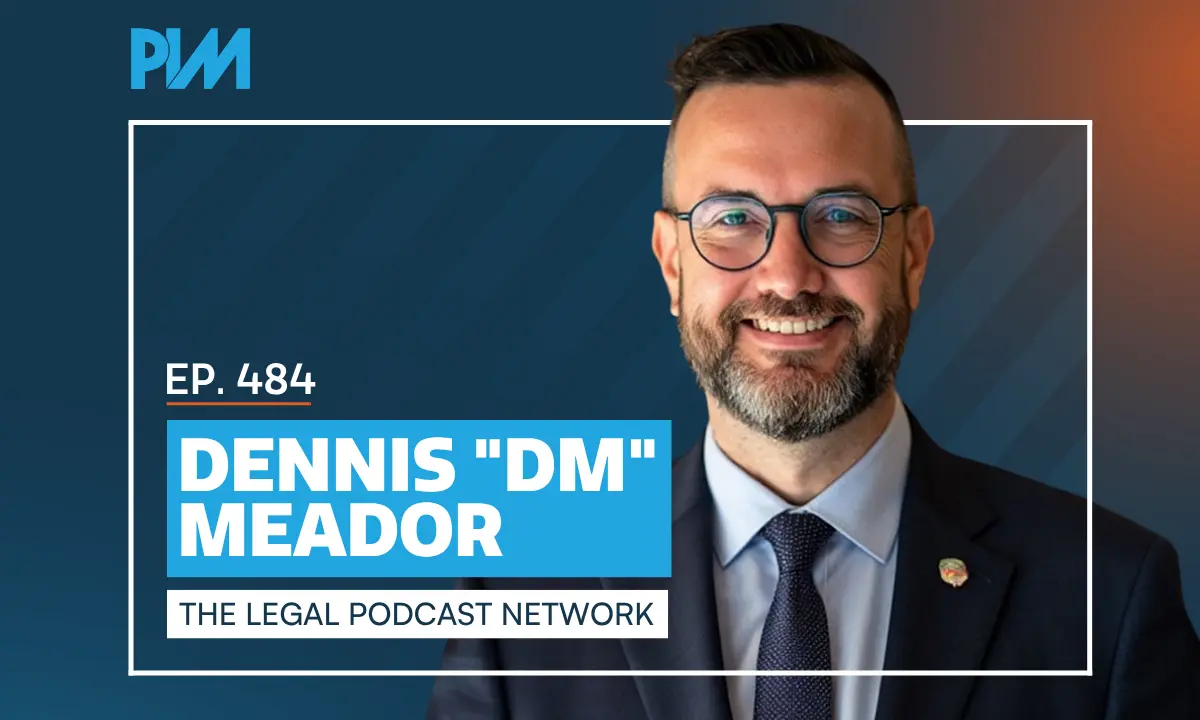
This is Personal Injury Mastermind. I'm Chris Dreyer, founder and CEO of Rankings.io, a legal marketing agency for elite law firms specializing in personal injury. We help firms sign more auto accident and personal injury cases. My guest today is Dennis Matter, founder of The Legal Podcast Network, a turnkey podcasting system built specifically for attorneys. We get into why B2C podcasting works when B2B doesn't, why 90% of legal podcasts die before episode five, and whether the math on 50 listeners beats a million YouTube views.
Let's get into it. Let's open it up out of the gate. What is Legal Podcast Network? Give me the spiel. What do you guys do? What's your services? Let's set it up and then we can dig in.
Dennis Meador:
Local professionals of any kind, they think the game is, let me get a million views and let me get all these people paying attention to me and stir up all this stuff. And yet at the end of the day, they don't get clients out of it. And they're like, "Ah, that's a waste of time." Whereas where we've seen success for our clients is focusing on them helping their potential client. We build everything from the potential client. So we do turnkey podcasting. And what that means simply is our attorneys just show up and talk for 30 minutes, almost like a consultation for a very specialty niche client or an aspect of a niche client. So you come to me, you say, "I'm high asset divorce in Atlanta." We then build out the content plan. We do these 20 minute, 15, 20 minute podcast sessions. We provide a host who's camera trained, has a background in it, knows how to make you look good on camera and a producer that's there that's like, "Hey, John, no one here knows what you said but you." And then we take that 15, 20 minutes, half hour of time on the clock, but 15, 20 minutes of a show and we chop that up and we make social media posts 30 pieces of content.
We make website content, two, three pages per session. We do video. We make it look good. We put in skins and the logo. We name the show. We actually propagate their content for them on social media. So you do one episode a month, you're giving us 30 minutes, a month's worth of content. And as you probably know, Chris, being in the marketing guy, LLMs are built on questions and answers. So we're chopping up, we're putting in, we're seeing results in the LLMs. We're doing AEO, GEO, and SEO, but not really. We're at least empowering it, the content for it. And we just keep expanding that ecosystem.
Chris Dreyer:
That's great. I got so many questions here. And I love it too. Look, I'm 75 or 76 released, another 20 recorded, 90 something this year. Odds, I love it. The feedback loop, what you learn, the people you meet, there's so many advantages. So you're speaking my language. The one thing that kind of caught my attention out of the gate is historically, I've always looked at the podcast for an attorney as like B2B and you're like, "Hey, this is more B2C," and your style of show.
Speak to me about that, about obviously if you go B2B, a lot of your content's going to be different. And I'm sure you have those shows too, but talk to me specifically about the B2C component because I think a lot of our audience is like, ah, this isn't really for B2C, but you're like, no, this is.
Dennis Meador:
Yeah. I mean, that's probably 85% of our client base. Those are honestly the people who stay longest because a B2C approach takes two to three years. Right now with the way the algorithms work, both on social media and in the LLMs and SEO and AEO and GEO and EIEIO and all that other fun stuff out there, the way the algorithms work is you propagate or you put out specific content and when people are looking for that specific answer that they have that specific issue, it propagates in their feed. So what we're doing is building niche content about the issues that their clients face in their market so that when that client clicks on an accident, they click on brain injury, they're doing some searching and it's all connected now, the cookies and the back and forth, they start researching to understand what they're going through.
If you can start building trust at that point instead of waiting to the 1% bottom of the funnel where everybody's fighting like rabid dogs and hyenas to get the bottom of the funnel people that are ready to sign right now, if you can catch them... Because everyone wants top of the funnel pure brand or bottom of the funnel search. That's kind of like what we teach and what's worked, especially with the way that SEO worked before and everything else. But with the way things are going now with the LLMs and everything, it's the middle. People want to trust who they put their trust in and logos don't do it anymore. The first question most attorneys get now from call in cold leads is, "How much is it? How much is it for this? Here's my problem, how much?" But what my clients have experienced on contingency in both sides, it's people are calling in and not saying, sell me, impress me. What's better than you about the other guy? Because they've already been consuming their content for a few days, a few hours.
Then they start on their journey and now all of a sudden there's a little thing that propagates in social media and they answer one or two of their questions. And then they go onto their website and they see the podcast and one podcast is about their specific issue and they're like, wow, this isn't injured in a car crash. It's what happens if an Amazon driver or some delivery contractor is the one who hits your car? Is Amazon responsible? Is it this other? So being able to be there with people on their journey instead of just doing top branding or bottom of the funnel conversion time, it not only increases conversion, but it turns you from a salesperson into a consultant along the way.
And that's the biggest difference.
Chris Dreyer:
Think about how someone actually behaves after a crash or diagnosis. They don't call a lawyer first. They search, they read, they watch, they research. That research phase can last hours, days, or even sometimes weeks. And right now, almost nobody is showing up for them there. A podcast built around their specific questions puts you in the gap before your competitors even know the client exists. That's the pre-sale. Now the question is, why do most attorneys who try this never get far enough to see it work? Why do most legal podcasts fail? What's the difference between the ones that really are successful? What's the 80/20? Let's just assume they have decent audio and what makes them successful?
Dennis Meador:
A few things. Number one, 90% of podcasts never go past episode four. There's a ton of zombie podcasts out there. So why do they fail? I just looked at a client who I was like, "Why are we having so much trouble getting this guy in the studio? What's going on?" "Well, his marketing director and da da da da da." And I was like, "Get to the bottom of this. This guy is a sharp tack and somebody on his team is dropping the ball. We have to force the ball through, right? He's got four podcasts from late 2024. He signed up seven months ago and he still wants the spot. "No, I don't want to lose. I'm the only..." And he actually happens to be an injury attorney. If I told you the market, somebody listened to this might be like, "Well, I'll take it." So he's in a good market, but his middleman is not... So it's not always the middleman's fault, but in this particular case. So not being consistent is the number one thing.
Number two, not being relatable and approachable in the way that they talk. Let's be honest, Chris, you and I could be like, "So IPC and CPM and at the bottom of the funnel and the top of the funnel and..." We could be a couple marketing geeks right now if we wanted to. But at the end of the day, it's probably if you, as you said, your clients are PI attorneys and sure a certain percentage of them would dig it, but the vast majority would be like, I don't know, just a couple marketing geeks talking about marketing, all these acronyms and things like that.
But hey, now attorneys, before you cast the first stone, let me listen to you talk about a problem for a potential client for 10 minutes and see how you answer it. "Well, citing case number 412. B in Jones v. Jones in Arkansas X," you know what I mean? So the people that actually are relatable, they put things, the cookies on the lower shelf, whatever you want to say, but the people that just are comfortable and relatable do very well.
Let me tell you about one of my favorite clients. He is a bankruptcy attorney in the Northeast, and this guy is who he is all the time. Matter of fact, he wears a ratty T-shirt sitting back. He's got a Quaalude bottle right here. No lie. He's got a bong right here. He tells stories about that kind of lifestyle back in the day. I kid you not, about three months ago, I look at my newsfeed and I see, and I'm like, "Did he post a picture of himself with that? What a dork." I realized, I was like, "Wait a minute, that's one of his podcasts with us." He had a T-shirt that said, "Uranus can fit seven moons inside or something like that, eight if you relax." And I was like, "Dude, you wore that on camera for your potential clients."
But guess what? He doesn't stop. He started with our very lowest package and he moved up to the next one, then he moved up to the next one. And he's just like. I mean, all I do is sit back and talk to somebody that I work with the same host every time. We've got kind of a friendship. It's like a Zoom call with a friend/potential client or whatever. And then they chop that up and I just sit back and people call me and they're like, "Hey, so-and-so, how are you?" They know him. So the people that are just real on camera win hands down. If you say, "Well, my clients," you're right, because right now they are your clients. But when you get to the point where you're like, "Hey, listen, I'm just here to help. What can I answer? What can I do? How can I help you through this journey? And listen, if we end up working together, great, but at the very least, I'd want you to have some clarity on what's happening." Those are the people that win with me. And in this arena, period.
Chris Dreyer:
That's so true. The personality where they come out, they're unique, they're relatable, the props, the talk triggers, the viral media. Let me talk about the different formats, and we have these different debates. It's like a lot of times when I see the top podcasts, they're like an every day or they're a high frequency, and then you've got the shows that are a weekly show and they can be really well done. The Guy Raz or whatever, I think he does a weekly How I Built This. There's so much white noise, there's so much saturation. You said two years. Let's just say, hey, all you got to do, like you said, we're cranking out almost five. You come in, you got the studio set up. I mean, do you do it daily?
Dennis Meador:
No.
Chris Dreyer:
Do you come out of the gate swinging?
Dennis Meador:
No. At most, four times a month, weekly. We do once a month, twice a month, or four times a month. Number one, let's be honest, attorneys just aren't going to sit around and do that because I talked about earlier that it takes two to three years on a peer sort of podcast, B2B, but what we've learned with The Arc in this is it's really closer to six to eight months before you start getting, "Hey, I've been watching your podcast. How do I work with you?" So the podcast frequency and playing the download game and playing the views game, that's a different game than we're playing. We're playing a propagating. What I say is these podcasts are not for mass consumption, they're for a certain people at a certain time at a certain place with a certain problem. And so if you can be the one to meet that need at that specific time and through their journey, then that puts you in a position to gain.
So the easiest illustration is CPM for YouTube. So let's just say 5,000 on the top end. You're an attorney, you get one million views on your podcast about estate planning in Charleston, South Carolina. How you do it, I don't know. Maybe you had somebody hit you in the head with a hammer, maybe you did a song and dance, I don't know, but somehow you got a million views. You are going to get a huge whopping check of $5,000 from YouTube for that. Now, let's take and flip that around and say you only get 70 views, but of those 70 views and 30 downloads, let's say a hundred people total on that episode, or let's just cut it in half, 50 people total on that episode. Eight of them call you, four of them hire you, you're an estate planner, and your average fee is $6,000. Which would you take, 5,000 or 24,000 in fees?
Again, that's why I say we're playing a different game now. People don't want to come into your office. They don't want to do a bunch of research. They want an answer to their very specific question. I like to say it this way. Everybody has a completely unique problem that no one has ever had that they need an expert who has worked on that specific issue a ton with. You know what I mean? It's like that's kind of the mind frame of everybody. So the more you can kind of slot yourself into that place during that research and understanding phase, wherever they are in the journey, you think about a divorce, you think about, like we talked about a car crash, you think about any number of cases, there is a journey before they signed on the lot. Sometimes it's a journey of a day or an hour, and sometimes it's a journey of a year or two. But wherever they're going to be on that journey, if you could be the one supplying that information.
So here's what I say, a little bit of something is infinitely more valuable than a whole bunch of nothing. And so if you can only take an hour every two months and be my client and come in and we release once a month, we propagate all your social media, 11 channels every day, one post, 25 different audio and video outlets, two to three pages of content, your show on whatever. So that is better than not showing up when people are looking. That's the way I look at it. Now I would say, and here's what... We really try to encourage people to do twice a month. That gives you two posts a day on everything. That gives you four to six pages of content that puts you more... Most of audio algorithms really look for two a month, like one a month, as long as it's consistent over time, but it'll take you six months to see consistency in the audio algorithm versus three months because they're looking for you to get past five. And then once you get past five, then they start going, "Okay, this person's serious," and then they start propagating you more.
Chris Dreyer:
Consistency feeds the algorithm, but the actual content you produce is what converts the client. In a saturated market, consumers are conditioned to ignore stiff cookie cutter advertisements. They hire attorneys they know, like, and trust. You can't build that trust through highly scrutinized static graphics that lack the human element. Instead, utilizing your raw, unfiltered voice builds immediate authority and approachability.
One of the things that I find intriguing by this is if we try to do social media without their voice, without them speaking in like we're speaking for them, if it's a static, it's a motion graphic, it's like they scrutinize the hell out of it. The one thing I love about the podcast is you clip what they say, make them look good. It's like, "Look, you said this."
Dennis Meador:
Yeah. Yeah. And I mean, at the end of the day, how many times in your career, Chris, have you heard this phrase, "If I can get them across the desk from me, I'm going to close them 80% of the time."
Chris Dreyer:
Well, everybody says that.
Dennis Meador:
Yeah, but across the desk doesn't exist anymore. So how do we play to a skill that is no longer being utilized like it once was? And in my opinion, this is the approach you take, a back and forth podcast with somebody that makes you feel comfortable, that brings out the best with you. It's structured, we're answering questions, we know what people are looking for. And so now here you are, we're just asking it. You get the questions ahead of time. You could be casual about it. I tell people, don't write out your answers because no one wants. I think that it is a very important. No one wants that. So if across the desk was your strength, but you're frustrated because you don't get to do it anymore, but you, like most other people, learned to do the Zoom thing during the pandemic, then what are you doing?
You're waiting for something to come back that, let's be honest, it probably isn't going to. So use what is.
Chris Dreyer:
The thing I've been selling a lot of people, it's like just from the leverage perspective, you think about going to speak at a conference and especially if they have breakout sessions, you're lucky if 30 to 40 people are in the room. And if you have a main stage, the bigger ones like ours is like 500 people, 600 people. Podcasts, especially once you get rolling after a few years, it's like a keynote presentation from your office every week, even on the small view side.
Dennis Meador:
Yeah, and it's cumulative. Yeah, it's so cumulative. One of the easiest things for us to do is take people who have been guests on podcasts, especially if we can find a couple of years ago, and PI is big on this. We'll call up somebody, we'll be like, "Hey, this is how it works." They're like, "I did a podcast or I did a video or I was a guest on a pod two years ago. I still get calls from that every once in a while." And we're like, "All right, are you ready to sign or do we need to show you how this works first?" Because we already know they understand evergreen content now. They understand cumulative trust. They understand being along the whole funnel instead of just top and bottom. They understand client journey and not as a client, but the journey they come through before they come to them.
They understand these things because it's been proven to them and they've made hundreds of thousands, millions of dollars. One guy told me his biggest case he's ever gotten came off a podcast he had done two years before, and he was like, "Listen, I'll sign up with you and do this the rest of my life and not get one case from you. In my mind, I still got a good ROI." So that's the thing, why are you spending money? I'm not disparaging PPC in one sense of the word, but you spend 10 grand on PPC, which Google won't even learn your first name if you're not doing that. You spend 10 grand a month on PPC, month's over, you're done, you're done. Now, if you capture them, yes, you can continue to market to them, but this, you spend the money, you create the content, it's real, it's relatable, it's personable.
You don't have to do a ton of stuff. Yes, production quality we talk about and we coach on. Yes, being better on camera is important, but at the end of the day, I would rather you be not as good on camera, but people actually connect with you, than... Because I've though about, I don't know if you've caught this, but I talk fast and I think fast and I often find myself trying to catch up and then I try to slow myself down. But what I've found is that people would rather listen to somebody who's than somebody who has perfect timing and perfect diction, and yet you know behind there is the facade of a real person.
We can listen to that and that's nice when there's certain podcasts I listen to, but those are story podcasts. I see that as entertainment. I don't see that as hell. When I feel that the person on the other side is not the real person that I would get if I met him at a local bar, then I'm probably not going to engage that person. And so this gives opportunity to all of these people who shine in presence to just simply start relating in a different way through a slightly different format you're comfortable with, but we're not trying to get people. I've had clients literally say to me, "I just got three cases last week. Should I buy that building next door and make it into a big podcast studio? What do you think?" And I'm just like, "No." You build out this big, huge studio and become a production company, you're going to be two steps away from the people actually that you're getting right now." So I love fucking what we do, man. Hope I didn't lose your rating for you. You could bleep it out.
Chris Dreyer:
Love it. No, no, no, you're good.
Dennis Meador:
But I love it, man.
Chris Dreyer:
You're good. This has been amazing. We haven't talked shop... I host a podcast, but we never talk about the benefits of it, so glad to have an expert like yourself on this show to discuss it. So for our audience listening, what's the best way to get in touch?
Dennis Meador:
Go to our website, thelegalpodcastnetwork.com. If you do have some stragglers in here that aren't legal, we had to launch the Authority Podcast Network earlier this year because I had a dozen shows that had nothing to do with the legal industry, like medical and coaching, sports coaching. I was like, "Who are these people? Why are they in my network?" And they're like, "They signed up. We didn't know what to do with them." I was like, "Well, I guess we got to create another network." So that's theauthoritypodcastnetwork.com. And if you want to connect with me directly, if you're not already, LinkedIn's kind of my playground. So I post there fairly regularly. I goof around. Sometimes LinkedIn gets mad at me because a VA logged into the same time. I just got off a two-week jail stint with LinkedIn because my VA and I were in at the same time and they're like, "Oh, you've shared your login." I literally said to them, "There are several industries built off of people sharing their logins and I got pinged? Okay, fine."
But if you want to kind of connect with me directly, that's the place. You can hit me in the inbox, I'll answer it. So either way, a little more personable, LinkedIn. If you're all about business and you want us to help you with what we're talking about, turnkey podcasting, show up and talk, and then we make it into more, then that's the legalpodcastnetwork.com.
Chris Dreyer:
Love it. DM, thanks for coming on the show.
Dennis Meador:
Absolutely. Thank you for having me, my friend.
Chris Dreyer:
Dennis makes it clear that you don't need a million viral views to build a highly profitable law firm. A hyper-targeted B2C podcast builds an ecosystem of trust that acts as an evergreen pre-sell for your ideal clients during their research journey. By showing up authentically and focusing on the client specific problems instead of generic marketing speak, you position yourself as a trusted consultant rather than just another salesperson. That's it for today's episode.
Personal Injury Mastermind is powered by Rankings.io, a legal marketing agency for elite law firms specializing in personal injury law. Legal marketing is all we do. We've generated more than a hundred thousand cases for personal injury firms. Every month we earn your business, no locking contracts. We handle search, ads, design, and everything in between so you don't have to think about it. If you want more auto and truck accident cases choosing you instead of the competition, book a complimentary growth audit at Rankings.io.
I'm Chris Dreyer. Thanks for listening to Personal Injury Mastermind. See you next time.