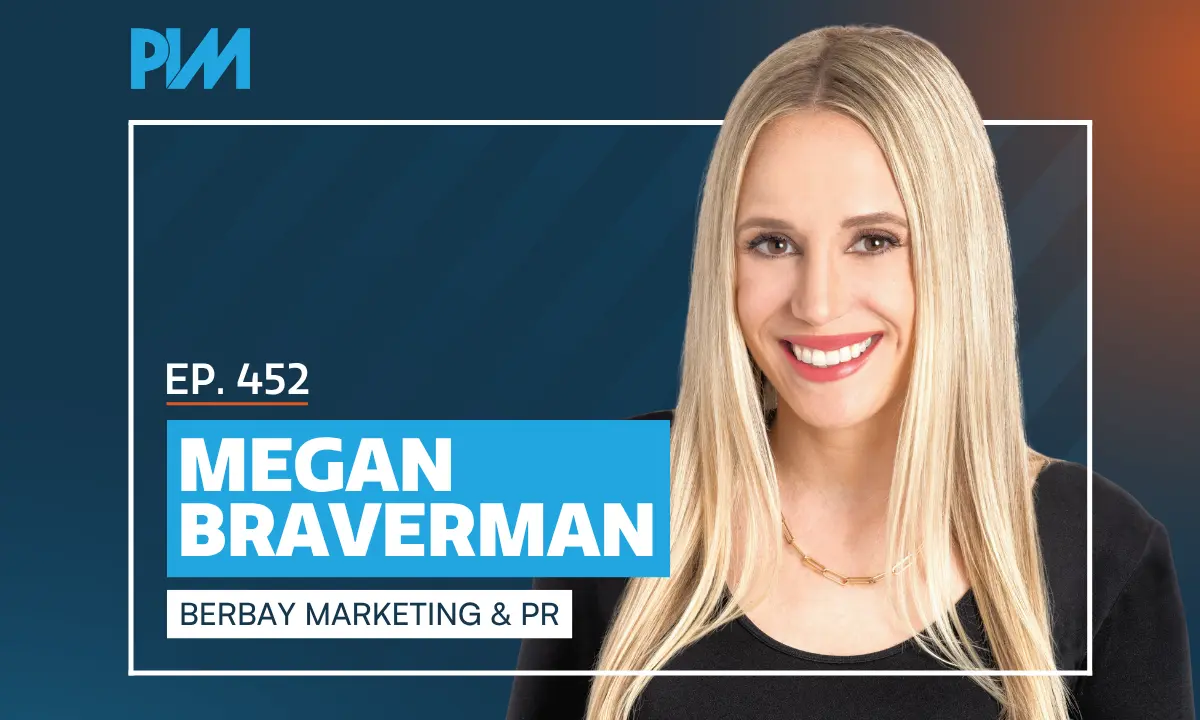
Megan Braverman:
Nothing is off the record. If you don't want it in print the next day, don't say it.
Chris Dreyer:
You might be a killer in the courtroom, but the media is a completely different battlefield. One slip up, one long-winded answer, and your firm is suddenly making headlines for all the wrong reasons.
Megan Braverman:
I don't think all PR is good PR. I don't. I think there's a lot of bad PR. The best crisis or the best bad care is something you prepare before it happens.
Chris Dreyer:
Your firm's reputation takes decades to build, but it only takes one bad interview to destroy. You pour time, money, and sweat and to grow in your firm, but if your PR strategy is just blasting press releases into the void, you're leaving money on the table.
Megan Braverman:
People, a lot of law firms' version of PR was submitting their press release to the Newswire. That is not earned media. It doesn't get you earned media.
Chris Dreyer:
So how do you get that kind of PR that's going to help generate earned media and get you cases? Stay tuned to find out. This is Personal Injury Mastermind. I'm Chris Dreyer, founder and CEO of Rankings.io, the elite performance marketing agency for personal injury law firms. Today, I'm joined by Megan Braverman, principal at Berbay Marketing and PR. With nearly two decades in legal marketing, she knows exactly how to get your firm top tier press and protect your reputation. In this episode, we're plugging intake leaks that are costing you cases, then diving into the trenches of legal PR. Megan breaks down how to handle media crisis, avoid common interview traps, and how AI is rewriting the rules of firm discovery. Let's get into it. Hey guys, got another amazing guest. Megan Braverman, welcome to the show.
Megan Braverman:
Thank you so much, Chris. Happy to be here.
Chris Dreyer:
We have known each other so long, I feel like we're both the OGs of the legal marketing and the legal space.
Megan Braverman:
It feels that way, I know. I think we're approaching two decades at this point.
Chris Dreyer:
Yeah, and we've got a lot to touch on and catch up on. Let's talk about a recent client win. So what's something that's happening at the agency, something you're excited about?
Megan Braverman:
Sure, there's so many. With PR, I think it's a lot of instant gratification because we do so much of it. It's very rewarding to see our clients consistently in the media, whether it's as a thought leader or it's promoting cases. I think one amazing success that's maybe not PR-related is for a plaintiff trial law firm. We've built a very robust lead intake and pipeline program, so we've been really successful at generating leads. The firm is avid marketers, they've got a strong marketing mix and have touched on the entire PESO model, but each year we've seen this significant uptick across all sources. It's great. It's like, okay, great, your marketing's working.
So they were generating leads, but we really lacked visibility into what was converting and where opportunities were being lost. We helped implement multiple systems, not only for tracking, but for intake processes and the follow-up strategy. A lot of times I think firms forget about the entire client journey, not just intake. What is the start to finish process the client experiences? The result of these systems that we put in place was really just much stronger conversion, better visibility on the ROI, and just a more scalable program, a more scalable business development engine. A lot of firms focus only on getting more leads, and we focus on that and what happens when the lead comes in. That was a really great success to see.
Chris Dreyer:
This is off the cuff. Can we dig into that a little bit?
Megan Braverman:
Absolutely.
Chris Dreyer:
Did you listen to calls, set up a follow-up cadence? What were the things that you did that really made it come alive?
Megan Braverman:
Yeah, a couple of things. First is we had a proper lead program, like the actual system in place to track leads, make sure we had a lead scoring system, etc. But I think the real thing was the reporting. Pulling reports from that system was really eye-opening. That's when we saw things like, "Oh wow, the lag time on the attorney's desk of due diligence." Intake was doing a really good job, but there was a big issue at the attorney level. Obviously, due diligence on cases can take time, but that is where you can lose conversion. We had to generate a couple of varying reports to see where things were getting stuck and then we developed more robust systems.
But yes, that was absolutely listening to calls. There's a lot of AI tools that help you listen to calls, so those were really tremendous because when you're talking about five, 6,000 leads per year, listening to every call is impossible. Then making sure that the intake process was fully airtight. What happens when it gets to intake? Where does it go? What is the parameter that we're trying to achieve around after intake? So really putting in some foundational benchmarks that we were trying to meet was also helpful, but it's just the right tools, the right technology, and the right reporting.
Chris Dreyer:
Amazing. That's what it's all about, and then that consistency. The days of blindly chasing media hits for the sake of a vanity link are over. As AI reshapes how information is indexed and served, the entire strategy behind legal PR is being forced to evolve. Today, your PR strategy has to do more than just build awareness. It needs to signal undeniable authority to the AI models that now dominate the search landscape. To stay ahead, you have to stop focusing on sheer volume and start securing the high impact placements to prove you're the heavy hitter in your market. You mentioned during the pre-interview that you've got your finger on the pulse for shifting trends within the PR space. What's something that we don't see as much that we used to see in the past? What's shifting in legal PR?
Megan Braverman:
Yeah. Well, you can't go a day without mentioning AI. I think PR is having its moment, it's kind of the golden child this year and last year because it's influencing both people and AI. Earned media is now impacting what AI tools cite and recommend, not just Google rankings and your beat signals. A lot of times people felt like PR was just vanity, which was never true. It really does affect discoverability, it affects your authority. I think at the same time, PR specifically is just more competitive because newsrooms are shrinking, reporters are really overloaded. I think relationships and hyper relevant timely pitches are just the differentiator, not just blasting out generic stuff.
I also think that everything is interconnected now. A lot of firms do this well and others not. I just think that everything needs to tie to one another, your PR, your SEO, your social media, all your content. It propels one another and it just doesn't happen in silos anymore, so I think that's a big shift. I don't think that any tactics have necessarily disappeared, I think it's just what has been changed by AI. I'll give you another example. One example is the explosion of AI-generated content. That's raising the bar a little bit, making generic, surface level messaging easy to ignore. I think the firms that can really demonstrate real expertise and a clear point of view is going to be incredibly important because people can read through that really quickly.
Then the last thing I would say, and this is something that just instinctually with PR that I feel like is playing it safe, firms used to default to very polished neutral messaging, try not to say anything controversial. One thing I've always said about lawyers is that they're often afraid of giving a concrete opinion, it's kind of who they are. They're meant to look at both sides. I think that that's happening less now because you can't break through. Reporters and audiences are drawn to clear points of view, real perspective. If you sound like everybody else, you get ignored. I think becoming more human, more opinionated is what cuts through today.
Chris Dreyer:
I couldn't agree more. It's just everything looks so programmatic. I know that ChatGPT's tuned up the M dashes, but still there's certain phrases that it's like, "Okay, that's not something that you would normally say like that." So what you do is completely... A lot of times PR, people are like, "Oh, I submitted my press release to Newswire or Cision." It like it kind of just goes out in the ether. Explain to me the difference between what you do in terms of pitching journalists as opposed to just the syndication perspective.
Megan Braverman:
Yeah, this is one of the big misconceptions we get a lot, is that a lot of law firms' version of PR is submitting their press release to the Newswire. That is not earned media, it doesn't get you earned media. In fact, anyone who's using the Newswire, I really strongly encourage you to try to find your news online. Even if we submit a press release and we're going to look for the results, we can't find it unless we're typing in such a specific long-tail keyword. It's really hard to even find it. So the Newswire does have a place in this world. I think it's really helpful for SEO purposes, as you mentioned, syndication. It can get syndicated, which gives you quality backlinks, and that is great for SEO. If you're an SEO agency, they love the Newswire.
For us, what we're doing is very different. We're obviously writing a story, a press release, whatever format it's going in, but we are curating the actual people that we're pitching to and the outlets, Joe Schmo at this outlet and Jane Doe at this outlet, and we are pitching them because they are writing on this very subject. We understand their beats, their audience, and we're pitching them the story for them to write and feature in editorial coverage, which is very searchable online and you can find it. Sometimes our earned media can result in five, six, seven, 10 editorial stories and those can get syndicated. Sometimes, for example, when we're pitching, let's say local or regional press, that placement will publish and then get syndicated on Yahoo Finance or other places. The syndication can still happen, depending on who you're pitching, but there are two very different things. Just to be clear, Newswires is not PR. It's not earned media.
Chris Dreyer:
Yeah, thank you for that explanation. We love the earned media because a lot of times we get those juicy backlinks that you just can't get normally. It's relationship-based, they're typically higher authority. So let's talk about where Berbay Marketing and PR fits into this. You're, let's say a litigation firm, and you pick up a nice commercial case, a nice case. When do you start the engagement? Give me a hypothetical example of how this would work. They pick up a good case and how do they maximize that case with your services?
Megan Braverman:
Yeah. For plaintiff law firms, we will work from the inception to the very end of the case. As you know, these tales can be sometimes two years or if not more. If they get a good case, the first immediate thing that we like to do is see if we have the ability to announce a lawsuit filing. The day that you file a lawsuit is the day that we disseminate a press release announcing it. That timing is really critical. That would be the first piece. Now, not everything can be announced, whether it be due to some confidentiality issues or maybe due to client sensitivity, maybe the client doesn't want it out there. But typically, if those things are not coming into play, we're able to get a huge splash at the lawsuit filing, and that generates awareness and recognition of the problems at play. It can really shape public perception. This is, I call it the court of public opinion, so that can influence a lot of things and even sometimes settlement dynamic. The lawsuit find is the big step one.
Now, throughout the case you try to leverage various case milestones. Let's say during discovery, there's some really damning evidence that we might be able to leverage, or if we approach trial, we're going to want to tout that as well. Sometimes we invite media to attend the trial, if we can get approval from the court and the judge. So really, throughout the entire life of a case, we're going to be finding the milestones to leverage. Then of course at the end, there's a victory, a settlement, a verdict, we're going to announce that as well. We've had multiple examples, whether it's like a two-year case, we had one that was a six-year case, and if you look back at all the press that we got over 6 years, now that was a really long one, I mean, we were approaching 50, 70 placements just on this one case. We can get some really big traction with promoting cases.
Chris Dreyer:
Yeah, and I think that's one of the things, we work with 200 plus PI firms, and they really miss out on. They'll have these big massive cases and it's like they don't tell anybody. It goes up on the website, that's about it.
Megan Braverman:
We get calls all the time where it's like two or three weeks later and they're like, "I just got this great verdict or great settlement." I hate doing it, but I have to turn those people down all the time because sometimes lawyers don't think about PR or the marketing piece until it's too late. I think that's a big thing that's changed with media, is even a day old is old to most outlets. They want to know the day that it happens, otherwise it's a bit of an uphill battle. One of the tips that I always try to tell people, especially who call me, I'm like, "Please call me earlier next time." Think about this as you're approaching a potential victory. Think about that as you're approaching a potential lawsuit filing. You have to have marketing in your back pocket.
Chris Dreyer:
I couldn't agree more. There's so many opportunities to make an impact. Now, like you said, the LLMs are discovering this information. They use it for discovery. Talk to me about the media training, thought leadership. It's one thing to be a great order in the courtroom, it's another to be a great order to the media. How do you prepare attorneys for effective media interaction and guide them on their communication techniques?
Megan Braverman:
Yeah, so this is a big piece, obviously. I mean, we work with a lot of trial lawyers, so they certainly understand how to speak with people, especially those that are not lawyers. We have everything from basic media training all the way to comprehensive media training, depending on who we're working with. But generally, I think media training is beneficial for everyone, no matter how savvy they believe they are. I think the couple of things that happen that I see, kind of the mistakes, one is speaking too legally instead of plainly. That's a big one. Again, I just said a lot of trial lawyers know how to do this because they're speaking to jury members oftentimes, but sometimes with the media, they forget that this reporter, while they might be a legal reporter, they're not a lawyer. They may have been a legal reporter for six months, they may be covering legal healthcare and the arts. We always try to make sure that we get them to practice their communication points and saying it plainly that people can understand.
The other thing that this is a big one, probably more than speaking plainly ,is they talk too much. I think it's harder to be succinct than it is to be long-winded, and so sometimes they try to say too much instead of landing on one or two memorable points. Because people forget that when you're on, let's say you have a 30-minute interview, that placement is going to translate into, let's say, a few quotes. So much is on the chopping block. It's honing in on what are the three things you want people to understand and walk away with this? That's a big one. Then the other thing I would say is it makes people a little bit nervous, so sometimes when we're listening to the interviews, they talk too fast. I always say, "Slow down." A lot of times the reporters are taking notes, and so this is where misquotes happen. Also, nothing is off the record ever. If you don't want it in print the next day, don't say it.
Chris Dreyer:
That's fair. I heard Jordan Belfort say something, I don't remember if it was in his book or something else, "All attention is good attention." Do you subscribe to that? Your thoughts on that? If they hit you from a negative angle, what's the counter positioning? How do you handle those?
Megan Braverman:
Yeah, I don't think all PR is good PR. I don't. I think there's a lot of bad PR. I do think that people have short memories, so sometimes when the bad PR hits, it doesn't live so long. The other thing is the best crisis or the best bad care is something you prepare before it happens. If you're getting a lot of great PR and you're in the media a lot, and then you get a bad quote or a bad article, all the good stuff is going to likely drown it out. But on the other hand, if you're not doing anything and you get that bad article, well, sometimes that's the only thing that shows up online. There's definitely versions... I don't think all is good.
It's interesting because I think most lawyers feel that way too, and I think, kind of what I said before about being shy about being too opinionated with media, because they're afraid that they might be misquoted or they might be quoted saying something that in five years down the road, people are going to look back at it and say, "Oh, well, Chris said this and this and he was wrong." Nobody does that. I always cut it with a grain of salt, but no, I don't buy subscribe to all PR is good PR.
Chris Dreyer:
Look, it's one thing to weather a crisis, but it's another to command the narrative. If your internal house isn't in order, that earned media is just a vanity metric. But once your systems are locked in, you have to play the game on Google's terms. Everything in search is shifting towards EEAT: Experience, expertise, authoritativeness, and trustworthiness. Getting your firm featured in authoritative outlets isn't just about the clout, it's about proving to the AI models that you are the primary authority in your market. Let's talk to selecting, the process to determine, "Hey, what could be some stories?" A big case is one thing, but maybe they don't have a big case. Are there approaches, like a team member joins if they've got a lot of clout? I don't know. What do you look for?
Megan Braverman:
Yeah. There's a lot that's not newsworthy, especially with cases. I mean, obviously the high impact, high dollar amount, or just general issues at play can make cases interesting. There's a lot that's not. The run-of-the-mill cases, let's say it's a car accident or a slip and fall or something and they get a really nice victory, two, three, four million, it might not even be enough to get any attention on it. There's a lot that we don't publicize because we can't find the unique angle. I mean, what media's looking for, they're looking for trends, they're looking for forecasts, they're looking for things that impact their audience. Sometimes a two million settlement on a car accident, it doesn't touch on any of those things.
Now, on the other hand, we can take some of the issues at play with, let's say, a less than noteworthy case, but some of the issues at play were interesting enough, and so we can, instead of pitching it all about the case, we pitch it as a trend or a forecast piece positioning the lawyer as a thought leader. If we were to wait around waiting for all of our clients to file great lawsuits and get great victories, we wouldn't be doing a whole lot. Some law firms would be very busy, others not. I would say 75% of our work is the thought leadership positioning and picking their brain and looking around their desk and cherry-picking the things that they might not deem as interesting, but it's a great story idea for media.
The other thing too is you can have the most newsworthy story and it's poor timing. I can give you some big examples like elections, wars. Those things are going to take over the headlines and your story idea at that moment might not get any attention, even if it's a good one. One thing is we had this really, really big story that was happening and we got these great broadcast interviews. Then I'm not kidding, about an hour later there was a farm nearby and a bunch of cows got out and they got on the freeway and they pushed the whole thing. It could be big stuff like elections and it could be things like cows getting on the freeway. The timing is really important and that's something you can't control. You can control it to a certain extent, like don't pitch something on Memorial Day, stay away from elections. If there's something big going on, maybe wait. You can control it to a certain extent, but you can't ever predict cows getting on the freeway.
Chris Dreyer:
Oh my gosh.
Megan Braverman:
That's just one of many examples.
Chris Dreyer:
Immediately, I wonder if our audience thought of this, immediately popped in my brain Anchorman and the panda story.
Megan Braverman:
Yeah, and our client was like, "Am I really getting bumped because of cows?" I was like, "Yes, that's what's happening." We were able to get it on a later show, thankfully, but it can be really disappointing. I mean, there's just no guarantee. Even if you have the interview, there's just no guarantee in if they're going to publish it, how long, how much airtime, how long the actual article will be, how much you'll be included in it. There's just a lot of variables.
Chris Dreyer:
This is incredible. Then give me the 80/20 on Berbay Marketing and PR. I know we really drilled on PR, but you mentioned early on the intake and lead gen systems. Talk to me about Berbay and what you guys do.
Megan Braverman:
Sure. We are, I mean, simply a strategic asset for law firms. We often serve as law firms' outsource marketing department. Really, we come in and we help law firms increase their visibility and generate more cases. This could be via earned media, it could be via earned speaking opportunities, nominations, your social media, your SEO, and paid programs and much more. Each law firm is different. They have different business objectives, they have different marketing objectives. There are some times where we're serving as firms' PR arm and other times we're serving as their outsource marketing department. I mean, really what we do is we want to partner with firms who are serious about their marketing and that we become their strategic partners that move the needle with making their marketing work for them or meeting their business objectives.
Chris Dreyer:
Incredible. Love it. Megan, this has been fantastic. For our audience listening that wants to connect with you, maybe ask questions about the pod, maybe they're interested in your services, what's the best way to connect with you?
Megan Braverman:
Sure. Berbay.com is our website, we have all of our contact information on there. We write monthly blogs on legal marketing. I will talk to anyone. I always say this, even if we're not a fit for you, I have a lot of great resources. People can call me or email me directly and I'd be happy to have a conversation.
Chris Dreyer:
Amazing. Megan, thanks for coming on the show.
Megan Braverman:
Thank you, Chris. Really appreciate it.
Chris Dreyer:
A huge thank you to Megan Braverman for stripping away the fluff and showing us what real earned media looks like today. If you're still blasting press releases into the void, you're just paying for digital clutter. Real authority is about having a point of view and being hyper relevant. Your goal is to train the AI algorithms to recognize you as the authority in your market. Stop playing it safe. If you aren't actively shaping your own narrative, the market is going to write it for you. If you're looking to dominate the search landscape and make sure your firm's brand matches the results you're delivering in the courtroom, head on over to Rankings.io. I'm Chris Dreyer and I'll catch you on the next one.