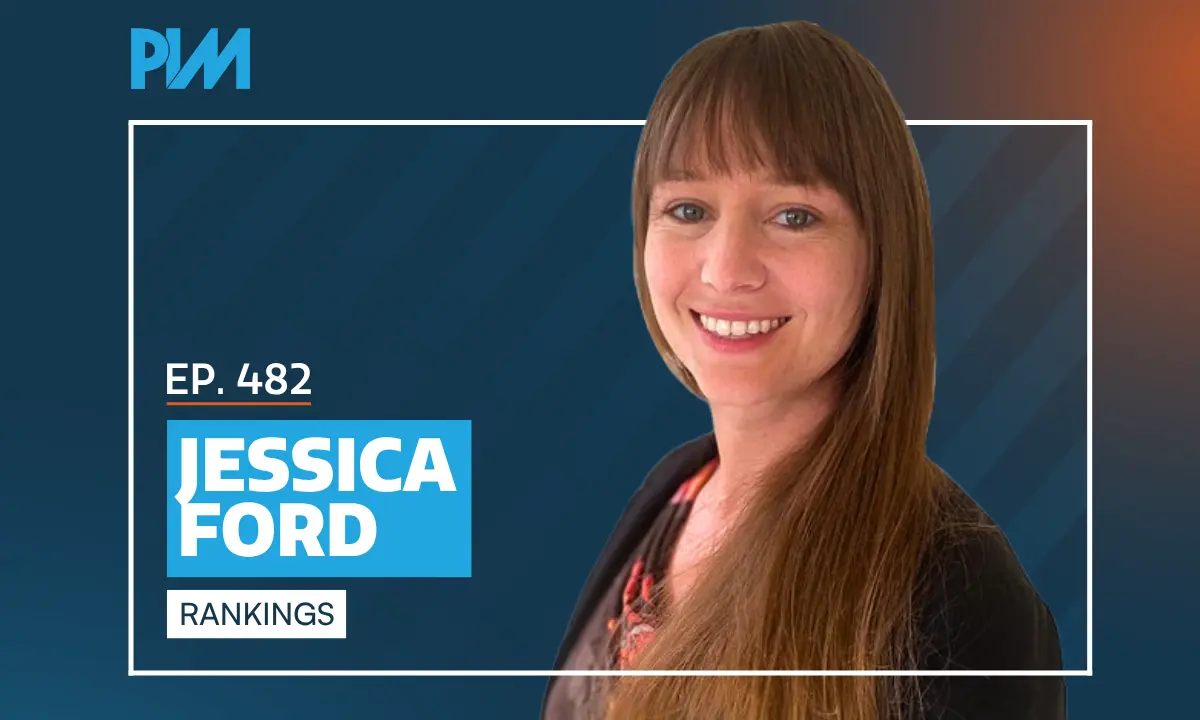
Chris Dreyer:
It's not often that a whole new space for marketing opens up overnight.
Jessica Ford:
It reminds me of LSAs when they first got released to legal and when they first showed up. So absolute wild west, very few rules.
Chris Dreyer:
But right now we're witnessing a fundamental shift in how consumers search. For firms willing to get in early, the opportunity on AI search platforms is wide open.
Jessica Ford:
I think at the best I've seen around a thousand cost per case.
Chris Dreyer:
The potential for a thousand dollar case acquisition on paid search sounds like a fever dream from 10 years ago, but here at Rankings, we've seen $1,000 cost per case with our own eyes. Months before OpenAI officially updated their policy to allow legal advertising, our team at Rankings got early beta access to test ChatGPT Ads on the ground level. Now we're bringing those real world insights and performance numbers directly to you. This is Personal Injury Mastermind. I'm Chris Dreyer, founder and CEO of Rankings.io, a legal marketing agency for elite law firms specializing in personal injury.
Today, our director of paid ads at Rankings, Jessica Ford, drops by to unpack the state of play for AI advertising. We cover ChatGPT ad policies, targeting and bidding strategies, unlocking five plus percent conversion rates with educational landing pages, why Google's AI Max is struggling with PI and where to allocate your budget instead. Let's get into it. Hey guys, I'm so excited. I have Jess Ford. Jessica Ford, welcome to the show.
Jessica Ford:
Thank you. Good to be here.
Chris Dreyer:
Before we start talking about all things ChatGPT Ads, tell me a little bit about you. Give me the paid ad experience. Who are you? Let's inform the listeners here.
Jessica Ford:
Awesome. Thank you. I'm the director of paid ads here at Rankings. I started doing digital marketing way back in 2011 and I've been advertising since about 2015.
Chris Dreyer:
Yeah. And you've managed huge budgets, very attuned to Facebook ads, Google Ads, LSA, Programmatic. Expand with me just a little bit about some of the disciplines and some of the things that you've worked on.
Jessica Ford:
So I think I specialize in search advertising, so primarily Google Ads and Bing ads on search results, that includes LSA. I also have a large background in LinkedIn advertising, Facebook advertising. Programmatic is a little bit more recent for me. I've only been doing that for a few years now. That is honestly one of my favorites. There's so much flexibility, especially for law firms there.
Chris Dreyer:
And today we're talking about ChatGPT Ads. I know yesterday there were a lot of people that were announcing, "Oh, it's available to legal yesterday," but we've been in a beta program that we told all of our clients, hopefully that was communicated well, that we're in a beta program. So what has changed between where we had the early in versus yesterday?
Jessica Ford:
So ChatGPT Ads first started to release any advertising at all in the United States back in February. They were pretty firm, like absolutely nothing sensitive category, no legal, no finance, nothing like that. In June, I attended a closed webinar with a member of OpenAI and he said, this was verbal, "We are starting to pilot test legal. It is still technically not allowed. We are testing it on a case by case basis. Rolling out slowly."
So right away I let you all know like, "Hey, let's give it a go. Worst case they say no."
So we started testing this in late June, early July. Now yesterday or pretty much yesterday, last week, OpenAI finally updated their policy saying now in their policy, "Legal is allowed on a case by case basis."
Chris Dreyer:
Yeah. And then yesterday that was 9:01, September 1st, 2026. So we had about a three-month period. It's kind of like the wild wild west. There was not a lot of things that you could control. So talk to me about the early challenges and some of the early ons, like what you've seen.
Jessica Ford:
It reminds me of LSAs when they first got released to legal and when they first showed up. So absolute wild west, very few rules, everything is about testing, just testing like crazy. The platform itself is very bare bones, not a lot of reporting available. The platform itself is in beta, so it does crash often or features become unavailable. So our job is to work with the system as best we can and almost crowdsource it together. My entire team, everyone who runs any ad at all at rankings is involved in this project and we chat about it daily.
Chris Dreyer:
Let's go into detail here. Let's go start to finish. First, I would say, how is ChatGPT Ads different than say a Google search ad in the placement, the cost per click? Let's go through the details of this on a really granular level.
Jessica Ford:
ChatGPT Ads are, they only show up for Free and Go ChatGPT accounts and searches. They are contextual based, not keyword based. So that does make them different from Google PPC. They show up at the bottom of a search, of a conversation I should say, with ChatGPT. Right now there's two ads per search if they do show up. ChatGPT often won't show ads every single time. And they show up at the bottom very clearly labeled as ads. They look very different from the rest of the conversation. It uses contextual targeting. So again, it's using what you're talking about, looking for those signals and matching them to the advertiser's ad, contextual hints if that's available, and the landing page.
Chris Dreyer:
I have seen these. I got a paid subscription, but I played around with the free version. What's the click-through rates? They got to be abysmal just because of where they're placed. And I know, but is it a pay-per-click scenario or is it pay per impression? Have they changed the billing? Talk to me about the billing structure.
Jessica Ford:
So there's actually flexibility with the billing structure. I recommend a max clicks strategy, but there is a CPM strategy as well, kind of like YouTube Ads. I recommend starting with the clicks bid strategy. Cost per click is all over the place for law. We've seen it vary between $3 and $64, sometimes in the same account in the span of only a week. So major warning, it is all over the place. Click-through rate is abysmal. It's between 0.1 and 0.5%. We don't quite have a benchmark on that yet.
Chris Dreyer:
So for Google Ads, there's a lot of intent. If you bid for car accident lawyer, it's chances are the consumer's injured, looking for a car accident lawyer. The placements, how does it decide? Are you going to see an ad if somebody's like, "What is a personal injury lawyer?" Or, "What's a contingency fee?" How close to the intent? What style of ad is this?
Jessica Ford:
We actually don't know, unfortunately. So ChatGPT doesn't offer any reporting on context hints or any other conversation like that. So we're really doing our best to match it. Now we'll do live testing as well. So you have us with free accounts over here trying to see what we can get to fire, try to see if we can find a pattern. It appears so far it is reaching people when they don't even know if they have a case. So it often isn't detailed, "I need a lawyer right now." A lot of it appears to be, "Somebody just hit me with a car, should I call a lawyer?" That kind of a conversation.
Chris Dreyer:
That's better. Let's talk about, before we talk about the results and what we're seeing, I'll kind of string the listeners along here. Let's talk about what can we actually control? In the beginning with Local Services Ads, it's like, here's your budget, here's your region, pick the categories and good luck. What can we actually control inside the platform to try to optimize this channel?
Jessica Ford:
So we have very few levers just like Local Service Ads. You have your landing page, which is actually really important. You have a very short headline and a very short description. Headline is up to 50 characters right now, description up to a hundred characters right now. What we recommend is a lot of testing. So test multiple landing pages, test at least four ads per ad group in ChatGPT to see what we can do, what levers we can pull. The more granular you are with your setup and with your testing, the more you can trust the results that you're seeing. So I do not recommend anything really generic. The more granular, the better. So instead of PI law firm, we're actually going like, "Are you looking for a car accident lawyer in Denver?" Very, very clear. So we can just kind of bridge those gaps with the lack of reporting too, with some guessing, of course.
Chris Dreyer:
Yeah, that makes a ton of sense. What have you seen in regards to deployment of capital in terms of, I'll keep comparing this to Local Services Ads because it's one of the newer platforms?
Jessica Ford:
It's a good comparison.
Chris Dreyer:
In Local Services Ads, you could set a max budget of 20K and it would spend a thousand, right? If you set a budget on ChatGPT Ads, is it going to deploy it or is it going to take some time? What are you seeing with the spends and the capital distribution?
Jessica Ford:
Oh, that's a good question. Our biggest challenge, and we finally figured out how to solve most of this, is getting the ads to run. That is usually the reason why they underspend. So we do struggle still to make them spend until we can get the ads to run consistently. We're still seeing probably 80% of our ads get flagged at one time or another post-launch. We recently, just in the last couple of weeks, got some tricks to stop that from happening. Now we're actually spending and you can actually spend quite a bit on ChatGPT.
Chris Dreyer:
So let's talk about, so we need to define quite a bit because first of all, for me, quite a bit for Google Ads, it's not 100K a month. That is probably what most major markets, the minimum spend, I know that's troubling to hear, but to get the correct economies, to get the correct metrics. So let's define the spend. And then also, is it similar to Google Ads, like you say the word injured or you say certain trigger words that you just can't say sometimes? I think injury actually was one that triggered issues. Were there certain phrases that you just can't say that creates a violation?
Jessica Ford:
Yeah, absolutely. So I would start with the budget. We're starting to see 5K, 10K a week spend in major metros for personal injury and MBA. Up to that point, we still have some others that are struggling to spend. So a lot of this is a big, it depends. I think region matters. We're looking into patterns with that where I think it's rolling out some regions more aggressively than others for advertising. They are not saying anything about this. This is just patterns that we're picking up.
Chris Dreyer:
Can we touch about that and then we'll touch on issues?
Jessica Ford:
Yeah.
Chris Dreyer:
So what about Yelp ads is constrained to a 20-mile radius. Google Ads have different, you can set zip code, you can do DMA, county. What are the parameters? Can you do all state? Can you say, "Hey, I want the entire state of Illinois?"
Jessica Ford:
Yes, you can. So you can go country, state, DMA, and zip code. One thing it can't do that Google Ads can is it can't target an actual city and the city limit. So if I wanted to target just Atlanta with ChatGPT, I could target the entire metro, not just Atlanta. To do that, I would have to do zip code targeting.
Chris Dreyer:
Got it, got it. Then let's go flip back to what causes some of these suspensions on the keywords or the issues with the landing pages.
Jessica Ford:
The trigger, the error that we get when these ads go down is a policy violation for legal advertising. There's a couple of things that it uses to fire, and we've confirmed this with ChatGPT Ads support. The landing page and the language on the landing page matters. If it comes across as very pushy, very salesy with anything that has car accidents in the photos or in the headlines, trying to appeal to your emotions, it will flag it. If it isn't educational enough, and it's clearly just like an ad landing page, those tend to get flagged as well. So you actually want something where it's more educational, more helpful to the consumer to help teach them what they need to know. ChatGPT Ads loves that.
Chris Dreyer:
So FAQs, more prevalent FAQs, things like that?
Jessica Ford:
FAQs. Yep. We have one who did really well with an ebook, free ebook download. If you've just been in a car accident, I'll walk you through it. That ran really well for us. Even blog posts, honestly, they are very cheap. They seem to do really well as well.
Chris Dreyer:
Let's talk about opt-ins. For an ebook, what can you expect in terms of an opt-in?
Jessica Ford:
We're seeing lead conversion rates 5% or more, especially for a simple opt-in.
Chris Dreyer:
Navigating compliance on a brand new ad network is always a minefield. OpenAI's algorithm treats aggressive hard sell legal landing pages like poison, flagging injury sales copy almost instantly. But when you pivot to educational assets like downloadable guides, FAQs, or high value blog posts, you unlock lead conversion rates north of 5% at a fraction of standard PPC costs. Once you crack the compliance code and get campaign spinning consistently, the focus shifts straight over to tracking attribution and measuring ROI. What type of reporting do we get back? Do we get detailed reporting? Is it thin in order to make adjustments? Talk to me about how they report.
Jessica Ford:
Reporting is pretty thin. So they have a typical reporting dashboard that is very your impressions, your clicks, your click-through rate, cost per click. We can set up pretty decent conversion tracking with it though, which is good. So we have an API available and also a standard pixel, very similar to Meta. And so we can track form fills, we can actually integrate directly with CallRail, which is fantastic. And then from there to actually get those closed cases, that is where we're having some trouble, although we are getting reports on CRMs that we are closing cases from ChatGPT Ads.
Chris Dreyer:
Yeah. So let's talk about that. Of the small sample size that we have, what's the CAC, the cost to acquire a client? What are those coming in at? And first of all, I hate that without a ton of data because it's dependent upon their sales and how good they close, but what are we seeing some of these conversions? Are they blowing eight, 10,000 a case? Are we actually getting some good metrics?
Jessica Ford:
Yeah, I think at the best I've seen around a thousand cost per case. I don't know how long that's going to last with the cost per click being what it is right now. I am seeing at worst, I kid you not, it was $16,000. So the range is all over the place right now.
Chris Dreyer:
And I guess it's based upon who's in the market because it's going to be auction based, it's going to be based upon competition. So I just encourage those listening to reach out because you want to get early in just like Local Services Ads. And also we have more data we've been in again since beta testing program since June. So I would say that. By the way, you just gave every person listening catnip for $1,000 a case, but for that $1,000 a case, is that auto or is that some obscure practice area?
Jessica Ford:
That was actually for auto. And on the high end, unfortunately, was also for auto. Although in the case on the high end, I think there was some attribution going on because I didn't entirely trust it.
Chris Dreyer:
That's fair. What parameters for the types of cases, how do you even gauge? Is there categories? Is there certain prompts that you give it that you want to be located in? What about the targeting? How does that function?
Jessica Ford:
I'm going to kind of spill the secret sauce a little bit here because this is really important to keep your ads live. There is something called contextual targeting that is as close to keyword targeting as you can get with ChatGPT Ads. Contextual targeting is the number one trigger for getting your ads disapproved. We recommend removing it. So you can in theory give it, "Hey, people who are just in a car accident, people looking for a lawyer after an accident, MBA lawyer" and actually give it those keywords, it will flag your ads nine out of 10 times and shut them down and won't let them run. But if you remove it it will let them run. Context targeting is like a hint. It's similar to Performance Max's search signals if you're familiar with that. It's not necessary. We will remove it if it flags the ads. It's the fastest way to keep them running.
Chris Dreyer:
Ooh, that's juicy. That's a good one. Okay, so give me a final summary of ChatGPT Ads and then I'm going to jump over to Gemini next.
Jessica Ford:
Awesome. So ChatGPT Ads, very similar to early LSA, that's how I would approach it. Very test focused. Make sure you have that pixel and your conversion tracking set up. Go very granular, and I think it is absolutely worth a go, especially right now when it's so affordable.
Chris Dreyer:
Okay. If I'm a PI attorney listening, I'm doing it. I don't know why you would wait. Why did you wait on Local Service Ads? Look, I don't know how to express it. The cost of case is going crazy, and if you can be one of those at sub three, I mean, why not? Okay, that's the hard pitch if you're going to get a hard pitch from me. Most of the time I'm not like that, but geez, I would do it. I would jump on it. Okay, next. So Google's Gemini runs AI style ad placements too. Talk to me about the AI style Gemini ads and that emerging and what's changing there.
Jessica Ford:
I'm actually more frustrated with Gemini ads than I am with ChatGPT Ads right now, which hurts me to say because Gemini ads inside the Google Ads platform, you think it would be so much more robust. So Gemini ads, if you want your ads to show on AI overview in Google search results or Gemini itself, you need to turn on AI Max and search. That's the most important thing. AI Max is the only way right now to show there. So Performance Max doesn't show there, standard search doesn't show there. You have to enable AI Max. The good news, AI Max has better reporting than ChatGPT does, so we can at least see some, probably about 30% is about what it shows us, search themes in AI Max, and it will tell you which of those search themes came from AI Max itself instead of your keywords.
The bad news, AI Max is having a very hard time understanding PI, very hard time right now. It tends to pull searches for tow truck, like searches for tow truck. It tends to pull a lot of courthouse addresses and it is all over the place with the languages for some reason. It really doesn't care if you want to focus on English or on Spanish or just those two languages. It will be a little bit all over the place and it tends to pull a lot of generic lawyer, paralegal, that kind of thing. It can work, but it can be pretty frustrating. I treat it as a test.
Chris Dreyer:
Okay. So what I'm hearing is I would prioritize ChatGPT Ads over Gemini ads, and certainly there's other Demand Gen and PMax, YouTube ads probably and a number of different campaigns taking priority over Gemini. I would say I'd put that lower on the totem pole, at least right now. There might be some exceptions, but yeah, that's what we're seeing. So Jess, this has been amazing. Guys, I would get on it. Look, you've probably heard me, 400 and something plus episodes. I've never been this pushy, but let's see here. Contact chris@rankings.io if you want to help us set you up with ChatGPT Ads and just put something in a title like ChatGPT or something just to get my attention. I'm an inbox zero guy, so if you do contact us, I'll get back to you right away. Thanks, Jess. Thanks a lot.
Jessica Ford:
Thank you.
Chris Dreyer:
The digital search landscape is shifting fast under our feet. Early adopters who jumped on the Local Services Ads years ago built competitive moats that still protect their market share today. ChatGPT Ads present that exact same first mover advantage right now. If you want to achieve a thousand dollar case cost before the rest of the market catches up and drives up the bids, you have to test aggressively, lean into educational assets, and optimize for compliance. If you're ready to stop waiting on the sidelines and want to dominate the new frontier of AI search advertising with campaigns built for excellence, head on over to Rankings.io or email me directly at chris@rankings.io with ChatGPT in the subject line. We will help you set up your AI ad strategy so your firm claims its stake early. I'm Chris Dreyer. Thanks for listening to Personal Injury Mastermind. See you next time.