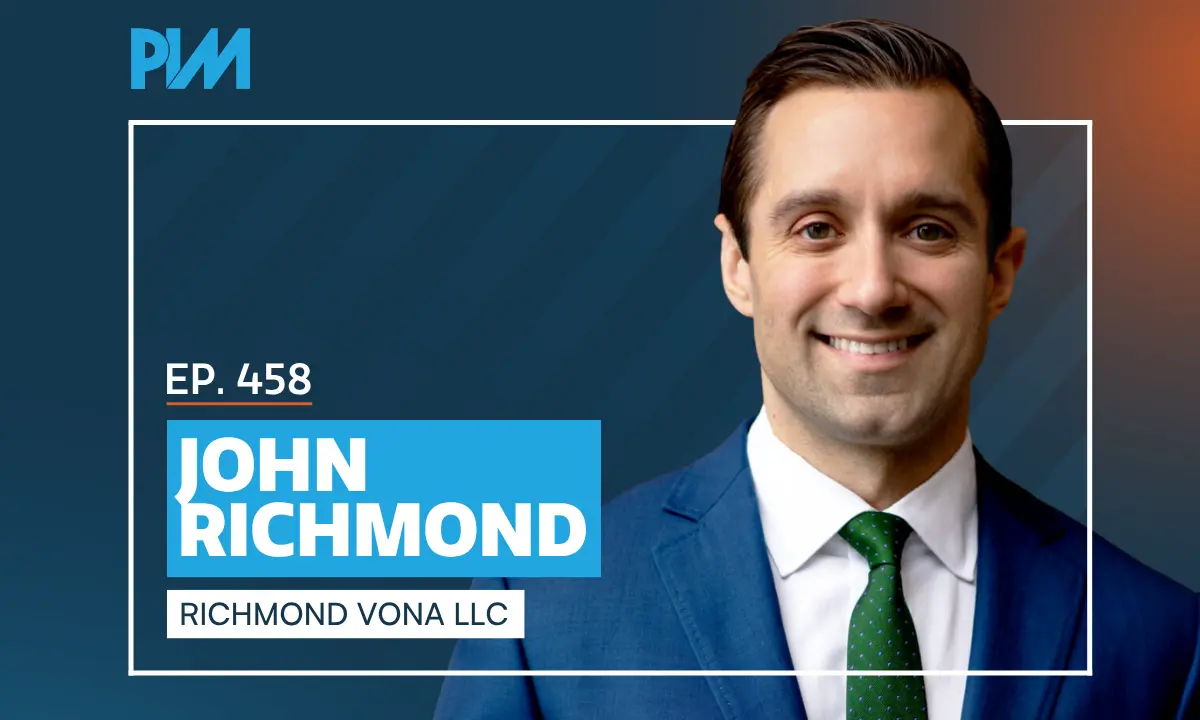
John Richmond:
This is a high performance culture. I mean, this is a law firm where litigators, high stakes, big money, serious injuries, one shot at this, right? You got to take that super seriously.
Chris Dreyer:
If you want to build an elite personal injury firm, you can't just operate like everyone else. You need to stop competing where you're outgunned and start leaning into what makes you authentic. Today we're breaking down how to treat your firm like a championship sports team from firing fast and eliminating toxic behavior to a unique strategy that can turn a standard limits case into a massive multimillion dollar settlement. This is Personal Injury Mastermind. I'm Chris Dreyer, founder and CEO of Rankings.io, the elite performance marketing agency for personal injury law firms. My guest today is John Richmond, co-founder and CEO of Richmond Vona, a leading personal injury firm in Buffalo, New York. John and his team have been on an absolute tear lately. In 2024, Richmond Vona hit the Inc. 5,000 list of fastest growing private companies and the best workplaces list. They also took home the 2023 Crisp Game Changer Award for excellence in firm culture.
We're getting into exactly how they built the award-winning environment and the marketing strategies that drive their massive growth. To kick things off, John shared his thoughts on how a newer firm could possibly compete against legacy brands with massive marketing budgets. Let's get into it.
John Richmond:
I was talking to somebody else about this pretty recently and I wish I would've honestly understood this earlier. So the analogy I used was, especially as a challenger brand, you're going up against legacy brands who at the moment have more marketing dollars than you do. And really one thing that you don't understand as an early on challenger is the importance or the value of brand equity and how long it takes to really build that brand that is top of mind awareness when somebody gets injured. So the mistake you make early on is just trying to compete in the same mediums, even though you're just getting annihilated when it comes to marketing dollar spend. So for us, again, going back to the analogy that I was hinting at is like, hey, if I was unfortunately for some crazy reason going to get in a fight with Mike Tyson in a ring, I'm not going to the center of the ring and throwing haymakers.
I'm trying to run around and be creative and try to just not die another way, even though I'm actually trying to win. So for us, we realized like, hey, we need some really high end marketing people internally. We need to be super creative. We need to really find and very carefully vet the appropriate partners, whether that's in the creative writing department, SEO, paid ads, whatever it is. And we really need to focus on creative and say, hey, what's authentic to us? Who are we? We shouldn't be saying the same things as everybody else. We shouldn't be doing the same thing as everybody else because the reason we started the firm is to change the way people think about personal injury lawyers. People get it. Okay. Yeah, you hire us for money and everyone's going to say they're going to fight for you and they're going to treat you like family.
Let's just be authentic to who we are. We love the community. We love Buffalo, New York. We love Western New York, and let's show people who we are. We like to have fun. We're creative, but we're serious people. So let's let it come through in everything that we do and make sure that everything comes back to what we call our north star and we don't kind of deviate from that.
Chris Dreyer:
That's fantastic. And maybe you could expound because during the research process, during the pre-interview, you shifted away from pure lead generation. What do you mean by pure lead generation? Does that mean your Walker Quintessa, that was filling the pipeline? And what did that transition look like when you started to be more authentic?
John Richmond:
No, it's a great question. So I mean, look, I think there's a place here and there for lead gen to maybe fill dockets or kind of supercharge parts of your firm at times. But I think, look, I mean, I know people look at this differently because some people are like, okay, well yeah, you get lead gen. And then if you have a really good client experience, now you're creating repeat customers and brand ambassadors based off that. And there's truth there, right? But for us, it's like, hey, we were spending this money to fill in the gaps on lead gen. And don't get me wrong, ROI was always decent. We always got way more back than what we paid for, but we're not getting any brand equity out of it. I mean, these lead gen companies, if you're even able to see the ads, they don't have your name on them.
They have nothing to do with you. Maybe your CAC is good, but whatever, you're not getting any brand equity out of it. So it's really trying to say, okay, you're always trying to monitor how much you're spending on leads and on cases, but where could that money go? Or let's just think about how important brand equity is, especially in this day and age with there's so many lead gen companies. You got private equity, you got big national firms and small markets that they weren't in before. I mean, brand equity is super valuable and it's huge. So really transitioning to saying like, hey, we're going to get cases from a lot of different places. We need to be extremely diversified and we need to monitor things closely, but we need to be spending more and more and more on our brand, on being authentic, on really kind of cementing ourselves in the community.
So when unfortunately something happens, they say, you know what? Those guys seem different. I like those guys. Let me give them a call.
Chris Dreyer:
I like every bit of that. And that is the brand equity's not there. Look, if you need cases and you need to fill the pipeline and get some work for your team, I think there's a place for it. Even at the CAC, of course you know the fall off rate's higher on the lead gen and you got to worry about their messaging and if their affiliates are following the guidelines and then you get these crazy cases, they're one year, I don't know what statute is in New York, but it's like two years. The accident happened two years earlier. It's like, can we shorten that to a year? And all those things. I want to dig in on the culture, the communication, the standards. Where does that start? Is it starting the hiring? Is it personality assessments? Where does it begin?
John Richmond:
Yeah. So it begins, I think, with your job posting. You have to be very careful about your posting, how it reads, what it looks like. It needs to be thorough. It needs to be exciting. It needs to be clear about what you're looking for. And it can't be like anybody else's. It's got to stand out. I think it's such a travesty. You see these firms, they're basically posting like need an attorney who's been practicing for five years and has a heartbeat. It's like, how inspiring is that? Who wants to work there? That sucks. So it starts there, but then having a really tight hiring funnel that you really stick to. So whether it's how many interviews you have, who's in those interviews, what kind of questions are asked, testing your core values. We give assessments to every type of person that we hire to see one, how much do they want it?
Can they meet deadlines? And do they produce the type of work that we expect in this role or at least understand what we're looking for? So it starts with this funnel, but I think you just got to be really, really honest about who you are, what your culture is, and do your best to really get that across to people. Because look, we've made a lot of mistakes in hiring. Because when we talk about culture, culture's such a buzzword. I'm not talking about some beanbag, high five, sit around lazy culture. I mean, this is a high performance culture. I mean, this is a law firm. We're litigators, high stakes, big money, serious injuries, one shot at this. You got to take that super seriously. We're a winning culture, a very collaborative and loyal and caring culture. We take care of our people, but you got to make sure people understand what type of environment they're walking into. This is what it is.
Now we think that we can make it better than other litigation firms in a variety of ways. But really you have no shot unless you get the best people. You need as many A players as possible. You need to pay for them. You need to get them in. An A player will outwork four C players or something like that. I mean, it's like dude, get them in, take care of them, surround them with other A players because they don't want to be around non-A players and just do your best to keep at it. You can't get discouraged.
If you lose some people as you continue to grow and it's not right for them, but you do need to say, "Hey, how do we make this better? How do we focus on getting the better people?" And I would just tell somebody, even like I said early on in the stages of your firm especially, look, I know it can be scary to pay a lot of money for somebody, but trust me, it's better to pay the money for the right person than to hire a couple of people who aren't going to be right and have to go through turnover and all that kind of stuff. I mean, just do it right the first time.
Chris Dreyer:
There's so much there and I have a ton of follow-up questions. Whenever I post a role in, let's say it has a certain comp band, but I get somebody that comes in double or significantly more and it's not a fast fill. It's like, okay, let's talk to this individual. Why do they think that... What's the reasoning? Maybe they're worth it. Oftentimes they are. And actually it's like, oh, let's flag this one because let's take it serious. You mentioned the values and having the values is incredibly important, but it's also getting people to follow them. So talk to me about your director of ops implementing these culture initiatives. Talk to me about any KPIs or things that you do to hold people to the values and the standards that you set.
John Richmond:
Yeah. So look, it starts at the top, but then you build leaders throughout the firm. So it spreads out and everyone's holding each other accountable. And our director of operations, Dawn, is amazing. And now she brought in a senior HR manager to really help us foster this culture. And it's not just like finding ways to help our team members better, to be better for them. It's about accountability. So it's constantly auditing your KPIs. So whether you're a case manager and one of your KPIs is the amount of time you have between when the medical records come in and the demand is drafted for review, or you're an attorney and it's your KPI for percentage of litigation or your marketing and it's another KPI, whatever it is, everyone's got them, everyone has goals, and we have to be accountable for them. And you have to hold these people to high standards.
And same with too, being professionals. We don't tolerate gossip. We don't tolerate any sort of toxic culture. I think we have a reputation for hiring slow and firing very fast. We have low tolerance for that because we're here to be professionals. We're here to help each other and collaborate and support one another. But look, we're in a serious business. We're here to win. We don't have time for that stuff. I mean, you spend most of your time at work. Who wants to be around that crap? We've all done it and we've all been kind of in places like that. It sucks. You don't want to go to work every day or you're keeping your head down to avoid this person. And it's like, we don't want that. So it's constantly finding ways to be more accountable, to get better. I mean, trust me, like anybody else, there's times where things slip and you're unacceptable. That can't happen because when there's everything on the line and people, clients have so many options, especially this day and age, we can't slip.
We're never going to be perfect, but we have to work to be excellent every day.
Chris Dreyer:
I'm not a football guy. Who's the Indiana coach? Is it Signati? Signati?
John Richmond:
Is he the current coach?
Chris Dreyer:
Yeah, he's the current coach. You're definitely giving those vibes. So I'm not a college football guy, but on TikTok I've saved and bookmarked a bunch of his statements. So I appreciate everything you're saying about standards, excellence, we're here to win and it pumps me up. I love hearing it.
John Richmond:
Well, and you know what I'll say is, and this is something that we're always trying to figure out and work on. So think about, and this is even a struggle sometimes with younger lawyers because it's kind of a different mentality this day and age sometimes. But regardless, I take a lot from playing hockey in college and you're in this locker room with all these guys and I'm like the worst guy on the team. I'm the backup goalie, but you're with all these guys who they made it there for a reason and they have these super high standards for themselves that were ingrained in them forever. So how do you make sure that the people you're bringing in actually understand what it means to be excellent every day? Actually understand like, hey, you can say all you want that you want to be the best trialer or you want to handle the biggest cases, you want to make all this money, but do you actually understand what the life of somebody in that role looks like?
Are you actually willing to do what it takes to get to that level and continue to grow and never get complacent? And that's where you got to be careful because a lot of people, they're not lying. They mean it. In their heads are like, "Yeah, I want that. I should want to be the big trialer that everybody knows and shakes their hand when they go to a bar event." But do you know what the life of that person is like? Do you know how stressful it is? Do you know how much pressure there is? So think long and hard about that. And as an employer or an executive or hiring person in a law firm, you got to find ways to figure out has this person been in a similar environment before? And if they haven't, which may just not be their fault, will they thrive in that type of environment? This type of environment they've just been waiting to get involved in.
Chris Dreyer:
Man, that pumps me up. It's like in the interview process, those sickos, the sickos that went the extra mile to win.
John Richmond:
Oh yeah, you can tell.
Chris Dreyer:
I love it. In college sports and our coaches, the good coaches we had just spoke to us differently, had different expectations, and it just carries through everything we do. Building a high performance culture isn't just about locker room speeches and core values. It has to translate to the actual operations of the firm. And one of the first places that an elite standard gets tested, intake. John's team handles serious catastrophic injuries, but their approach to intake might just surprise you. So it's kind of shifting to intake. You're focusing serious injuries. You've got the lit paralegals, you got a bunch of attorneys and you are through and through. You say this in your videos like, "Hey, we're trial attorneys. We're going to fight." So because of that, what's that look like on intake? Do you, "Hey, that's a soft tissue. Maybe you have a partner." Or is it, "Hey, we take the soft tissue case manager." I don't know. I don't know. What does that look like for you?
John Richmond:
Yeah. So I mean, it's a great question. Yeah, we want to be known as litigators because we are. And we love trying cases and we know the insurance companies know who will try them and who won't as firms. But for us, I think you got to be a little careful with intake. So for us, we take intake very, very seriously. We study it. We're constantly tweaking it. We have somebody who runs it. We have amazing intake specialists. But for us, we keep our qualifying criteria pretty loose. Our criteria is loose. We sign on the spot. I think 98% of the time is first call on the phone, DocuSign, it's signed before they get off the phone. And the reason we do that is we're very clear with the new cases or new clients. You then go into onboarding and investigation and we very quickly get things ramped up and we take a look at things.
And we've learned that, look, if we ultimately learn quickly that we can't handle a case, maybe it doesn't meet certain criteria or the liability's off or whatever it is. We will sit down and have an honest conversation with that client, explain why we can't help. Sometimes even offer to make a referral to one of our trusted partners. And they're just thankful because what's happening and this blows my mind, Chris. It's crazy. We're getting calls from people who are speaking to on their face really respected old school legacy firms who are telling these people, "Hey, go get the police report or go to the doctor first and then call me back." And you're like, "Whoa." And then they're calling us, we're signing them. And yeah, some of the people you end up finding out you can't help, then I could give you a laundry list of cases all day every day, high six, maybe even seven figure cases where, because everyone knows with car accidents, a lot of times people have no clue how injured they are right after.
So it's crazy to me. I mean, you got to take this stuff seriously, keep it loose, but just you have to then have the system internally to vet those cases, to grade those cases. And if you're going to keep them, get them with the right attorneys so they can be handled the right way.
Chris Dreyer:
Yeah. I think we had David Haskins on, he's got the Speed AI and it's like these giving people too much homework on the intake. It's like, are you kidding me? The police report and stuff, that's not their job. That's why they came to you. That's wild to hear that.
John Richmond:
Yeah, it's crazy. It happens every day. It really just blows your mind. You can't believe it.
Chris Dreyer:
John actually cut his teeth in complex mesothelioma and asbestos litigation. That background gave him a unique superpower, the ability to look at a standard everyday PI case through a products liability lens. I've had guests on the show mention that if a case hits a certain value, you should always scrub it for products. I asked John to elaborate on what that means and why it could be such a massive advantage.
John Richmond:
I think products cases are really scary for most, we'll call it traditional personal injury lawyers, like lawyers who are focusing more on car accidents, premises cases. I'll give you an example. So there could be certain cases, maybe it's a premises case, maybe it's a car accident case or whatever it is. And you look at it and you're just thinking and looking at it through the lens of say a premises liability case. And you may just be totally missing the idea that like, yeah, this happened on a premises. And yes, the owner had a responsibility to keep that premises safe, but there actually was a product in that kind of, we'll call it chain of command that led to this injury that may have been defective or there may have been a bad warning or an inadequate warning. It may have been designed or manufactured in a defective manner.
And now you got the super dangerous product, it's put into commerce, it's out there and there's a continuing duty to warn here in New York. So there could be these layered in cases. So I always tell people, be very careful. I mean, even with car accident cases, especially if you got big injuries, you got to be really careful and look really hard at the car and really talk to people because even if your firm isn't equipped, and most firms are, I mean, my firm, we don't even go after auto dealers yet. We have a firm we work with in California that we'll refer those cases out to just because of the knowledge base there and how expensive that type of litigation is against the Fords and the Toyotas of the world. But there could be stuff hidden in there and that could be the difference between, okay, yeah, your quick $100,000 policy tender and the five, six, seven, $8 million that your client actually deserves.
So you got to be super careful. And I just think it's like, look, with anything in life, there's nothing wrong with admitting you don't know something. There's nothing wrong with getting other people to come in and help you. Y shouldn't be ashamed. If you don't understand products cases, if you don't understand TBI cases, get people in to help you. And then if you get one and you feel like your team's not prepared to do it, bring those people in and work with them on it. You just got to do what's best for the client and you got to check your ego out the door.
Chris Dreyer:
I think that's great advice. And if you truly do the co-counsel the way that's supposed to be done, I know a lot of firms don't, then you get to learn. Then you get that opportunity. So then you refer it the first time, maybe the second time or the third time you want to take it in.
John Richmond:
You know what? I'll tell you this just real quick too. If you're a young lawyer listening to this and you work at another law firm, I mean, I'm telling you, at least from my perspective as a law firm owner, I would be so pumped to have a young lawyer come to me. And I have one right now, he's about to become a lawyer where it's like, "Hey, I want to be your products guy." Or, "Hey, I want to be your TBI gal." Whatever it is. I'm like, "Dude, yes. I'll give you all the resources. I'll train you. I'll bring people in. We'll co-counsel on the first few cases. You learn from these people till you're ready." I mean, talk about carving out a niche for yourself in these types of cases that most people are terrified of. And once your boss gets to trust you and understands that you're passionate about it, you're going to put your heart and soul into it, they'll start hopefully allocating resources to get you those cases.
Chris Dreyer:
It's like where you put energy and attention. Then it naturally comes back. So I couldn't agree more. This has been amazing, John. For our audience listening that wants to connect with you, has a case, Buffalo, New York, a case they want to send to you, what's the best way to get in touch?
John Richmond:
Yeah, we'd be honored to help you. We pride ourselves in our communication with co-counsel, but if you want to send a case, we're at richmondvona.com or at 716-500-5678, or you can always reach me on LinkedIn. John Richmond, easy to find. Always happy to talk to other professionals no matter where you are in your career. I like helping people because I wouldn't be where I am if others didn't help me and if others aren't continuing to help me. So I appreciate the time. Chris, this has been awesome and hopefully looking forward to connecting to other people as well.
Chris Dreyer:
Absolutely. Thanks, John.
John Richmond:
Thanks, man.
Chris Dreyer:
If you want to outpace the legacy brands, you have to build real brand equity and hold your entire team to the relentless standards of a championship sports team. But it doesn't stop at culture. John has grown his business by locking in clients immediately at intake and looking beyond the obvious policy limits to find those massive hidden product liability angles. If you're looking for that kind of thoughtful, deliberate approach to your firm's marketing, head over to rankings.io. We help elite personal injury law firms scale by delivering actual proven results rather than empty promises. Find out how we can help get you the leads you want at rankings.io. I'm Chris Dreyer. Thanks for listening to Personal Injury Mastermind. I'll catch you next time.