Every lawyer in your city might name your firm as the one they’d trust with their own case. If AI can’t tell what makes you different, the injured person searching tonight may never hear your name.
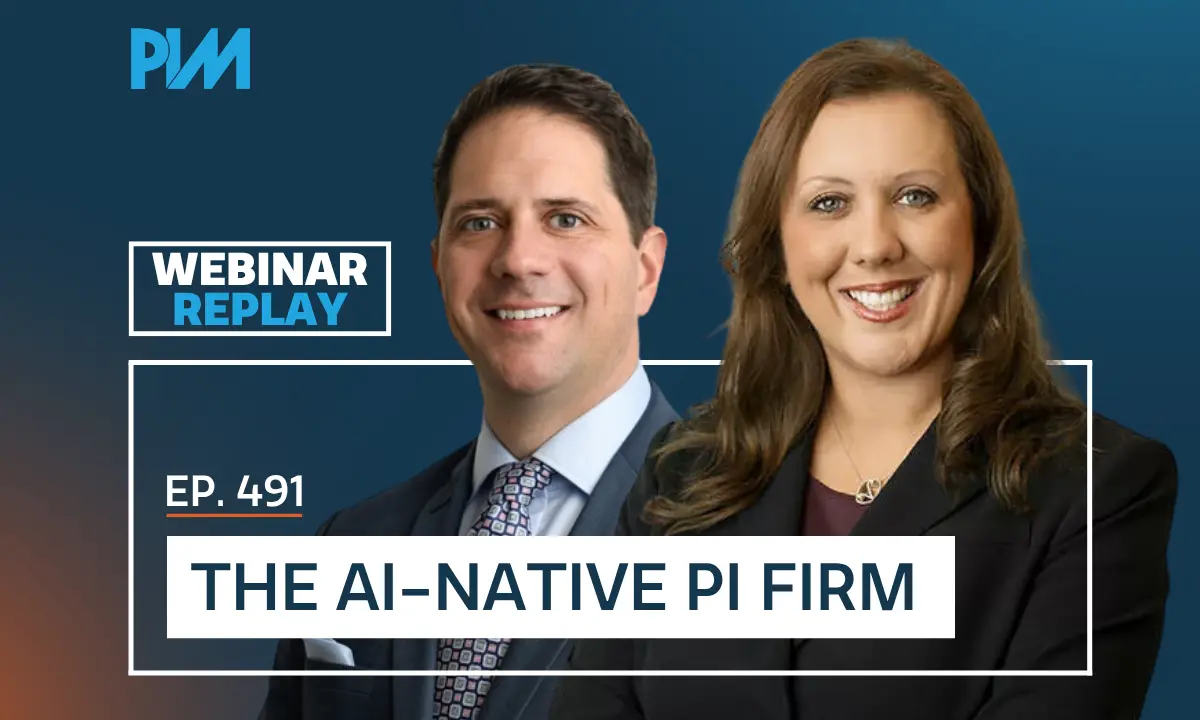
This webinar replay maps AI in law firms across the entire client journey, from the first search to the final review. Rankings.io’s John Lowe opens with how generative search decides which firm to recommend, why a review is one of the strongest signals a happy client can leave, and why a great result posted once on a settlements page barely registers.
Then Gina DeBoni and Michael Cerasa of Romanucci & Blandin take it inside a national trial firm. They share how AI medical record review answers decade-old questions in seconds, catches missing bills, builds deposition chronologies, and nearly finishes pre-suit demands as evidence comes in. They also explain why a self-described AI skeptic became a believer, and why empathy, strategy, and the final word on every demand letter still belong to the lawyer.
Schedule a call with EvenUp.
If you want to be the firm injured people call first for auto and premises liability cases, Head over to Rankings.io.
How to Use AI in Law Firms From Search to Settlement:
- How do AI search engines decide which law firm to recommend?
People rarely ask AI a vague question. They add parameters like case type, location, and the kind of firm they want, and AI builds a custom answer around them. That means AI has to work out who your firm serves, what you do especially well, and where you practice. It draws on your entire digital footprint, not just your website, so a consistent story across sources matters.
- What three steps can a law firm take to earn more AI search recommendations?
John Lowe breaks it into three steps.
- First, clarify who you help, what you handle, and where you practice, going beyond the contingency fees and free consultations every firm offers.
- Second, validate those claims with reviews, case results, attorney credentials, and recognition.
- Third, connect them: Share strong results on your website, in press releases, on your business profile, on LinkedIn, on social, and in legal directories. One touch point versus 10 can decide whether AI ever sources the information.
- How does AI help with medical record review?
In a case involving tens of thousands of pages and nearly a decade of litigation, EvenUp’s Case Companion answered a question about a 2017 appointment in 30 seconds, with a hyperlink to the record. Romanucci & Blandin also uses AI to build chronologies for depositions and to flag medical records that lack bills, which used to require labor-intensive work by the medical records team.
- Can AI help with demand letters?
Yes, especially when the firm adds evidence as it arrives. AI analyzes witness statements, police reports, medical records, and damage photos along the way, so the case is nearly ready for a demand before the attorney is. Ongoing analysis can also flag treatment gaps or liability issues early. When drafting, attorneys can make the language firmer or softer paragraph by paragraph, but the lawyer, not the AI, should make those choices and review the result.
- What should stay human in an AI-native law firm?
Empathy and client relationships. Plaintiffs’ lawyers often meet clients at their worst, and Romanucci & Blandin puts its team through trauma-informed training. In negotiations, AI is a “plus one” that surfaces strengths, hurdles, and counterarguments from the file. Case strategy and advocacy stay with the attorneys, who still read, review, decide, and advocate for their clients.
- Is AI only useful for high-volume PI firms?
No. The time savings matter for both volume shops and boutiques handling single-event cases. At a trial firm where lawyers read their own records, synthesizing years of files frees up time for strategy, like deciding which experts to retain.
If you want to keep learning from the best voices in PI, join us at PIMCON 2027. Buy your tickets now!
Rankings.io was named 2026 Inc. Power Partner: www.inc.com/power-partner-awards
Subscribe to our newsletter and get the freshest news every Monday: newsletter.rankings.io
Learn more from our webinars:
- EP 371: New Rules for LLM Visibility | Webinar Replay
- EP 363: AI for Law Firms | Webinar Replay
- Own the future of search with AI SEO.
Speakers Details
Gina A. DeBoni, Managing and Senior Partner, Romanucci & Blandin LLC
Gina has led the firm’s overall operations since 2010 while continuing to litigate cases.
Michael Cerasa, Partner, Romanucci & Blandin LLC
Michael brings 20 years of personal injury experience to the firm, where he leads the transportation and premises liability practice areas.
John Lowe, Key Account Manager, Rankings.io
John works with law firms every day on how clients find them online and in AI search. He shares what he sees on the front lines with firms across the country.
Chris Dreyer and Rankings.io Details
Chris Dreyer is the CEO and founder of Rankings.io, the elite law firm marketing experts for all your digital marketing and modern search needs.
- Personal Injury Mastermind w/ Chris Dreyer powered by Rankings.io: Instagram | YouTube | TikTok
- Chris Dreyer: Website, Instagram
- Books: Personal Injury Lawyer Marketing: From Good to GOAT; Niching Up: The Narrower the Market, the Bigger the Prize
- Rankings.io: Website, Instagram, X
- Work with Rankings.io: Connect