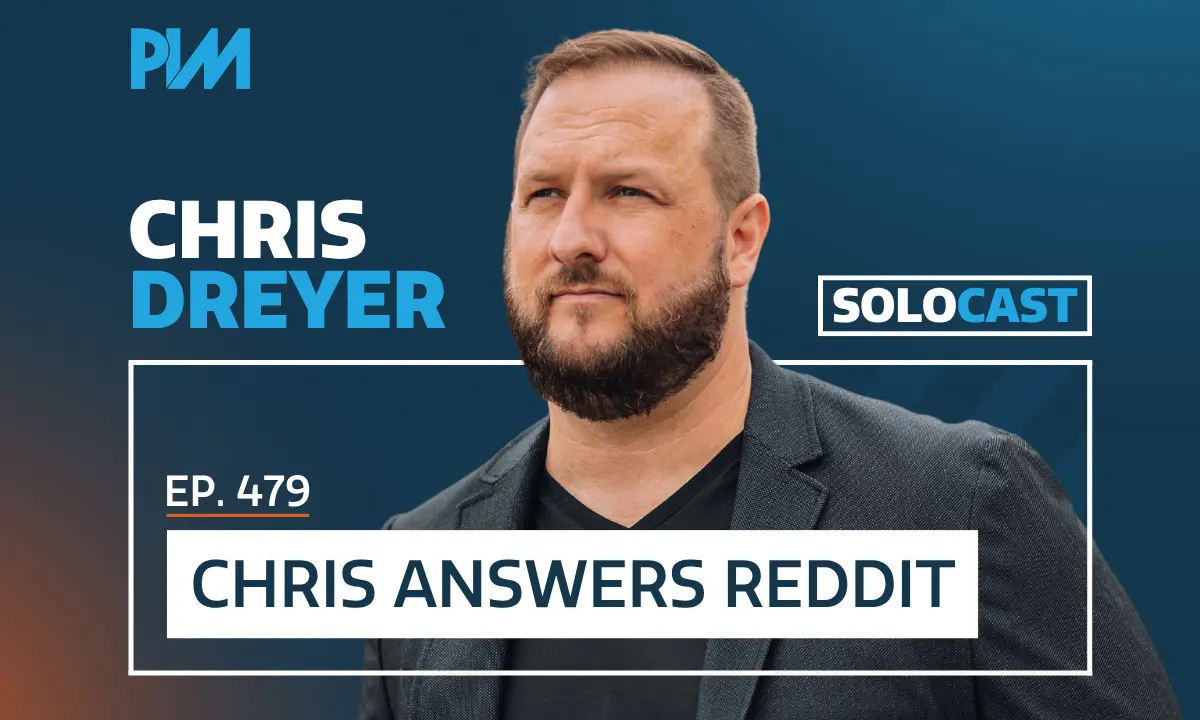
Chris Dreyer:
Today, we're doing something a little different. We're digging through some of the most popular legal marketing subreddits and pulled some of the most asked questions. How much should you spend? Is SEO dead? Should you bring it in-house? Why is ChatGPT ghosting your firm? There's no script, just me answering some of the most common questions in legal marketing, and you know I'm going to give it to you straight. This is Personal Injury Mastermind. I'm Chris Dreyer, Founder and CEO of Rankings.io, a legal marketing agency for elite law firms specializing in personal injury. Let's get into it.
Question number one, how much should a PI firm actually spend on digital marketing? Well, I got to tell you, this is one of those questions, as much as you can, baby, if you're hitting that three to one on the CAC to LTV ratio. Let me take a step back, right? I heard John Morgan talk about this. Look, if you went to an ATM and some machine was just popping out $100 bills, when you're putting in 10, you'd put as many as you could. Right? And that's the name of the game, is you want to scale something that works.
There's a lot of risk with owning a business and being an entrepreneur, and with that comes opportunities. If you're putting money in the stock market, maybe you're getting your S&P 500, the VOO, maybe you're getting six to 8%, and that's fine. But with a business, you have the opportunity to invest a dollar and get $3, or $4, or more. Again, it's stressful. There's a lot of work that comes with it. It's not passive by any means, but you should invest as much as possible.
Let me take a step back. You don't want to stress yourself out. You don't want to accrue a bunch of debt, especially early on when you don't have a CFO and people that really understand how to use leverage and the math behind it. It's a, walk before you run, type of scenario. If you're a new business owner, you need to have the financial visibility to make these good decisions and to even have the understanding of what your cost per lead, cost per case, and what the actual cases are worth and your average fees.
You also need to understand your CAC payback period, meaning when you acquire a case, how long is it before I get that money back? We all know the timeline for PI attorneys and contingency is longer. I would just say that when you have a channel that is really producing at least a three to one, scale it to the moon.
The other question that's kind of a follow-up to this is brand and you don't know, it's a little bit harder from the attribution perspective, but I would just tell you to zoom out and do a blended across everything, your marketing and sales. And if you're still getting a three to one, then keep jamming. And once it starts to dip, then you need to be careful. There's different constraints that occur as an entrepreneur, whether it's the marketing on the front end, the leads or the sales, the closing or the deal sizes, and everyone has one constraint. And if your constraint is not capital and you're producing leads, then keep jamming, baby.
Is SEO still worth the investment for a personal injury firm? SEO is a more encompassing term than it used to be in the past. In the past, Google was so dominant that attention wasn't as fractured, that you could do subsections of SEO. So I get frustrated, first of all, when I hear SEO, because it's basically, are you choosing to advertise on Google? Do you think people still visit Google? Well, you need to have a broader discipline. You need to attack it from the entire channel. It's no longer just organic SEO. You need to look at local services ads, Google Ads, Google Maps, SEO. And the actions that you take from an SEO perspective also contribute to GEO. There's a saying where, SEO is everything found on your website, where GEO is everything that someone else is talking about you, your reviews and how those interact.
The question though is, where are you at from a business perspective? And here's where I'm going with this. If you're not doing top of funnel advertising and grassroots advertising, then maybe it doesn't make sense to capture demand and spend eight to $12,000 a month. If you are, that's where people convert. People still go to Google to convert. They may do their research at other locations, but then they go to Google convert. That's why the Google tax that everyone talks about having hating to pay is bidding for your own personal brand. If you go look at Morgan & Morgan and Top Dog Law and all these firms, they're all bidding for Morgan & Morgan Top Dog because it's the Google Tax, it has the best virtual real estate.
And I'll take this a step further. When you have a really limited budget, early on, you want to do the belly to belly marketing, you want to try to establish some referrals, try to take other firms' turndowns, and try to monetize cases that other people aren't really targeting. Right? Try to carve out a little niche, try to get a chiro or a physician or somebody that's going to send you cases. Right? That's early on. Once you've got a little bit of that going on, it's like, okay, well what do I do next?
One option that's going to be a little contrarian, is you could do lead gen, you could do, but just know that's not a long-term solution for the majority of your investment because lead gen, you get no brand equity. There's a little gray area in terms of how they're advertising, so there's a little bit of risk there. Also, there's a much higher drop rate, but it is cases now. If you've got a dialed in intake team and you need some pipeline, you need some reps at the plate, that can be an opportunity. Moving on from there, you can do all the things that don't cost money. It costs your time, social media, writing content, doing those types of things. Those takes a lot of times to develop, that's not going to be a big pipeline.
So, where would I deploy dollars? I would deploy dollars once I had enough reviews at local services ads. Probably right behind that would be Facebook ads. Both of those can operate with a low budget. So if you're questioning if I should spend eight to 12K a month, by the nature of the question itself means you're probably not ready.
Should we bring SEO in-house instead of using an agency? Ooh, I love this question. Now everybody's got their Claude, their ChatGPT. Let me just Claude it up. I was on vacation recently and I'm driving, so I'm normally really responsive and I had a client text me and said, "A consultant told me that this is what I need to do for my SEO," and I'm reading what it says and it's of course Claude. And I don't know why they wouldn't just say Claude, but here's the deal. The inputs and the context that you give Claude in order to create a strategy is very important. So there's a lot of details that goes into this. Scraping an entire website with Screaming Frog, inputting and extracting all the data from Google Analytics, Google Search Console, running the API and through AHRFs, giving it a lot of context and then feeding it all your competitor information and what your goals are. That's a different type of scenario than just asking Claude, "Oh, I want to rank for this, what should I do?" You're going to get a different level of outcomes.
So yes, I understand the draw that, hey, I didn't know SEO, and maybe you feel more confident to do it in-house. I would just say that, do a comparison here. If you're going to hire a top SEO specialist, they're going to be a minimum 80 to 120K. Right? Let's just call it 120K. That's for one person, that's for an SEO specialist that doesn't have a focus in one area. They're going to be better at some things than other things, but that's $10,000 a month. Most agencies, including myself, we have offers that start at $10,000 a month, but the difference is not only do you get the strategy and 20 years experience, you also get people that have dedicated disciplines, content specialists, technical specialists, local SEO specialists, link building specialists.
It is very hard to bring SEO in-house without a decent amount of capital. In order to really set up a great SEO system, you're looking at a minimum three hires, plus. And even if you're doing the near shore stuff, you're still looking at 15, $20,000 a month, minimum. And that goes to say, and also are they experts in legal? Do they have a track record of success? Now let me take a step back. Some people, the more seasoned operators that have the capital should absolutely consider it. You go hire the 150,000 to 200,000 plus killer SEO person, and then you hire the writers. But I would say for most people listening, an agency would be a much better solution.
And I want to go a couple different directions here. The question itself, you could break this question down for anything in regards to working with an agency, a freelancer, or in-house. And let me take a step back. If you're going to work with an agency, it is low control, low effort. Low control in they have their systems, they have their processes to generate. You can't really deviate. That's their web method of doing things. And low effort though, they have their defined process of generating results. Right? So it's low effort, low control.
Then I'm going to go up the next step. The next step is a freelancer. A freelancer is medium control. You hired them, they work for you, right? Medium effort, you read their reviews, they have a lot of reviews, they have a sheet, you didn't hire a subcontractor that's not skilled. But the problem is in the medium control side is, someone else could take their capacity and you could lose them. Right? Then that goes to say who's going to manage that individual, right? So that's the freelancer side.
And then you have in-house. In-house is high effort, high control. High effort, you have to train these individuals. You have to make sure that they have the work to do. You have to have the ability to judge if they're doing good work. It's a lot of effort in-house, but it's high control. You can get them to do whatever you want. Maybe the agency's not doing something that you want them to do. And that's a decision matrix of, when should I work with an agency? When should I work with a freelancer? And when should I consider bringing it in-house? There's more to it, but I would say use that as a frame of reference to help you make decisions.
What should I look for when hiring an SEO or Google Ads agency? I'll start with SEO and I'm going to be a little contrarian here, and I don't care. This is my pod, baby. I appreciate y'all listening. I'm going to be contrarian here. The first one, the giant red flag is, are they just jamming geographic exclusivity down your throat? "Hey, we'll give you exclusivity for your market." That's a sign that they don't work with any big boys, because the big boys have multiple offices, they expand everywhere. And if you're an agency that really generates results, you don't restrict your client's ability to grow. If you've got a client in Chicago and they want to open an office in Miami, then you want to help them. You don't say, "No, no, no, we can't help you." Okay? That is a signal that they suck. Okay? If they offer geographic exclusivity, not good. Now, you should have integrity. You should limit the number of clients in a market because you need to generate an ROI. That's signal number one. Okay? Geographic exclusivity, ah, you're out. Okay?
Number two, their reviews, particularly on Clutch. The reason why I mentioned Clutch specifically is because it is a big pain in ass the to get reviews on Clutch. They have to basically write a dissertation. It is a long form review, it is not easy to get. So if a client is willing to leave this long review on Clutch, they're more likely to be happy than someone that says, "Had a great experience, rub my back, well, one day, and let me get a five star Google review." Those reviews aren't as trusted. Same for Trustpilot and there's other review sites. But Clutch, have they worked with a firm in your niche and generate results? We specialize in personal injury law. We work with a lot of personal injury law firms. Personal injury is like the NBA, it's not the minor leagues. It is not, congratulations, you got results for rando employment lawyer or trademark attorney. The competition's just not there. There is a ton of competition. It's a red ocean in PI. Do they specialize in personal injury? Do they have great reviews and case studies? Do they offer geographic exclusivity? You don't want that.
Then the other thing that I look at is their team size, their team composition. I go on LinkedIn, go on LinkedIn, look at, go to their company page, look at the people that they employ. How many people do they employ? If they employ a lot of people, that's probably a signal that they do good work, that they keep their clients. Are all of them nearshore? Maybe that's important, maybe it's not. Also, look at the ratio of SEO specialists to other roles and how many actual people do they have on the delivery side? Those are some of the things that I would say, okay, that's the search side, a lot of that could be applied to the Google Ads side. I would just add a few things on the Google Ads. You need to make sure that they're certified, a Google Ads agency. I can't remember the... I think it's like a premier partner because you got to meet certain spend requirements. I believe that's the title of it. So you need to check for that.
And then I would ask how much ad budget they manage on a monthly basis. That's a big one, because in personal injury, when your CAC is $3,000 to acquire an auto case, your minimum spend for Google Ads is going to be 30K. When I used to work at Power Advocates, this was a legal agency in Clayton, Missouri. I remember the CAC was less than 1,000 bucks. It was, let's say $500. And I would say, well, I would always 10X it because you want 10 shots on goal to have an opportunity. So I would say, "Okay, well, your minimum is 5K." Now that the minimum CAC, it's 3,000 bucks, so your minimum, you need to go in properly capitalize with a minimum of $30,000 to get 10 opportunities to sign a good case because you're going to get some junk early on. I would go in, I would go further.
Personally, if it were me, I don't care what market it is, I know this amount of dollars is going to scare some people, but I'm just telling you how I think. I don't care if it's lead gen, Google Ads, LSA, I would spend at least $100,000. The cost per lead and the cost per case, so that means Facebook ads, until you really determine if it works. Because Google Ads has a learning period, Facebook Ads has a learning period, they need the data to optimize on. The capitalization for personal injury, I'm sorry, I wish it was lower. That's what you really need to make decisions because you may kill something early on that is just starting to work.
How do I get leads while I'm waiting for SEO to work? So you've got some cash flow issues, maybe you don't want to lever up and borrow some money. Maybe you're in that first year and Esquire Bank won't give you any leverage because you need that first year of inventory. How do I get leads? You've got a lot of time here. I would go and meet with every law firm, every medical provider, everyone that I possibly could and just start building relationships. There's a book called, I think a book called, Never Eat Alone, and I would be thinking about... Leverage comes from capital, it comes from tech, it comes from media distribution. Well, that costs money. And even though it's not a leverage play, one-to-one, shaking hands, there's more trust there. And I think that I would target some of the firms spending a lot more money.
And if it were me, I would say, "Can I look at your turndowns?" What do they have to lose? Yeah, "You can look at our turn downs. Hey, if I monetize it, I'll send you a check." Great. That's a win-win. Let me have your turndowns. I'll go through them. I'll dumpster dive for those cases. That's what I would do to get some leads early on is I would really do. I would be boots on ground, belly to belly. I would probably attend some of the conferences that are cheaper. You really got to protect your capital every little dollar. I'm not as Kevin O'Leary and telling you not to go to Starbucks, but I am telling you to preserve your capital. And I'd say once you get some early dollars, I would look at local services ads, Facebook ads, lead gen early on as some of the cheaper methods of getting leads early on.
Why is ChatGPT recommending newer firms instead of my established firm? Well, I want you to go in the mirror. No, I'm just kidding. The first thing I would tell this more established firm is, "What are your Google reviews and Yelp reviews? Are they complete and utter trash?" Because I know many legacy firms that, "Oh, we do great work," and I go look at their reviews and they're complete garbage. And remember, GEO, which is generative engine optimization and optimizing for the LLMs, optimize based upon what other people are saying about you. So if other people are saying they didn't have a good experience, I promise you, ChatGPT is not going to recommend your firm despite what your case results are and all these other things. That's the big one. Really focus on your reputation, protect it.
Also, a lot of legacy firms don't typically list all their case results and everything that they have done. They've had these tremendous successes. You haven't done press releases or done traditional PR after a big win and got it featured, maybe haven't jumped on other podcasts, but you got to advertise even if you're a legacy firm that gets a lot of business from referrals.
And then lastly, I would say one other reason why you're probably not getting recommended, and again, I'm not trying to be the stereotype guy here. I'm just saying in general what I see is newer firms, typically if they have a younger owner, they're more willing to do social media. They lean on social media first because they're more comfortable with it, and social media trains a lot of the LLMs. So if they're producing a lot of social media content, answering questions, they may show up and be discovered more on ChatGPT, Gemini, and all the different Claude and all the different LLMs.
And that's a wrap. Look, none of this stuff is magic. It's protecting your capital, scaling what works, and not being afraid to think for yourself when everybody else is chasing the same shiny thing. If something in here got you fired up either because you loved it or you hated it, then find me on LinkedIn and let me know. Also, feel free to send me a question directly and we'll put it on the show. I'm Chris Dreyer. Thanks for listening to Personal Injury Mastermind. See you next time.