Chris Dreyer:
Every PI firm wants to sign more cases, but what do you do when you're going head-to-head with massive firms spending millions on ads and billboards? Today's guest has an answer to that.
Neil Dubovsky:
And when I started my law firm, I really approached marketing like Billy Beane in Moneyball.
Chris Dreyer:
We're diving into exactly when you should ask for reviews to get the highest conversion and why letting your lawyers handle intake calls is actively costing you cases.
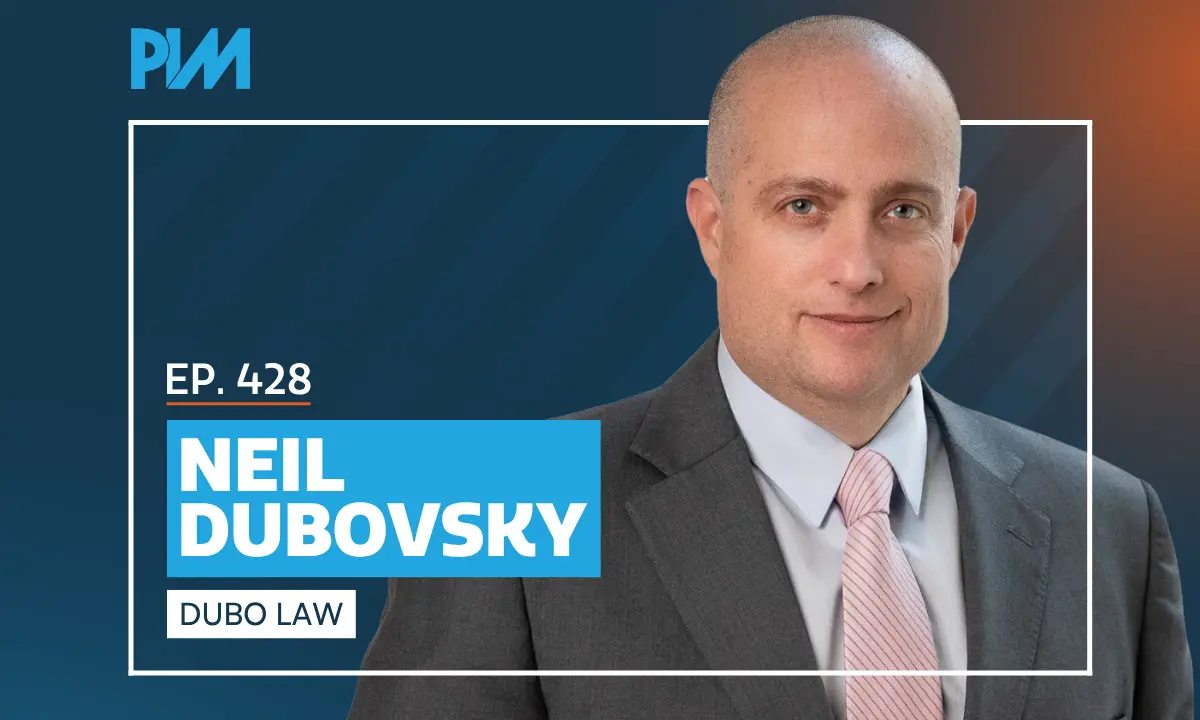
This is Personal Injury Mastermind. I'm Chris Dreyer, Founder and CEO of Rankings.io, the elite performance marketing agency for personal injury law firms. Today we're talking with Neil Dubovsky, founder of Dubo Law in Maryland. We talk about his Moneyball approach, how he consistently gets those five-star reviews and why empathy is your ultimate conversion tool. Let's get into it.
Neil Dubovsky:
I have always approached my marketing... I'm from South Africa originally, so baseball was not part of my life growing up, but I've adopted it as my favorite sport. One of the best books I ever read was Moneyball. I loved it. I probably read it four or five times, obviously saw the movie.
And when I started my law firm, I really approached the growth of my law firm in general, but marketing specifically like Billy Beane in Moneyball. We are the Oakland As and we're competing against the Yankees and the Red Sox. And if I try to do things the same way that they do, I'm going to fail because they have more resources than I do. And so with that as my operating philosophy, it was always about trying to find the best way to grow in a responsible way, understanding that I'd never had the budget and still don't have the budget of some of these much bigger firms.
And so that led me to sort of a couple of really guiding principles. The first one is leverage your skills as a litigator to get other attorneys to throw you cases. And that has been a very successful way that we have been able to grow. And in fact, a lot of our initial growth was based on that. And then, and this is going to sound so basic and so simple that I almost feel silly saying it. Do a good job. There is no substitute for doing a good job.
Doing a good job helps build your client list. It gets you client referrals. It gets you five star reviews and it's not just the five stars. One of the things that has generated a lot of continued business for us is what our clients write in the reviews. The number of times we get feedback from new clients that they actually took the time to read the reviews and like what people said, right?
That is foundational to me and that has been how we've grown. So what we do is we make sure that our client list continues to grow, that we do a good job, that we continue to get those five star reviews, which leads to more clients, happier clients. And so we've grown organically that way because at the end of the day, I believe, we talk about Morgan & Morgan and some of these bigger firms and obviously private equity knocking on the door in a lot of these states, right?
The elephant in the room. My philosophy is that other firms can spend as much as they want on TV, on radio, with billboards, multiple Super Bowl ads instead of one. At the end of the day, the one thing they cannot touch is my client list if those people are happy with me and I did a good job. That's mine.
Chris Dreyer:
Well said. And I think that the systemic referrals come from that and it kind of just compounds over time. Look, you do, you got 231, 332, around that range, Google reviews, all five star rating, all of them.
Well, at least the aggregate rating and everyone knows how difficult that is, to have that higher rating. So you mentioned the reviews. Just a quick follow up on that. Are you asking for those on the closeout? Are you doing it in an intake? Since you do have to kind of go through the cases and you can't help more individuals, do you get some reviews on the intake? Talk to me about your process there.
Neil Dubovsky:
That's an excellent question. It's actually something we've been having internal discussions about as recently as last week. I'm not going to sit here and tell you that I figured out the correct solution. I can tell you the way we did it when I started was wrong, which is that what we were doing was, my philosophy or my thought initially was, the client's at their happiest when they're picking up their check, that's when you ask for the review.
And what I was finding back then was that people would come in, they would say, "Absolutely. No problem. Of course, I'll give you a review. You guys were great." They would walk out of the office with the check. I would send them a link to do the review and I'd never hear from them again. And so what we then started doing, which has been most successful for us is getting the reviews... We just changed the timing.
So now what we do is overwhelmingly, we ask for the reviews when the case settles, but before disbursement. So you still have a happy client but you're still relevant to them. They still need you, and our conversion rate, to use that term for reviews, skyrocketed. What we don't do, and we've actually discussed this, what we do not do is get reviews at intake.
I know a lot of firms do. I think in my opinion, that elevates the getting the five stars above the narrative in the review because the person posting the review hasn't really worked with your firm. All they had was the experience at intake, which I'm not diminishing. And for us, because so many people reference what's written in the reviews, I think it is more beneficial, it's more real, again, for a firm of our size to have people post reviews having gone through the experience with us.
Now there's a big area in the middle that you can tell, I've given a lot of thought to this. I am trying now to incorporate getting reviews before settlement. So still not at intake, but during the life of the case, if there's something that happens that the client is very happy about, maybe we help them resolve their property damage, or there was something else, there was a holdup somewhere and we were able to help them alleviate that concern so that the client in that moment is really happy.
Even if it's before settlement, we can solicit reviews at that point too. So again, intake, no. Very end of the process, no. Anything in between I think is where we've sort of settled.
Chris Dreyer:
Thank you for sharing that. Yeah. And you have a different type of practice, right? You said it on the outset. It's like the giant advertising firms, they're going to want to try to get a thousand reviews, where you're trying to maximize like what's said and make those more impactful, which I think is smart. It's the Moneyball approach there too. So I love it.
So talk to me about intake, right? You have to be more selective on the cases you choose and also how you turn down potential cases, because you don't want a negative review if someone just expects you're going to take their case. So what tech stack do you use? How do you think about intake? What's the team look like?
Neil Dubovsky:
Yeah. We actually, it's funny you say that, we have one one star review, which I've been trying to get removed now for a while and Google has not been particularly responsive. Somebody called probably about two or three months ago with a really crazy off the wall situation that was in no way... And tried to say, "Look, I'm sorry, I'm so sorry for what you're going through, but we can't help." And he hung up on our intake person and then within a couple of hours just posted, "Really bad lawyer," that's it. And one star.
So to your point... One of the other reasons why it's important to aggregate five star reviews and get them is to inoculate yourself against the inevitable one star reviews that do come. Fortunately we only have that one, but really you're just one disagreeable person away from getting the next one, right?
Intake, I don't think anybody's figured out intake. I go to a decent number of conferences. I talk to people who've been doing this a lot longer than I have with much bigger firms than I do, and they're still wrestling with the best way to handle intake.
We initially in our firm had a process where our attorneys were handling intakes, and over time I came to the conclusion that that was not just suboptimal but wrong, for two reasons. Number one, now that I have multiple attorneys, their time is better spent doing the things that generate revenue for the firm, right? More directly settling cases, litigating cases. But number two, lawyers are really bad at empathy, and always want to default to giving legal advice and viewing everything from a legal perspective, and intake calls are all about empathy and conversion.
How do you convert someone while at the same time not making it seem transactional? There's a skill in that and it is one that most lawyers do not possess. We now have a dedicated intake person. Right now we only have one. At some point I imagine that'll grow, and she's phenomenal. She's so great on the phone with clients. She's able to get signed retainers in the majority of cases on the initial call while setting people at ease. She's got a wonderful style to her, and has been an amazing add to the law firm and our conversion rate is higher than it was when attorneys were doing intakes and our revenue is up because the attorneys are resolving cases, as it should be.
Chris Dreyer:
What about like overflow? Do you have an AI, a capture now for overflow? Does it go to a third-party? And then what's the weekends look like? Because you got her and she's fantastic, but then how does the weekends look like too?
Neil Dubovsky:
We do have an after hour answering service or overflow, and right now the way we're structured is those overflow calls do go to attorneys. So on weekends, again, we don't have a massive volume on the weekends, but the script that our answering service has is if it's a potential new client call, it's a live transfer. We have three lawyers and it cycles between us.
One of us always takes the call in real time and we're able to get the conversions on the weekend. That process is not scalable. So again, in my mind, I'm always thinking about, our processes now, which ones that we have are scalable and which ones are not. Even if they're all working, I'm constantly reevaluating and saying, "Okay, this is great, but does this work if our calls triple or quadruple?"
So I am mindful of the fact that that process is not scalable, but right now it works for us. AI, Chris, I got to tell you, I am all in on AI. We have incorporated it here into our law firm. I personally have tried to get more of a comfort level in using it, not just my law firm, but in day-to-day life, but not in intake, not for me, not yet.
I know people are doing it. I've listened to AI bots handle intake calls and everybody tells me how real they sound and it's just not the same. At the end of the day... If we have this conversation five or 10 years from now, other people might say, "Neil, see, you came around." But right now it's very hard for me to imagine a non-human being handling an intake call, again, because to me the primary thing is empathy. Somebody who's calling you and they are only on the phone with you because something really bad has happened, that to them has been life changing and they want somebody to empathize with that.
And just no matter how good these AI bots are, they're not a human being who can express empathy. I definitely see the value in all areas of our practice, including intake in general, as long as it's not handling the initial call.
I can definitely see a situation where a human being answers a call. It's a workers' comp case or a criminal case or something that we don't handle, and that there's an AI tool that instantaneously connects or helps my intake person connect someone to a referral partner in real time.
Absolutely. And I know that there are tools right now that allow people to use AI to make that connection themselves. To me, and this goes back to the point about trying to compete in a different way. Again, I perceive one of our value adds as the fact that we're still the human being on the phone at intake, handling the call, that creates the expectation for the client from day one that there's a specific way we handle a case. And part of my fear, and again, I understand this may be an unrealistic thing on my part.
I think I'm probably being overly neurotic about it, is that if we go away from that, that it ends up eroding part of our core value that has allowed us to be successful.
Chris Dreyer:
Empathy at the front door gets the client to sign, but what happens when those cases start stacking up? You can't rely on brute force to get them through the pipeline. To scale a Moneyball operation, you have to build a machine. Neil realized that to keep his competitive edge, he needed to completely restructure his team. He created highly specialized roles, set strict caseload limits, and even assigned one dedicated staff member to an often overlooked phase in a case's life.
Let's look at how he built an operation that moves fast while still staying connected to their clients.
Neil Dubovsky:
So we are structured, again, a little differently than some other firms. We don't have pods. What we have is we have case managers or paralegals working with a virtual assistant, somebody who's remote, to work up cases in pre-suit. So each, again, case manager, paralegal, whatever term you want to use, has somebody else assisting them, and they all have finite numbers of cases assigned to them and we have a number here that we don't want anybody to get above or we think they're overworked.
And so we would just then, as we've done recently, add another pre-suit paralegal with a VA assisting them. We have a litigation paralegal, right now only one. We recently restructured. I have two other attorneys in the office. I do a lot less day-to-day litigation work than I did before. It turns out running a business, it takes up a lot of time, but I'm always available to them as a resource and truthfully, I actually really love that part of it.
I don't ever want to lose that. Being involved in litigation still gets my juices flowing and I don't want that to ever go away, but the recent restructuring we did in the legal department, I now have one of my attorneys who's primarily handling pre-suit and the other one primarily handling litigation, and that restructuring has actually been beneficial.
So the pre-suit paralegals function predominantly with one lawyer. The litigation paralegal works with the other one. And then obviously I have an operations manager who runs the office and everything operationally. We have somebody who answers the phone and does administrative work as well.
We have the intake person. And then lastly, one of the things we did, this we did about two years ago and it was really game changing for us, is we took one of our paralegals internally and put her in charge of settlement.
So we have somebody that is solely dedicated once a case resolves, to moving through the settlement process and getting cases dispersed. I always would tell people, and I tell other lawyers who are interested in hearing, "You can do the best job on a case ever, at trial, in settlement, you could do A plus lawyering, and if you take too long to get the client their money, you are going to take a very grateful and happy client and turn them into the opposite of that."
And that's something over which we have complete control and it has significantly increased the speed at which we move cases on the back end. Clients are happier. Obviously it's generating revenue quicker for us. So that's sort of how our team is constituted.
Chris Dreyer:
Let's talk about the people management, right? I believe you mentioned model discipline as a core pillar. Maybe you could expound on that?
Neil Dubovsky:
Yeah. So as separated out from people management for a second. So the model discipline is making sure that you only take cases that fit your model. And I think one of the biggest challenges law firms face, and I face this especially initially, is every potential case is revenue, right? When you're young and small and growing, it's always hard to turn down work that you perceive could generate revenue for your firm.
And so it requires discipline to say, "This is my model. This is what we do." I've lost track of the number of times, for example, that people have said, "Hey, why didn't you incorporate workers' comp into your practice? You can figure it out. It's really not that complicated."
Now part of that is my legal malpractice defense background going, "I don't dabble. I know what I do and I know what we're good at and that's what we do and I'm going to refer cases that don't fit our model to somebody else, in part because I don't want us to get in trouble." But also if I'm purpose driven to help clients, I would be violating that core philosophy, core principle by taking a case that I didn't believe we were the best people to handle if I knew there was somebody else who could do it better.
How am I doing right by the client if I do that? And so we refer people... For cases we think we're the best firm to handle, we will take those and we will represent those people and we will do the best we can to get the best result. For cases that fall in different categories, we're going to get those people to other lawyers who are better for those cases than we are. There's nothing wrong in admitting that.
Chris Dreyer:
And I think that's the big integrity word with an underline, right? It's, "Hey, we're the best at this." And I think that lends itself to trust too, when you're willing to potentially turn down revenue, like it's a real case, to stay in where your expertise is, I think there's a lot of strength to that as well.
Neil Dubovsky:
Yeah. And then in terms of like the discipline part in general, again, just going back to the intake side of things, we in the legal world, and it's funny, I only kind of realized this recently. So we've created this artificial construct in the personal injury world of measuring cases by month. How many cases did you get in this month, lost month, what's your monthly average?
And as a result of that, what I have found is that the discipline comes into play there too, because what ends up happening is you're looking at your numbers for the month. So you get to the 28th, 29th of a given month and maybe that month hasn't been as good as the month before. And you go, "Oh, I'm a little light on the numbers this month." And what you end up doing is reaching, right? You end up taking cases at the end of a month just to hit an artificial number that don't fit your model, that you wouldn't have taken if it was, instead of being June 29th, it's July 3rd and that exact same case is a reject on July 3rd, but you're going to take it on June 29th.
So that's something we've also really tried to be disciplined about, is to not fall into that trap. If it fits our model, it doesn't matter when it comes in or how it comes in, we'll take it, and if it doesn't, we won't. And so there's a discipline there too.
Chris Dreyer:
This has been fantastic, Neil. For our audience listening that wants to connect, maybe they have a case in Maryland that they want to refer to you, they have questions about the pod, or just want to connect, what's the best way to get in touch?
Neil Dubovsky:
Yeah. So if they go to our website, which is www.dubolawfirm.com, there's a variety of ways there to get in touch. They're also welcome to give us a call. Phone number is 443-275-6345. And if they want to shoot me an email, it's my first name, which is N-E-I-L @dubolawfirm.com. Anytime, doesn't matter, nighttimes, weekends, you name it. Obviously all of our, as with anybody else, initial consultations are free, so happy to have a conversation with anyone. And like I tell our clients and like our intake person is trained to do, if you're not sure, you think maybe I have a claim, but I don't know, just call us. It doesn't cost you anything, and let us be the gatekeepers to decide whether or not we can help. And if we can, we will.
Chris Dreyer:
Fantastic. Neil, thanks for coming on the show.
Neil Dubovsky:
Chris, thank you so much for having me. This has been great. I appreciate it.
Chris Dreyer:
Neil's approach is proof that you don't need a nine figure war chest to win in the PI game. You don't have to be the Yankees, you just need to be relentless about your team structure, your client experience, and playing where the giants aren't looking.
They are playing a volume game, but you can still win by playing a precision game. If you're tired of losing market share to the billboard titans and want to know exactly where your firm has room to dominate, then we should talk. At Rankings, we help elite PI firms sign more cases and take over their markets.
Head over to Rankings.io today to learn how we can help you dominate your market. I'm Chris Dreyer. Thanks for listening to Personal Injury Mastermind. We'll see you next time.