Chris Dreyer:
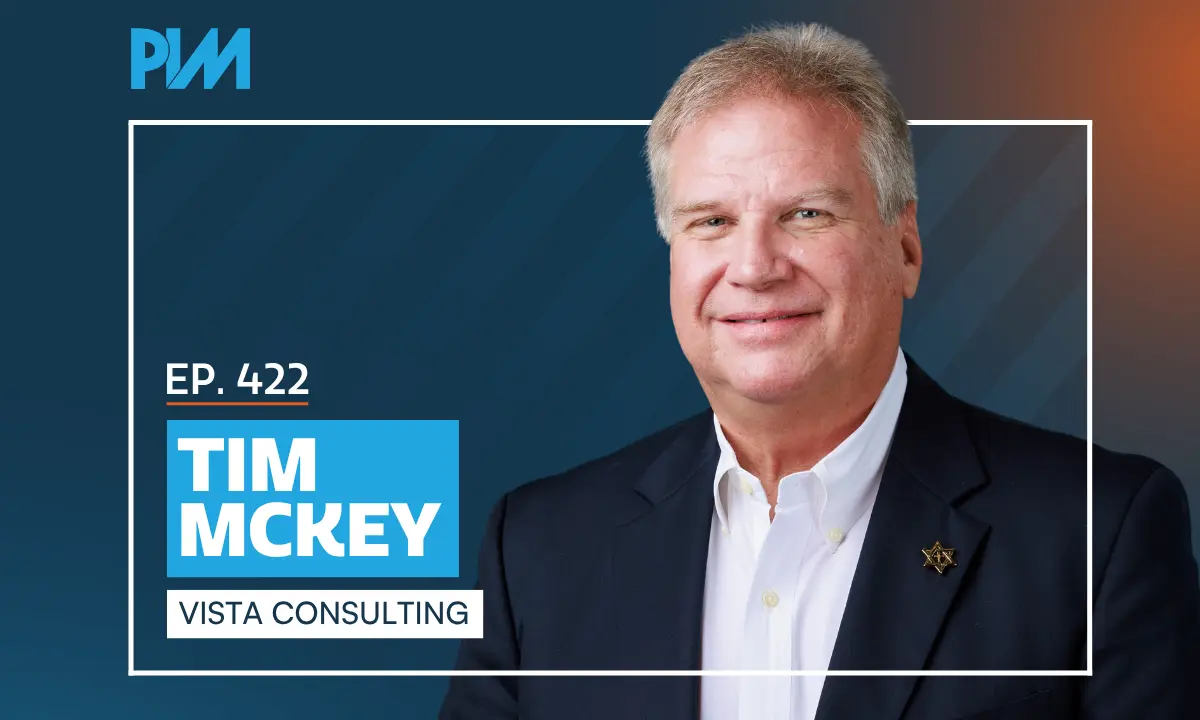
The legal landscape is changing. Private equity is entering the chat, and managed service organizations, or MSOs, are changing the way law firms scale, access capital, and compete. You don't have to play the PE game, but if you want to stay competitive, you have to understand it. Today, we're talking with Tim McKey, CEO of Vista Consulting. Tim knows this world inside and out. He recently served as a key strategic advisor on a landmark private equity deal that transitioned Dudley DeBosier Injury Lawyers into an MSO structure.
We're breaking down exactly what an MSO is, how to protect your firm's core values if you bring in capital, and we even play a little game on how to deploy a marketing budget as a startup versus a scaling eight-figure firm. This is Personal Injury Mastermind. I'm Chris Dreyer, founder and CEO of Rankings.io, the elite performance marketing agency for personal injury law firms. Let's get into it. First of all, just what is an MSO, for our audience?
Tim McKey:
Yeah. A managed service organization is simply an entity that has employees and know-how and has licensed name, image, likeness from someone else. It then provides services to another organization. So it's a managed service organization. In this case, if you picture a law firm before a managed service organization, everything is within that one entity. All the paralegals, the copy machines, the know-how, the systems, the processes, all that is within one entity that also practices law.
What an MSO is is simply the creation of a new entity. You take all of the support, and you drop it into another entity. It provides services back to the law firm. So in going the step further, the private equity or anyone who wants to invest in this service industry can, because it is not a law firm. So the law firm has to be owned by lawyers, except in Arizona, Puerto Rico, and DC, where they have some non-lawyer ownership provisions. But by and large in this country, lawyers have to own law firms.
But with this creation, we've got a service business that provides just about 100% of the support services to the law firm. Lawyers are still in the law firm. They're not over here. Their practice of law is in the law firm, 100%. All the decisions made on cases and all that, within the law firm. Support services over here. So that's a very brief explanation of something that gets a little bit more complicated, but that's what it is.
Chris Dreyer:
Yeah. Thank you for that. So that makes sense from a ... You got a way, a means of getting capital in or out of the business. Let's talk about the pros. What are some of the cons? We need to talk about it versus the ABS, but what are some of the pros and cons just come to mind?
Tim McKey:
I'll compare ABS to MSO first, ABS meaning alternative business structures, which is the type of entity that has been created in Arizona, Puerto Rico, and in Washington, DC. They are law firms that can actually have owners that are not lawyers. There were some rules that were amended, changed, or erased even in Arizona where non-lawyers can own law firms. That's an ABS. The pros with that is what you would think. Then, you can get capital. The people that come in, non-lawyers may have capital to inject into the business.
The big con is that not all states recognize this alternative business service. In fact, there are some states that are now writing into their bar rules that, "Hey. This particular state cannot share legal fees with a ABS law firm, a law firm that has non-lawyers in it." So you've got these cross state lines problems, which is huge, because I thought of it, when it happened, that it had to be a domino effect. Every state had to fall. Well, not many have fallen in the three or four years ABS came about. Really, only one or two dominoes have fallen at all, and there's been a lot of resistance.
However, I'm going to contrast that now with the MSO structure, which I already explained, which it's not ownership of the law firm by non-lawyers. It's ownership of a support service by non-lawyers, or at least part of it. In the transaction that I was involved with, private equity bought a piece of the support entity, and with the idea that they bought a platform firm, a Dudley DeBosier. People know who that is, and that was the most public, or really the only one that I know of that's been totally publicized in the country right now.
They went from the acquired to the acquirer right after closing. So they were acquired with the idea that they, along with private equity, were going to fund additional acquisitions to come under their MSO, or at least maybe a sister MSO beside it. So the pros of that is an ability to grow in a way that is scalable, potentially, provides capital. If you think about it, the Dudley DeBosier guys, they may have been doing really well, but they weren't ready to go out and buy five other law firms. So this is a methodology of doing that. It's not right for everyone.
I mean, you're relinquishing some of the management, or at least input to management, to someone who ... Whether they're a lawyer or not, to me, makes no difference. You relinquish it to somebody else. You have a partner now. The three guys in Dudley DeBosier have been together for 15, 16 years, and now, all of a sudden, you're letting someone in that's going to own a piece of your management company. Look, whether or not it's private equity, or Joe Blow, or whoever, that's still a big decision, to bring in a partner. So a lot of the discussions, and frankly, my involvement with these guys were much more before the letter of intent was signed with, "Hey. Is this what we want to do, and why? What makes sense for us?" and running all those traps, for lack of a better word, and the why.
Chris Dreyer:
I think the capital in allows for the opportunity for the expansion. The other thing, too, is currently, securing those non-attorney all stars. Right? I know there's the LTIPs, those long-term incentive plans with the phantom equities and the dividend stuff, but that's not the same as through-and-through equity.
Tim McKey:
No. It's not. The law firm decisions have to be made by lawyers. It's over here, there's a clear distinction, but here, we've got a potential exit strategy for practitioners who want to ... maybe are older and want to get out. Or maybe they're younger and aggressive and want to be a smaller piece of a much larger pie. There's a lot of different ways to play in this, but we need to get it right.
Chris Dreyer:
Let's talk about second-order effects. With Dudley, they have one of the seven powers of scale economies. Right? So when they start doing this, and they start acquiring, and just the MSO vehicle itself lends itself to scale economies, then they have pricing power to go buy broadcast television and all these things at a discount. How does that impact the mid-size guy trying to advertise the B2C?
Tim McKey:
I think it's something that not just mid-size, but small firms should pay attention to and know, that competition may be increased as these firms get larger and go statewide, section of the country, regionally, and then, potentially, nationally. I do think that there will be a look at economies of scale, but I also know that when the MSO and the firms that are doing this, not just Dudley DeBosier, but the next one and the next one, more than likely, they're going to be acquiring firms that are okay to stand alone. In other words, they're not going to need a lot of heavy management right away.
I think that will be phase two. I think there will be some accumulation of firms. Then, there will be what I call integration, where they will be looking at those economies of scale, because you don't want to be forcing someone right out of the ... right when you go, "Hey. We're going to change this, this, and this." That is not the goal. That will be a gradual change, in my opinion, because that's how it can get traction. Yeah. I think if you want to do a national buy for TV or marketing services, I think that's an easy one. But when you start talking about, "Hey. Should we all be on the same case management system? Should we all have the same tech stack? Should we all be doing this, this, and this?" I think that may be a little bit further down the road, Chris, as this structure evolves.
It just makes sense, because you don't want to go in and overhaul everything. Look, Vista's day job, when we go into firms and look at their operations, is to decide how to de-bottleneck. In other words, where are the problems? How can we help this firm be more efficient and effective? We don't want overhauls. We want a tweak, and everything we do is extremely custom. To the general public, the education that I'm trying to get out there is you should be aware of these things that are coming, but don't think that you've got to be a part of it. It may not be right for you, but you need to evaluate, understand what your competition is.
I think that there will be a time when, in the not too distant future, the firms will start looking at other case types. They're mostly looking at plaintiff personal injury firms. I can see, down the road, where you bring bankruptcy, family law, all these different case types under. I use the example of Walmart, that you can buy bananas, and you can buy a hundred-inch high-tech TV in Walmart. We should be aware of these things, that it's coming. What can you do? You can specialize. There's lots of different ways to attack it. Because we still have the corner hardware store that does very well, because they're so service-oriented. I want to make sure that these larger firms stay that way. That's kind of my personal goal.
Chris Dreyer:
I think there's a lot of truth to everything you just said. I was reading Brad Jacobs' book, How to Make a Few Billion Dollars, and he was talking about looking at these fragmented industries and the impacts of consolidation like he did with waste management and talking about the back office, the integration of tech and data and those advantages. Pretty hard to compete against, from a B2C perspective, unless you do have some specialization. I think that belly to belly old school and just the boutique willing to have a specialization on a certain case type is going to be really that much more valuable.
Tim McKey:
I think that you're absolutely right, and that's why the fact that this consolidation or this investment of capital into this service organization in the plaintiff law firm space is so interesting. But you don't have to play. You can decide there are other things that you can do. There's no industry more fragmented than the plaintiff personal injury space. The insurance companies are very consistent in their message to the public, "You're in good hands. We're going to take care of you," all the things that you hear. The plaintiff personal injury are all, "Get your check today," blah, blah, blah, this or that. It does confuse the buying public, and I think there's another opportunity here to have some education to the public, as well.
Chris Dreyer:
Thousand percent agree. I was looking at MediaRadar and some of the data components on the other side, right, State Farm, Geico, Progressive, their advertising vehicle on, say, television. They do the national buys. They're not doing the local spot buys. Think about the buying power and the cost per impression that they get versus the PI and just the data intelligence on the negotiation aspect. So I support the MSO. I think it's a move in the right direction. We'll see how it plays out.
It's easy to talk about high-level private equity and eight-figure budgets, but what happens when the rubber meets the road? I wanted to put Tim on the spot. With his operational experience looking under the hood of hundreds of firms, I threw a hypothetical at him. How do you spend your first billion in a highly competitive market? Let's say we got a startup with a low budget, say a million bucks. You're coming into a competitive market. You're trying to advertise B2C. I know these are all hypotheticals and probably ... What do you do with a million dollars? Then, we'll do, "Hey. Let's jump it up to 10, and then, let's jump it up to the big boy."
Tim McKey:
Yeah. I'm going to play the consultant, because it depends. Are you a startup, a guy just coming out of school? Are you coming out of another firm? Do you have any type of customer base? There's so many different angles to this.
Chris Dreyer:
Yeah. Let me give you a scenario here. Let's say Chicago. Let's say I'm a typical auto. I'm not a through-and-through litigator. Maybe I've tried a couple cases, but I'm not someone that's going to be doing a really specialized trial. I'm just an auto practice trying to-
Tim McKey:
Trying to get your foot, get traction.
Chris Dreyer:
Yep. Yep.
Tim McKey:
Get traction. I would go visit as many other attorney firms that are a little bit larger than you and try to arrange something to get the cases that may consider to be too small. That's very cheap. It's a lunch. It's a bottle of wine. It's one of those things, because you said, I think, belly to belly. That, in the startup, is going to be as important. Yeah. Are you going to do a little bit of maybe SEO and looking at something like that? A little bit, but you got to get some inventory to be able to leverage from. The best way to do that is through relationships.
Again, if you've moved there from, who knows, Ottumwa, Iowa, and you don't know anybody, look, I might question your judgment of going to Chicago. So again, I'm not trying to be flippant, but every case is going to be a little bit different. But if you're there, you're coming out of a firm, say, unless there's a bad relationship or something, hey. Do this. These cases give you a good referral fee split. You got to build up your inventory, build up your panache, if you will. You talk to others. You talk to the service providers. You do what you do in any business to drum it up.
Just because it's a lawyer doesn't ... Again, I was a general business consultant before we narrowed into plaintiff law. So we looked at lots of different industries and how to get clients. The best one, the cheapest one is relationships. I'm going to say one other thing and get off the subject for a second, is even the largest advertising firms, and I'll just say in Chicago, but this is everything that we've seen, their largest cases still come from a referral or a relationship, without exception.
Okay. They can chum the water, is what I call it, with all the TV, the billboards, and all that, but treating a client well when they came through or having a very important referral source, maybe a pastor, or a policeman, or someone like that that you've built a relationship refer, that's where the rubber meets the road, Chris, on any size firm. So get that right first, and then move up from there.
Chris Dreyer:
I couldn't agree more. I think that BNI, those BNI, those associations where the people in those are trying to build a community, and they're wanting to expand, they have reach, those realtors, the plumbers, the municipal people that go off and start their own side business or what have you, so ...
Tim McKey:
Vista has a network. We've been in these 300 firms. I can't tell you how many calls over the years I've gotten from someone in Rhode Island that said, "Look, I've got a case that I need to refer to Georgia. Who do you know? How does it work?" Those are the kind of things that ... I call Vista the straw that stirs the drink sometimes. We're not the drink, but we're the straw that stirs it.
Chris Dreyer:
That's great. That's great. I love that. Let's do one other. We won't stair step. Let's do one other. Let's say you just peaked over that eight figure. Right? So you've got a nice body. Maybe you're 200, 300,000 ahead, employ maybe 40, 50 people. You got that big-time backer, maybe your big case. You got a little bit of capital to deploy. What's the mix? Are you still leaning into broadcast television, radio? What are you thinking?
Tim McKey:
Yeah, and I'll say this. We're more operational consultants and experts than we are marketing, but I would say TV is still here. It is slowly dying, but it is dying. But it's still the master right now. So if you're heavy into TV, I would say remain there. But also, there's so many other areas now to look into. But, being really redundant here, having a robust system of reaching back and keeping your name in front of the clients that have come through is imperative no matter what because of what we said before. That's where the bigger cases come from.
Now, that is marketing, but it's an operational function. Okay? My good friend Mickey Love, who you probably know the name, she talks about touching clients seven times a year and different, by different methods and that kind of thing. Again, all of this knowledge is somewhat shared, and I always give credit if it comes from someone else. But I really like it.
And how you touch, what your swag is that you give, those things are much more important than you think. It's sexy to say, "I'm going to throw a million dollars at TV," or, "I'm going to do this," or, "I'm going to do that." I would propose to you, make sure that you cover basics. I'll go back to blocking and tackling. Again, you win football by the basics. Blocking and tackling still wins. Okay? So get that right first. So again, I'm probably not answering your question exactly like you thought, but would I go pour money into other methodologies? Probably not. I'd probably reinforce what we have and especially that internal marketing. It's so important.
Chris Dreyer:
Marketing gets the phone to ring, but what happens next dictates your profitability. I see it all the time. Firms obsess over their cost per click and TV spend, ignore the massive leaks right at the finish line. Tim is about to break down the actual math on why simply fixing your intake process can add over a half million dollars to your bottom line without spending a single extra penny on ads. Thoughts on intake, it's so important. I think when I think of the core functions outside of HR and finance, I think of the attraction. Then, you've got the sales, the intake, and then, you got the delivery side. It seems like at least a lot of the clients that I work with, they kind of skip the intake and want to move on to you being a lawyer. So thoughts on that.
Tim McKey:
Intake is deceptively complex. We spend a lot of time with our clients on intake, and the first thing we generally ask is, "Do you keep statistics?" Again, a firm of any size, "Do you keep statistics?" A lot of times, we get, "Well, what do you mean?" I say, "Well, how many leads do you get from what sources? Of those leads, how many meet your firm criteria?" We call them wants, W-A-N-T-S. "How many do you want? Then, of the ones you want, how many do you sign?" Without that information, most firms will tell us or most owners go, "Oh. We get every one we want." "Well, are you measuring it?" "No." "Well, then, I'm going to be a little bit ... I don't know if I believe you. Okay?"
Well, then, we start measuring it, and we figure out that they're getting about 80%. Again, these are all made-up numbers, but we're getting 80%. We know that they should be getting 93%. If you then look and say, "Okay. The difference in cases per month from 80% to 93," and I'm picking a number out of the air, "is five cases, just five cases." Okay? Then, I'm going to pick a average case fee of $10,000. So okay. We got five cases a month, time $10,000 is 50,000 a month, time 12 is $600,000 per year that, if you get intake right, then you hadn't spent another nickel on marketing, and you've increased revenue by $600,000, that's a freaking win. Those are the kind of things we look at with our clients to try to understand where they are.
Then, we move into case management, which is another thing. I usually tell people there's really only four ways to grow a law firm, and they're not secret. One is you got to get more cases. Number two is you have to increase the resolution value. Number three is, and this is a subset, you have to have a experience for the client where they will refer back to you. So you've got to have a great client experience cycle. Then, number four is every system and process should be as efficient and effective as it can be, which generally allows you to get higher case values. So more cases, higher case value yields a more profitable firm. If you do it well and get good efficient throughput, you can serve more.
So that's what we're talking about. Again, I still say that comes back to treating the client right, understanding when a case should be, for lack of a better term, fast-tracked, "Hey. We're only going to get X number of dollars out of this case because of liability or injuries or whatever it is," but then recognizing that, "Hey. We need to ask the question, 'How are you doing?'" They say, "I'm okay." They say, "Well, if you get that by text, you're going to say you're okay." But if you're talking to them, which we highly recommend, you've got to communicate, "Oh. That didn't sound like you're okay." "Well, yeah. You know what? I got some tingling in my left hand." "Oh my gosh. Nerve damage. We need to do something else here."
Those are the systems and processes that we see as business. That's the best way, but it also innerves to the benefit of that client. So if we can get it right, increase case volume, increase resolution value, it's a win-win-win. It's a win first for the client. It's a win for the people who deliver the service and the win for the owner, entrepreneur who has started the whole thing, and that's what we're looking for.
Chris Dreyer:
Fantastic. The deal size, the average deal size and stuff, that's not my expertise, and that's one I'm always curious about. But one on the intake side, I always, at least the firms that we work with, I just, I feel like they extremely under-index on the amount of bodies. The AI, I know you got your backup, your overflow. But I just do the math, and it's like, if you got a 20% conversion off of just raw leads, you got a hundred leads, you got 20 cases, and it's like, why wouldn't you have an intake specialist every 100 to 150 leads? A lot of times, it's like one or two people and no supervisor quality assurance. It's just wild to me. If I had 500 leads, I want at least five intake specialists.
Tim McKey:
Yeah. Yeah. These are things that we look at when we evaluate firms, and I say our day job is to make firms more efficient and effective. The way that we do it is we have to first assess what they're doing. And so intake is right up near the top. "Hey. Do you have a vision? Do you know what you want to be when you grow up?" By the way, that's changing with what we've talked about earlier, "What do you want to do here?" But then, "Do you have the right people?" or at least identify the positions. You just talked about intake positions, where we could say, "We believe that around the 35 team member mark, you probably need a full-time HR person at that point."
So there's different criteria or different levels of moving from one growth space to another where different things happen, and when you start to grow, especially when you double or you grow by half again, things break. Your systems and processes break. Your supervisors aren't there. And that's where, again, we come in and say, "Look, we need good reporting. Your team members shouldn't just do their job. They have to report that they've done it so we can manage and hold accountable, not hold accountable with a hammer, but hold accountable as a coach."
Like you said, if you see that you're getting so many leads, these leads are qualified, and you're not signing up 93 or 94% of them, then you have to evaluate, "Wow. Wait a minute. Were we overrun? We're just not doing? Do we not have training?" There's three or four things that can happen in there, Chris, that we need to evaluate. It's like going to the doctor and saying, "My knee hurts." He doesn't know until he does tests whether you got a torn meniscus, have one leg shorter than the other, whatever the problem is.
So we assess before we recommend, because every firm's different. Some firms, you can have two or three intake people that are really volume, they're really good. Some other firms, you need more training. You need this, and that's where the evaluation comes in and the custom work that we did. So I hope that helps a little bit.
Chris Dreyer:
Yeah. That was very helpful, and Tim, we've touched on it. But give me the overview of Vista Consulting. Let's say somebody listening is interested in engaging Vista Consulting. What's that look like? What services do you guys provide?
Tim McKey:
Yeah. I mean, I'd say we're a full service operational and strategic consultant, which means we want to understand what your strategy is from a high level first, but operations, looking at things like, "What are your systems and processes within it?" Our feed-in is to help firms be more efficient and effective at delivering their services to their clients. That's what we do.
Chris Dreyer:
Well said. Very valuable, and I know, Tim, we talked about this offline. I believe, and then kind of circling back to the MSO, I believe you have an event coming up. So tell us a little bit about the event coming up.
Tim McKey:
No. Well, look, thank you for reminding me about it, to at least say something about it. On May the 7th in Baltimore at Camden Yards Oriole Park, we're going to have an event called A Seat at the Table, where we are bringing in the Dudley DeBosier guys, the investor that invested in their MSO. We're bringing in ethics attorneys. We're bringing in an investment bank. We're bringing in the attorneys that actually helped on both sides of the transaction. I'm going to be talking about the things before the letter of intent. What are the options now?
Because this isn't ... I don't want anybody to think that I'm pushing people to do this. It's got to be right for you. This is a whole educational event that's ... We're also inviting private equity firms, and we're inviting law firms. Because I think there's education on both sides. The intent is education. That's what it's about, to remove, hopefully, some of the fear or at least have owners start thinking that they have another option as an exit strategy, potentially.
Chris Dreyer:
I think that's fantastic, and I think anybody, it's worthwhile to just understand how this is going to impact them, or to be a part of it, or potentially create it themselves. So this is excellent. Tim, for our audience listening that has follow-up questions, that wants to connect with you, what's the best way to get in touch?
Tim McKey:
Probably the website first, which is www.vista, V-I-S-T-A, ct.com. It's Vista Consulting Team. We just shorten it to CT, vistact.com. My email address is tmckey@vistact.com. We're on social. If you look at Vista Consulting on Facebook, Instagram, LinkedIn, we put out a tremendous amount of content every week out there, and we'd really like to have as many people as we can, not because of just volume. We think this education is going to be extremely valuable, where to go, what to do. First of all, you've got to have the roadmap, and this will help you start building that roadmap or blueprint for your firm. There are other options now.
Chris Dreyer:
Tim, thank you so much for coming on the show.
Tim McKey:
You're very welcome. Anything I can do to help you, you just let me know.
Chris Dreyer:
Thank you. The legal landscape is getting more aggressive by the day. With private equity and MSOs giving competitive firms a massive war chest, the margin for error is shrinking. You can't afford to leave money on the table with a leaky intake process, and you definitely can't afford lackluster marketing. If you want to dominate your area, outmaneuver the competition, and secure the high-value cases that actually move the needle, you need a partner who delivers proof over promises. Head on over to Rankings.io. See how we help elite personal injury firms scale. I'm Chris Dreyer. Thanks for listening to Personal Injury Mastermind. Catch you next time.