Chris Dreyer:
If you've listened to this podcast for a while, you know I've heard every marketing tactic under the sun.
Tyson Mutrux:
It's way harder to give a Google review today than it was five years ago. It's just people are done with it.
Chris Dreyer:
It's the harsh truth of local SEO. You can move mountains for a client, but getting them to actually cross the finish line and post reviews feels like pulling teeth. Usually the only time when people go out of their way to type something out is when things go wrong.
Tyson Mutrux:
People are more likely to probably give a negative review at this point than a positive review. I'm just saying generally, because then they get a trigger, they're going to be like, oh, because they're off about something.
Chris Dreyer:
But today, Tyson Mutrux drops a strategy for generating five-star Google reviews that's not only brilliant, but it aligns specifically to what he's doing in his firm.
Tyson Mutrux:
So here's where the magic is. Maybe in that situation is...
Chris Dreyer:
That may be the best piece of advice I've ever heard. What is the absolutely brilliant thing that Tyson is doing to get those five star reviews? You'll just have to keep listening to find out.
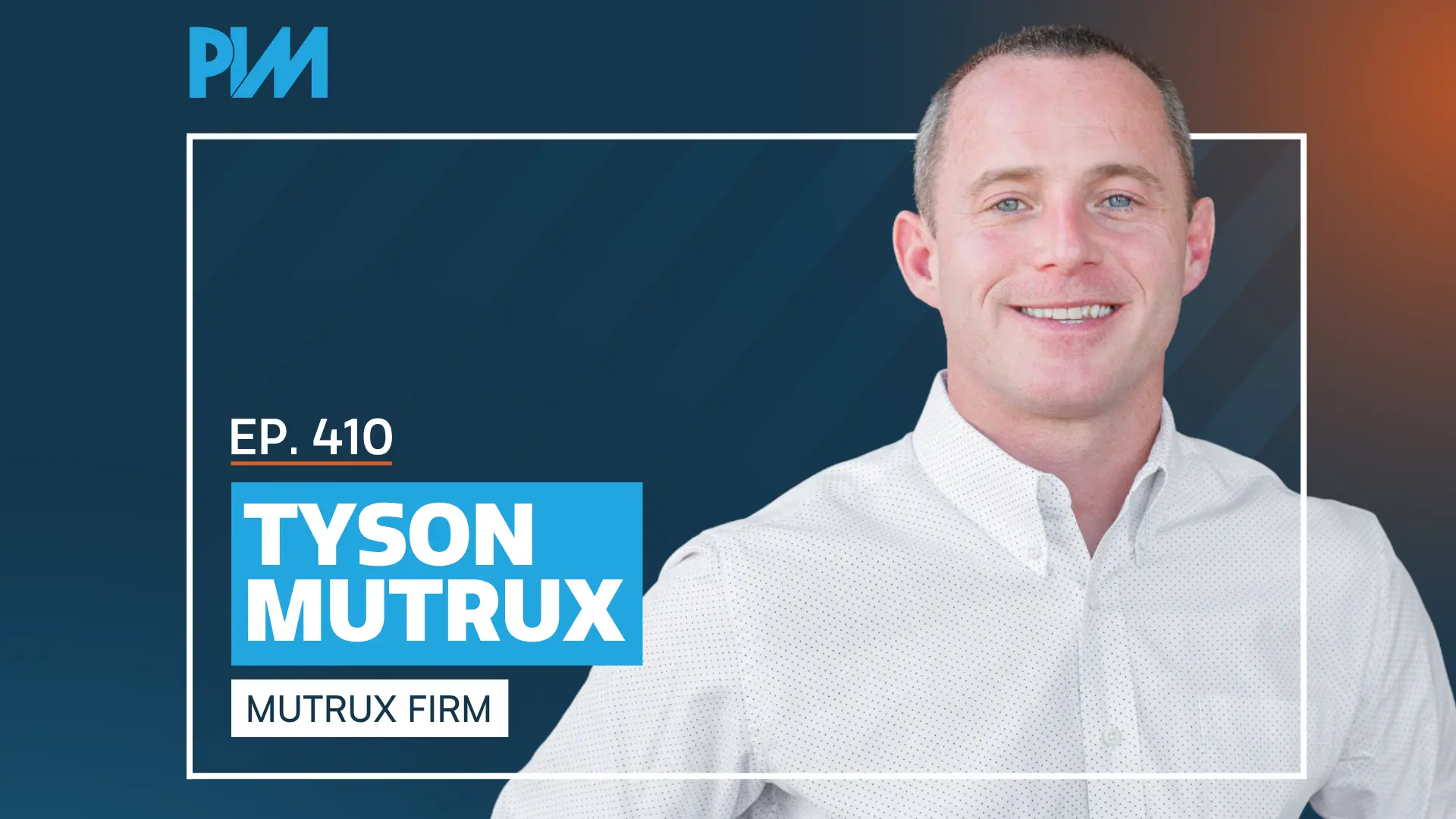
This is Personal Injury Mastermind. I'm Chris Dreyer, founder and CEO of Rankings.io, the elite performance marketing agency for personal injury law firms. Today we're talking with Tyson Mutrux from Mutrux Firm Injury Lawyers and Maximum Lawyer. He shares how to maximize your average fee using bad faith claims, why dedicated cares team is your firm's ultimate financial moat and the exact psychological script to turn happy clients into an unstoppable Google review engine.
Now usually I'm the one asking questions around here, but Tyson flipped the script on me right out of the gate to ask about the one metric I focus on to measure a company's health. Let's get into it.
Tyson Mutrux:
What is your one number that you focus on?
Chris Dreyer:
It's different for everyone.
Tyson Mutrux:
What about for the company though? For the company by its... Do you have a number for the company?
Chris Dreyer:
So the main one I'm dialed in right now is CAC to LTV ratio, that number.
Tyson Mutrux:
Okay. Very nice.
Chris Dreyer:
To me, that's the health of a company. And everyone says that the cost acquired case and that number is the true leading indicator of if you're going to be profitable or not.
Tyson Mutrux:
So it's funny for us, average fee for our firm?
Chris Dreyer:
Yeah.
Tyson Mutrux:
Average fee. Because you can look at a lot of things from average fee. If your number starts to go down, it could be an indication of a lot of different things and you can start to tweak things and look at it. It could be maybe you're settling your cases too slowly, maybe you're settling it too quickly. It can indicate a lot of different things.
And so we know if we're on track if that number is steadily increasing. Whenever I first started tracking that number, we were like $7,400 a case, which is super low. And by the way, we don't include the high end cases. So if we settle a case for seven figures, we're not throwing that into the mix because it'll skew the numbers big time. So ours is right around 24,000, just under 24,000. So it's increased significantly since I started tracking, I think 2015 or something like that.
And it's been like a steady, gradual, gradual growth. That means that every single one of our cases is worth at least a state minimum. Actually, it's way more than that. So that's our average fee. So it's basically triple what the state minimum is. So that's a significant increase. And I also think it's way higher than the average firm.
Chris Dreyer:
What were some of the big 80/20 things that you did to get to that case value? How did you identify it was a problem and then kind of like how did you approach increasing it?
Tyson Mutrux:
It's interesting. How did I identify it was a problem? I don't know. That's a question I have actually never been asked. Let me think about it back when we actually... It's been over a decade since we've been doing it. I don't know. I think I accidentally started tracking it. I think it's probably what it was. It started with that.
And then I guess 80/20 is we started... That one's probably an easy one where I'd say when we first started tracking this, we were not super great at bad faith. We just weren't. We didn't have, as a firm, not as strong understanding as to what bad faith meant when it comes to settlement dollars. And then once we started to shift towards that, that is one of the hardest things to explain to any lawyer. I think at least in Missouri it is.
It's kind of like the Nick Rally approach because it feels almost like a mythical thing that doesn't work because they don't see it happen that much. If you go to an average volume firm, they're typically not using bad faith as an angle to try to get more money out of the settlements. And when we made that shift, I'd say we probably made that shift right around 2017, is really focusing and hammering on bad faith and working on getting excess verdicts and excess settlements.
So that was probably the 80/20 if we're going to look at that. And it's really kind of funny. So we've brought on attorneys that have a lot of experience and they came from firms that didn't focus on bad faith. And they come in and they're like... It's like deer in a headlights like, "What are you talking about bad faith?" I remember having a conversation with a guy, I will not tell you what city he's in because it would probably say who it is.
He was heavy on radio ads and I had coffee with him. I was talking to him about bad faith and everything. And he's like, "What do you mean bad faith?" And I had to explain to him bad faith. This is a guy that was spending a ton on marketing and had no idea what bad faith is. And if he had an understanding of that, he would be able to get a lot more money for clients. It'd be better for the profession too. Back to what I was talking about when we brought our attorneys.
I've had the same conversations with attorneys that have had a lot of experience and they have just never seen it happen before. And the first time they see it happen, they think it's like magic. They're like, "Oh my God. You settled the case for over the policy? What are you talking about?" It drives me crazy whenever I hear attorneys say things like that, because this is what we do. This is the center of what we are doing on the legal side is attacking when it comes to bad faith.
Chris Dreyer:
How do you think about the attraction side though? I mean, first of all, maybe you're like, "Well, I'll pay five or $10,000 for a case or 5,000 because I'm 5x on the ratio."
Tyson Mutrux:
So funny, I have this conversation quite often. So our marketing team, it's funny because they're always trying to spend less money and they're like, "Well, to get these cases, we have to spend X number of dollars." And I say, "Our average fee is $24,000." So I would always use a high number. If I can spend $8,000 to get one case and get $24,000 on it, I'm going to do it every single day. But it's funny, I'm always fighting that because they're always wanting... It's kind of like the nature of our firm where we're always trying to like, "Do we even need that thing over there? Okay. Stop spending money on that thing." So it's part of the culture too where we've kind of got that built in. So I'm kind of fighting the culture that I've built a little bit where everyone's trying to maximize every penny.
So it's part of that, but it is kind of funny how I think if I were in that department, I would probably be fighting for, "Let's spend more money. Let's spend more money." But I guess that is interesting. So one of the things I see a lot, and I bet you see this too, where people, they're making money, right? They're making money, making money. The marketing thing that they're doing is working and they're like, "Well, it's just expensive. I want to shut it down." But are you getting cases from it? Yes. So don't shut it off. That drives me nuts.
Chris Dreyer:
I have this all the time. Well, they'll do a Rob Peter to pay Paul. Of course, one channel's going to be better than another. That doesn't mean shut down the one that's not... You know?
Tyson Mutrux:
Yes. Absolutely. Absolutely.
Chris Dreyer:
I'm the non-attorney. Can you give me the simplified version?
Tyson Mutrux:
Simplified version is that use and the demand the insurance company low balls you so they have placed their insured at jeopardy of having their personal assets at jeopardy, at risk. And so because of that, we pit the insured against the insurance company, kind of get them to team up with us. And because of that, the insurance company's willing to pay more money than the policy. That's in a nutshell. That's oversimplifying is what it is.
Chris Dreyer:
I think I heard on a John Morgan's really entertaining. I like listening to him because he's also at this point in his career where he has no filter and no cares. And I think he was on Patrick-
Tyson Mutrux:
Can I cuss somewhat?
Chris Dreyer:
Yeah. Yeah. He gives no fucks.
Tyson Mutrux:
He gives no fucks.
Chris Dreyer:
That's exactly it. So I heard, I think he was on Patrick Bet-David or the My First Million and he gave that example about, "Hey, now you're in bad faith." And so I'd always wanted to understand that, but so that's incredible. And the example you gave, the 8,000, I mean, 8,000 to 24 is a three to one ratio. And from what I've been told in professional services, anything three to one or higher is healthy for profit, which is awesome.
Tyson Mutrux:
Anyone that's not doing that needs to change what they're doing, pick up Running with the Bull by Nick Rowley and educate a little bit if they've not already. That'll give them the framework, the general framework, and then they can tweak it from there like we have.
Chris Dreyer:
We just heard how Tyson leverages bad faith claims to triple his average fee and build a massive marketing war chest. But to protect those high value cases over months or years of litigation, yet to realize that you are just managing a legal file, you're managing your client's now disrupted life. Listen to how Tyson maps out the absolute lowest points of a client's journey to build a concierge experience and why he completely separated his customer service team from his legal team.
The other thing too that during the research that came up is like you have this soup to nuts, this concierge level approach to a case, right? Where you are really taking care, I mean, from rental cars to... I mean, you're really... I think of that Alex Hormozi, you read his hundred million dollar offers, like what's a good offer? On the denominator, it says faster and decreasing effort and sacrifice.
I mean, you are making this very seamless for them. So talk to our audience about that, the impact it's had on your firm, like that approach.
Tyson Mutrux:
Yeah. So it's funny. I remember I got the URL, completeinjurylaw.com. It's still a URL that we use, but that was sort of the mindset. We called it complete injury law is how we focus on it. And it was even to the point where, and I've had this conversation with other attorneys too, and they've thought about doing the same thing where we even thought about getting a fleet of cars that while we are... Either the client can't get a rental car or let's say it's an uninsured motorist claim and they don't have rental coverage, that they can use one of those cars. We ultimately decided not to. It just didn't make sense to do it. But we really take the whole approach where if you can't get to a doctor, we make sure you get to the doctor.
And the whole idea is that it's going to increase the value of the case. And it's obviously about helping our clients and everything, but most of it centers around getting the clients to the doctors that they need to get to and making sure they make it to their appointments because that affects everything else when it comes to the case. From start to finish, I like how you put it, soup to nuts.
We really do take that approach. We do little things too where, this isn't necessarily related to that specifically, but if a client has someone in their life that dies, there's a button we can click and they can add a couple notes and it sends flowers out to them. Things like that where we really want to take this... I don't know if I like the word holistic approach, but we kind of take this holistic approach that there are all these aspects of a client's life that are affected.
We've got this massive Kanban board. It's massive to the point where you have to get to each column, you have to zoom in. And we usually do this as a team. What we do is we broke down every single stage of the case from the client's perspective. So you're at the scene of the crash. What are you thinking? We break it down by like, "What's going through their mind, okay? What are they feeling? Who are they contacting? Who is it that they actually have contacted at that very moment?"
So all these things, we break it down like each one of those little slivers is broken down into all these different questions that we ask and then answer and from start to finish. And then we kind of develop like, "Okay, what can we do surrounding that?" And it's funny. I really haven't talked about this in particular because I think it's such a cool thing.
And one of the questions is that, what is something that no one else is doing that we could do? And that's one of my favorite questions when it comes to that because we get to that sliver and we answer that question and that's where the magic happens because we've just gone through, all right, who are they in touch with at this point? What are they feeling? What are they thinking? What are their concerns? All these different things.
And then like, okay, what's everyone else doing and what can we do that's different? And that you get so many great little nuggets and we're not able to adopt all of them. Sometimes like the idea of us buying a fleet of cars for our clients doesn't make a whole lot of sense when you factor in other things, but you get little bitty ideas that make a massive impact.
Chris Dreyer:
I'll tell you immediately, I think when you tell a story like that, anybody that's been in an accident think puts themselves in their shoes. When you were giving that example, so I was thinking of myself, even though I work with attorneys and I've been through this, when it happens, there's like anxiety and it's just a blur. And I think that, "Hey, I need to get in touch with my wife and work." Right? You're all stressed about work and like, yeah, it'd been nice. Like, "Hey, do you want us to get ahold of your wife? Do you want us to do this?" And it's like, because your phone might be messed up or who knows?
Tyson Mutrux:
Right. Well, have you ever had surgery before?
Chris Dreyer:
Yeah. Yeah.
Tyson Mutrux:
Okay. So then you know how disruptive it is. So I was rear-ended a couple years ago and I had to have shoulder surgery from it. And I remember, it's amazing the things that I was thinking in my head that I'd be able to do. And in reality, everyone else knew I was not able to... Because the people I'm surrounded by are like people in my firm and my wife who also works for the firm and they see it with all these other clients. There's no way in hell you're going to be... I was thinking I was going to be able to sit in my bed and take depos while I was in my bed and they're like, "You're going to be on freaking pain meds." But I remember thinking how helpless it felt because I was in bed for a week, a couple days of that where they give you that nerve block. I can't even raise my arm.
I mean, I couldn't use my computer. It was all these different things. Your life stops in some aspects. And when you don't have a vehicle and you have... That's why it was like such a big deal for us to make sure people can get to their jobs, people get to work because let's say you are on the lower end of the income scale, right? Usually those jobs, they're hourly based. If you don't make it, even if you've got a good excuse, guess what? Bye-bye. You're getting fired, their life stops. And so a big part of it was making sure that they could get to the doctor after work.
You have to accommodate all these different things. So making appointments for them and figuring all this different stuff out. It's a massive thing because just not have that one thing, not having a vehicle in this country is a massive deal.
Chris Dreyer:
That deep empathy led to the CARES team. It's an incredible operational setup, but here's where we bring it full circle back to marketing. Asking for a review as a firm can feel transactional and awkward, but watch how Tyson makes that authentic human connection built by the CARES team and flips the script.
Your reviews, they name the individuals, which speaks to the personal relationships. So they mention Kristen and Bianca, the friendly voice. Kristen keeps the chaos in check. I imagine when you ask for the review, you're like, "Oh, no sweat. I got you."
Tyson Mutrux:
Well, so the key to this, one of the keys, there's many keys of getting your reviews, Google reviews for anyone that's trying to get them. It's way harder to get a Google review today than it was five years ago. It's just people are done with it. People are more likely to probably give a negative review at this point than a positive review. Not necessarily with our firm, I'm just saying generally, because then it's going to trigger it. They're going to be like, oh, because they're off about something.
But one of the keys to it is and one of my favorite tricks is it's something along the lines of, because we have what we call the CARES team. A part of the whole complete injury law is what we call our CARES team. And our CARES team is basically there from the beginning to the end. I say basically because they're not working on the case.
The CARES team, a part of it is actual leads and converting clients, all that, but it acts as sort of like a customer service department where they check in with them. We wanted that continuity instead of them getting handed off to someone and then never having some sort of continuity because we do have it split up where you have the CARES team, we have pre-lit and we have litigation.
So if you go from a lead to pre-lit to lit, I mean, you're being basically being passed off to three different teams. CARES team hovers along the entire time and then from start to finish and checks in with the client throughout. So that was a big part of it where they're checking in. So the key is, where I was kind of teasing the key, let's use Krista or for example, Krista or Kristen. We have a lot of case outing names on our firm, but we'll use Kristen.
So let's say Isabelle from the CARES team, she calls and she's talking to you and she's like, "Hey, Chris, how are things going?" The whole idea is to like, see how you're doing, checking in on you. And you're like, "You know what? Kristen has done an amazing job."
So here's where the magic is. Maybe in that situation, Isabelle says, "You know what, Chris, Kristen would love to hear that and one of the things we pride ourselves with is Google reviews. Google reviews, and if you would just leave her a review on our firm page and I'll send you the link and just mention her name, it would mean the world to her." Something like that where, yeah, it's not Isabella asking for a review for her. You're giving a gift to Kristen is what you're doing because you are so appreciative of Kristen, you're giving her a gift is what it is. That's the magic in that, I think.
Chris Dreyer:
By the way, that may be the best piece of advice I've ever heard because I think there's three parts of this. The first part is what I see a lot of attorneys do wrong is they'll ask for a review for the firm, right? Because I always encourage people to ask for the individual, but then now you're saying the gift component and, "Hey, leave a review for someone else." Oh, wow. Yeah. That's amazing. That's awesome.
Tyson Mutrux:
So you haven't changed the dynamic so much? Oh my God, I would love to do that for her because she's been so great to me. People like giving gifts. They really do. The next hurdle's removing all the friction, right? What's the friction? Having to go on there. One, your daily life is happening, but you also got to... Which link is it? Because especially you have multiple offices. Which one? You make it freaking simple. Here's the link. Would love for you to say a few kind words about Kristen, blah-blah-blah. That's how you do it.
Chris Dreyer:
That CARES team, I guess you use a Case Status or a Hona or something to keep them updated. So would they kind of take over more of the client service communication compared to the case manager? Break it down just a little bit more of the differences for me.
Tyson Mutrux:
Here's the main difference. The CARES team just calls to check in to see how they're doing. It's pretty simple. It's someone calling you from the firm saying, "Hey, Chris, listen, I know it looks like you're..." Because they look at the notes too. This was something that was grown internally that was not my idea. One of the case managers came up with this. They'll put in very specific notes about something the client says. So let's say that, again, you're the client and you mentioned that... What city are you in right now?
Chris Dreyer:
I'm in Marion, Illinois. Actually, you might know Marion, Illinois.
Tyson Mutrux:
Okay. I know Marion. It was funny. I was going to use the Bears as an example. Are you a Bears fan?
Chris Dreyer:
No. No. Not a Bears fan. Cardinals and used to be the Rams till they left.
Tyson Mutrux:
Okay. Let's say you're a Cardinals fan. So let's say you took the kids... Do you have kids?
Chris Dreyer:
Yeah. One boy.
Tyson Mutrux:
Okay. You mentioned that you took your son to the Cardinals game last week against the Mets. Okay? So Isabella might call you and say, "Hey Chris. Hey, I'm just calling to see how you're doing, checking in on you. Oh, how was the Cardinals game last week?" And then you talk about that. It's a simple call, check in to see how things are going.
And we have some specific questions that they ask with it, but the whole idea is just to see how you doing, right? How are you doing kind of a thing? So that's the main difference. All of the other case update communication, all that is done by the case manager. But whenever Isabella calls you and she says, "How is the Cardinals game?" After that, she might say, "Yeah. It looks like the insurance company's really being a pain. It looks like they really low balled you on that last offer." And then she'll kind of get into the other stuff.
So she's mixing in some of the case stuff, she's mixing in your personal life, but the actual case updates about the legal side of the case, all that comes from the actual team that the client is assigned to. It's not done by the CARES team itself.
Chris Dreyer:
That's incredible. So talk to me too about somebody who wants to get involved with Maximum Lawyer, like your community.
Tyson Mutrux:
Sure. I mean, yeah, it's the easiest and cheapest way, the freeway. We do have a big Facebook group. They can just go to Maximum Lawyer on Facebook and do that. That's the easiest way. We also have the podcast, so you could listen to the podcast, see if it's kind of your flavor. And then maximumlawyer.com, that's where you can go to. If anyone's interested in any of the events, maxxlawevents.com, we have the conference coming up in October.
Chris Dreyer:
Any our audience wants to connect just a final, how can they get in touch?
Tyson Mutrux:
Yeah. I'd say you just go to maximumlawyer.com. If you have questions about the firm, call our office. Don't email me. I'm not an email fan, 888-550-4026. You can call us if you have anything about a case, but when it comes to Maximum Lawyer, just maximumlawyer.com.
Chris Dreyer:
Amazing. Tyson, thanks for coming on the show.
Tyson Mutrux:
Thanks, Chris. Really appreciate it.
Chris Dreyer:
Tyson's strategy is the perfect loop. You fight for the maximum fee by mastering bad faith. You protect the client operationally by building a CARES team that genuinely maps out the disruption in their lives. And then you turn the operational excellence into a marketing asset by generating those five star reviews. That is how you build an undeniable moat around your personal injury firm.
If you found value in Tyson's playbook today, you should take this episode and share it with people in your own office, your intake staff, your case managers, and your partners. Get everyone thinking about how you can elevate the client journey. If you're ready to dominate your market, increase your average fee and sign the kinds of high value cases that let you completely outspend the competition, head it over to Rankings.io. We are the elite performance marketing agency for personal injury law firms. I'm Chris Dreyer. We'll catch you next time.