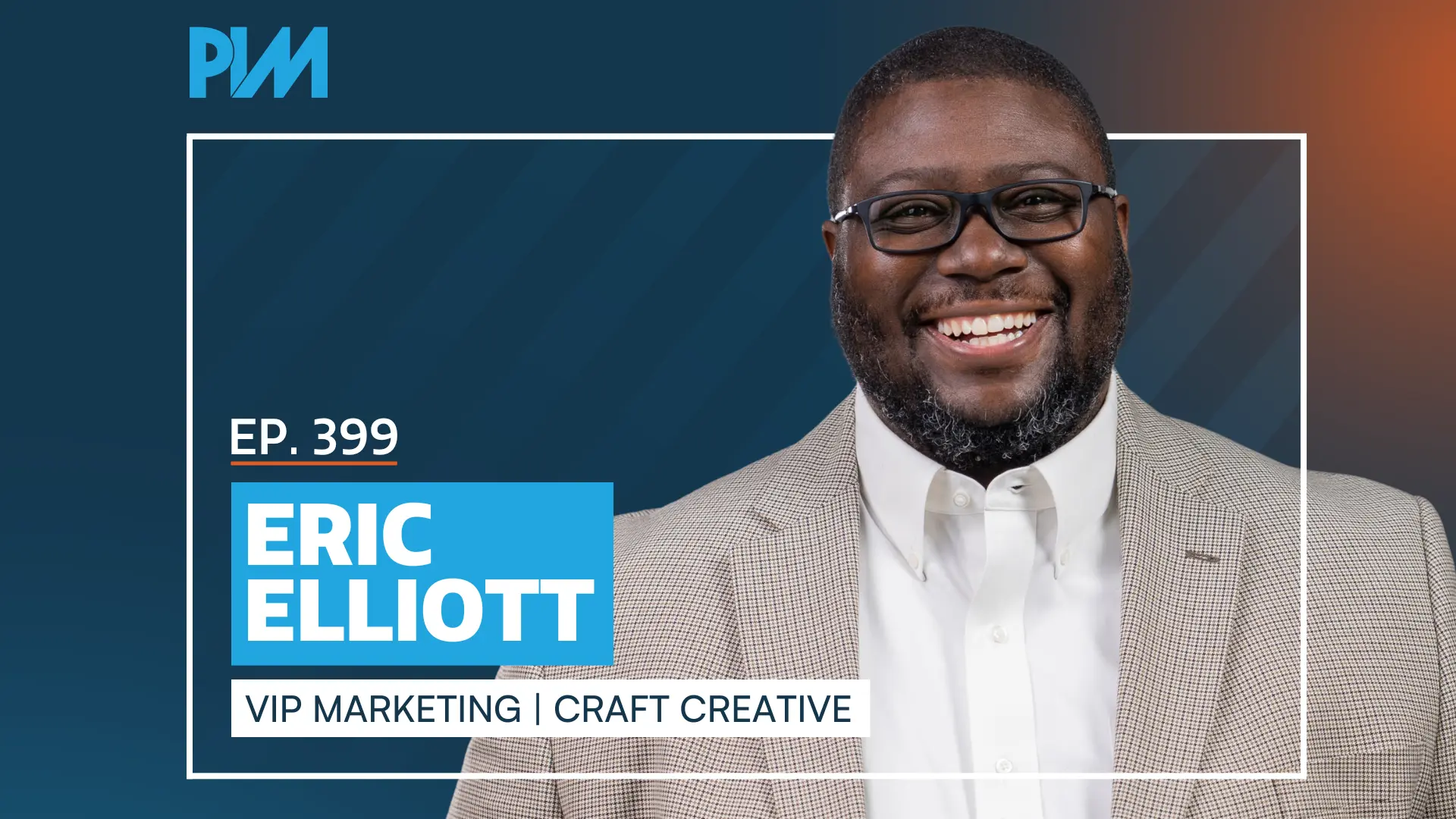
Eric Elliott:
Everyone wants to play basketball and shoot a three-pointer like Steph Curry, but he's been playing fundamentals since watching his dad on the court, and I think people forget that part. Everyone wants leads, but you can't get the fundamentals that go along with it.
Chris Dreyer:
You want to dominate your market and sign high-value cases, but you can't just throw a massive budget of TV and billboards and expect the phone to ring if your core strategy is broken.
Eric Elliott:
I always start out with budget, media and message. So are you going to spend that amount of money for that Super Bowl ad and just have a spot that just doesn't do anything?
Chris Dreyer:
Most PI firms are stuck in the past, praying their traditional sales funnel still works. Today we're tearing down that outdated model and building the marketing engine that actually beats inflated spend.
This is Personal Injury Mastermind. I'm Chris Dreyer, founder and CEO of Rankings.io, the elite performance marketing agency for personal injury law firms. Excellence is the standard, which means dialing in your entire growth strategy. Today I'm talking marketing with Eric M. Elliot, the founder of VIP Marketing and Craft Creative. Eric does more than run ads. He builds battle plans for law firms looking to take over their markets. He knows exactly how to match the right budget with the right media and the perfect message. We're breaking down why Meta ads are your ultimate testing ground, how to turn your linear sales funnel into self-sustaining referral flywheel, and why making real community deposits is the secret to taking market share from the giants. Let's get into it.
So what did you learn from 2025? How are you thinking about the attraction filling up the pipeline for a firm today?
Why most law firms waste advertising dollars on unqualified leads—and how intake systems increase signed case volume.
Eric Elliott:
Man, what a great question. And everyone talks about getting more leads, but then they don't talk about what they're doing with the ones that they do get. And I had this conversation with David Haskin. I know he was actually on your podcast before and he developed this software too, and it's sometimes they're getting what they need, but they're not closing the door. And I think one of the things that agencies have to remember is we don't close cases. That's not what we do. We don't sign them up. Our job is to hopefully bring that right audience to you and then you do your part. So it's a two part thing and I think some of the times we take that on or we have that mindset to help them get cases, but the truth is, Chris, you can send 600 leads to a firm, but if their intake isn't done the right way or set up the right way, then they're coming after you saying, "We're only at so-and-so in many cases."
And then you figure out they're answering the phone too late or they're not forwarding the calls or they're not empathetic on the phone call or they're questioning people too much without giving any empathy. So many different things. So I think the biggest part is I like to focus on the fundamental part of it. Everyone wants to play basketball and shoot a three point like Steph Curry, but he's been playing fundamentals since watching his dad on the court, and I think people forget that part. Everyone wants leads, but you can't forget the fundamentals that go along with it. I think that's crucial, man.
Chris Dreyer:
Let's talk about the fundamentals though. What do you think the fundamentals are of marketing first? And then we'll do the fundamentals maybe of intake.
Eric Elliott:
Man, good. I always start out with budget media and message. Having budget media and message one, you got to be able to compete. There's some markets, like you know this, across the country where guys will come to you, firms will come to you and say, "We want to be able to crush it," but they don't have the money to be able to compete. So you got to have the budget and then it's going to be the media part of it and also the message. It's like, what are you going to say? So are you going to spend that amount of money for that Superbowl ad and just have a spot that just doesn't do anything? So those three components are some of the fundamentals that we would utilize.
And then every firm's going to be different. There are some firms that they want to hunt rabbits, and then there's some firms that want to hunt elephants and their fundamentals to them are going to be totally different. They're not looking for speed and lead. We have one firm that they'll tell you, they're like, "I don't want all those cases." They said, "I only want 10 of them. I only want 10 a year, but I don't want to take any of them that are going to be less than a million dollars." So there are firms like that, and I think it really depends on the firms, but still I think a good, clean fundamental for us is always budget media and message and being able to bifurcate each of those to really say like, "Okay. Budget, check. Media, check. Message, check." And then being comfortable to be able to go to market with your message.
Chris Dreyer:
I think that's fantastic. I love where you led with budget because they could pick the right channel, but they're undercapitalized, right? You want to go into broadcast television with a shoestring budget. I mean, good luck, right? Same for search and the message being different and standing out, so important, can lower those CPMs, have that viral. Maybe you get some extra visibility there. On the channel before, I'm kind of beating this, let's say we in a vacuum, some random city popped up, it's got 100,000 people. Maybe the PI attorneys haven't flooded it, but just in a vacuum, is broadcast first for that top of funnel, is search first for the bottom of the funnel? How do you think of just a general mix?
Eric Elliott:
You know what? It's almost like it's a battle plan is what it is. If you're going to go into a market, even if it's 100,000 population and you start throwing all this money at TV and billboards and everything else, well, you can't manage what you can't measure. You just can't. I think one of the best ways, and there may be others who may think differently, there may be others who say, "I'm just going to tear up the whole market and put billboards everywhere." But truthfully, I believe one of the best ways to do it is going into a market digitally and also having some content to see what you can pull out of that market and really start to gauge it and really start to and kind of throttle yourself, throttle in your budget and also, but I think the best thing is having a great battle playing going into a market.
If it's one that's underserved, having that good strategy so that you can have some frequency and also show some expertise so that people are coming to you. And then when you start pulling some cases and start dialing it, show some dominance in that market and don't let it go.
Chris Dreyer:
I think it's a great answer. And one of the things on the digital, you said you opened the door. It's like you take Meta ads, Facebook ads. I like it because you can have so many messages, and I know you want to have continuity and consistency, but you could do a funnel for nursing, you could do a funnel for dog bites, you could do a funnel, versus TV or even radio, it's kind of hard to pivot your creative in your messaging. But Facebook ads, you take a couple swings at a plate and different practice area types.
How to use Meta ads to pressure-test case types, messaging, and budget allocation before scaling your PI firm.
Eric Elliott:
Yeah, 1,000%. I mean people always talk about A and B testing. You can A through Z test. You just laid it out. I mean, there's a lot of different ways that you can be able to do it. Not only that, it can actually help lower your cost per case if you're doing it right and paying attention to it as well. I remember we had a conversation with a personal injury lawyer and one of the things they were like, "I don't want to do those things." And they saw Facebook for one side of what they thought it was supposed to be. And like we said to them, "It's not about you, it's about the people on the other end. It's not you. We're not going to find people just like you because people just like you, they are the lawyer or they have friends that are lawyers. We're not targeting you. We're targeting people that are on this platform as well."
So I do love Meta ads and I love the fact that you can not just A/B test, you can A/B/C/D/E/F/G/H/I/J/K/L/M/N/O/P/Q/R/S/T/U/V, ALL through the alphabet. You can do all those different kinds of tests and you can be very nimble with it. You're not confined to 15 seconds or 30 seconds you would be in.
Chris Dreyer:
Yeah, yeah, well said. And it's like you said, the omnichannel, the hey, you do just top of funnel, but your search is messed up. You don't have that capture, you're in trouble. And then on the flip side, let's say you got your search dialed in, but no one knows you, you don't have any awareness, so it kind of goes hand in hand.
It is easy to get obsessed with driving down your cost per lead and mastering the digital game, but generating a massive amount of attention is only half the battle. What happens next is where most law firms hemorrhage money, and Eric has some hard truths about where those marketing dollars are actually going.
You talked about the leak, right? Hey, our job produced the leads, but then hey, their job's the leak, and what do you see there? Where do you advise? What are some of those fundamentals on the intake side?
Eric Elliott:
I believe us agencies, we have a responsibility to ask them and talk to them and make sure even before we engage with them on what their processes are because there's nothing worse than inviting good people into a bad process. And I almost feel like if we are doing our due diligence and doing these great campaigns, then one of the first things that we need to do is make sure that they can handle it. I remember Michael Mogul and I, we were talking about this before and we talked about how if you have all this advertising, you could have a great advertising campaign, but if you bring it in to a system that's broken, nothing will work. Not at all. And then they'll end up pointing the finger and the one who normally gets the finger pointed at them is usually the agency, when in the beginning we have to give them some accountability.
It's a two-way street. It's not just your problems go away the minute you write a check to us or you pay us. It's like, "Okay, great. We're going to partner together. Let's make sure that you can handle this." Because part of being able to compete is not just do you have enough money to spend? It's also okay, do you know what to do when these come in? Do you have systems and processes? How does intake happened? Or when John at the front desk isn't here and you said, John is your intake, what happens when John's out sick today? Those are the important things that you have to think about.
Chris Dreyer:
Yeah, I had a conversation literally last week and was digging in. We had a good marketing plan talking about intake. I'm like, well, what's the chase? When somebody contacts you and sends an email like, "Oh, we send a text in an email." Wow. I was like, well, what else? Come on. What else did you call him eight times that day? Do pretext? Did you do different messaging to create urgency? Maybe an empathy message and an urgency message? So many levels. I think the check the box too is like, oh, we got Smith AI. They're handling our intake. And I'm like, "Ugh."
Eric Elliott:
Chris, I think it's to the fault of a lot of the money lawyers, and I would say it where we got our client this, they've created the shopping mentality into the consumers. And so now the consumers are starting to check for lawyers. They shop for an item and so they're like, "Hey, can you take my case? Or what do you think I can get?" They're wanting to know these things. In the beginning, what do you think we can get? But they've conditioned the audience by the multiple TV ads or internet ads by saying, "We got our client this, so now there's an expectancy. Oh, that person had a car wreck on the TV ad, the lawyer said it, so maybe I can get that much too." So now it creates this shopping mentality for them, and then people start to think, if I see a lawyer that has more frequency on TV, maybe they're a good lawyer. There's a lot that has to happen from the law firms end as well, and they have a duty and responsibility whenever they start marketing as well.
Chris Dreyer:
It goes hand in hand, like you said. One of the things you got at VIP Marketing is you got this case cost calculator. So talk to me about how you guys develop, what that maybe that uncovered through its iteration and talk to me about that.
Eric Elliott:
Well, a lot of times when you get into these engagements, what happens is we'll ask them, "Okay, well, what's your goal?" Everyone wants to say their goal and then you'll say, "Okay, where are you now?" And then that's where the hesitation comes in. So with a case cost calculator, what we're doing is we're trying to show them what the pathway is or what the goal is. This is how many leads we need coming through. So now what it does for our agency, it says, okay, remember in the beginning we talked about we needed to have 200 leads a month just throwing a number out there and now we have some guardrails to show them what it could look like.
Because in the beginning, they all want to know. They want guarantees and we can't give them that. We can't give them that. But what we can do is guide or manage the expectation upfront, and that's what our case cost calculator is doing.
It's saying, okay, if this is your revenue goal and this is what your average case value is, and this is your closing ratio, this is how many appointments we need, this is how many cases you need. For them, they look at it and they're like, "Wow, this is what I really need." So now it gives them kind of guidance. I would probably bet you a ton of lawyers out there don't know how many appointments or how many leads they need per week or what their closing ratio is to be able to get to what is considered success for them.
Chris Dreyer:
1,000% agree. And I also just think too, it's when you start talking about wanted case percentages and things like that, and you hear these, "Hey, we want a 94, 95%." Well, what channel are you talking about? Your brand stuff? Like, okay, let's hit that 95. Are we talking about cold stuff? Maybe even the pay-per-click, maybe. Who knows? And then that percentage goes down and you'd still be happy. Maybe then 80% the non-branded versus the brand and how you can segment those. So interesting. I think part of it, you creating that awareness. Then they say, "Oh, well I don't have these." Well like, Hey, step one, so let's just say that you got the firm comes in, they want to spend the big money with the agency, but they don't have those numbers. Are you like, "Hey, here's this person, they can help you with this." What's the talk track then?
Eric Elliott:
Yeah, it goes back to what we talked about in the beginning. We have to have that roadmap to whatever success looks like for them and if it's going to be that case count. And sometimes we've had firms realize that they need to try and get more out of their cases. So if you're getting, let's just say if you're getting your average case is $7,000 per case or whatever, and maybe you need to try and get 10,000 per case, then you'll ask them like, "Hey guys, what's your system? I mean, are you guys doing these case reviews where you can bring all the attorneys together?" And you might have one who's more seasoned than the other working on the case and say, "Man, you could probably get an extra 25,000 out of this case if you look at X, right?"
So sometimes a case goal calculator does a little more than just saying, this is how many appointments you need. It could help you with the undiscovered inside of the firm that they may not be aware of, because sometimes they may be happy with $7,000 cost per case, but in order for them to do that, they got to do tons of getting in. Then they GRO some cases that's like, Hey, we might assign 200, but we're going to get rid of 50. And that changes their numbers. So sometimes they have to realize maybe we need to step it up. And now you hear more firms talking about not being afraid to go to court or we're trial attorneys and trying to give off that vibe like, "Hey, we're going to get you more." And I think some of the firms are realizing, "You know what? We need to take that up." Sometimes they need to raise their own rates, is what they need to do.
Chris Dreyer:
It makes it a lot more palatable on those incremental gains instead of like, "Hey, I want to double my practice." Well, you got to double your leads as opposed to maybe you just increase your wanted percentage a little bit, get a little bit more on the fees, and maybe you only need to increase your leads 25% or 50% because it all kind of works together.
You don't always need to double your ad spend to double your revenue. Small incremental wins in your operations can completely change your ROI, but eventually you hit a ceiling if you only rely on capturing bottom of the funnel demand. Eric argues the traditional marketing funnel is actually holding firms back, and the secret to long-term dominance comes down to a budget most law firms don't even realize they need. We mentioned this a little bit, and maybe this is antiquated, the funnel. You get top attention, middle consideration, and then the bottom decision. How do you think about that when you're creating a marketing strategy?
Why replacing the traditional marketing funnel with a referral flywheel strengthens long-term market share and community trust.
Eric Elliott:
I can't own this line because I think it's more than a funnel. It's more of a flywheel. Because at some point in that, what we need to start doing is asking for referrals and growing that referral based business as well. And if you have them in just a funnel, at some point the funnel ends, it just drops, and then someone has to physically pick them up and put them back in the top of the funnel, or hopefully they remember us. But if you keep the flywheel going, they have a great experience. I mean, you have a great marketing plan, you attract them, they sign on, you treat them well, you get them a great settlement, or you go to trial for them and then they're happy. They go back into your flywheel, they're telling their moms or friends, everyone in church about you, and it all starts over again.
And then that flywheel just gets bigger and bigger and bigger. I don't hear of a lot of firms having a referral budget. It's always, "I want to turn it on TV, I want to turn it online." It's like, okay, how about community? What's your community budget? I'm not talking just going to get school supplies and dropping them off, but what's your community budget? You're asking a lot. And one thing that we have to tell these law firms is that you got to remember, you are asking for withdrawals from the community, but you're not making any deposits. And I think there's a few firms out there that do really, really well and they have a heart for it, and the community will give back to them. If they pulled off of the traditional media, their referrals are so strong, it could help feed them. And I think that's something that people need to focus on. So the funnel needs to be the flywheel now.
Chris Dreyer:
So well said. And then that wheel spins faster and faster and all powers itself. I think that's one of the things that these referral models miss out on is the systemic marketing, the clients coming from the past. And you see these legacy firms that, they were started by the father or the parent, and it's like they got the business coming in because they've been in business for 20 years, 30 years. So they look at those, "Hey, our CAC is 100,000 bucks." I'm like, "Ah, you're not a startup."
One other thing, I like to toss these ideas top the dome. I see a lot of people, like you said, do really well with the community. I think we've had some guests on here that really care and they do a great job, but one thing I've always thought about is where does the pro bono legal work come in? All these attorneys need local services, ad reviews, you need Google reviews. I don't know. You're going to spend... Some people, they spend a lot of money on the grassroots marketing. Could we hire a couple associate attorneys and let them do some cases just to get the pipeline going?
Eric Elliott:
Man, that's a great point. Before I got into even doing the legal space, I worked a lot into the automotive space and the automotive space is dang near identical to the legal space. The things you can say, can't say by state, co-op for automotive. And one of the things that was really big in automotive was just like the BDC, how they set appointments, which is just like the legal intake part of it. But I really think that automotive did a great job in being visible within the community. A lot of times, not every lawyer or law firm, they're visible when they want something. And I believe the most important thing is for any law firm is to integrate themselves within into the firm. You could have one lawyer who's visible for fighting for the undeserved, and it gives that firm a reputation.
I'll give you an example of one that comes to mind that you bring up this topic. It was probably more than 12 years ago, I became friends with Kenny Harrell from Joy Law Firm. I don't know if you know those guys, good people, and they are a personal entry law firm through and through and they will go to court and not afraid for it. And years ago what they did was there was a high school football team and the high school football team had an undefeated record. They were kind of robbed from going to the state championship. And what the Joy Law Firm did was they stepped in and started defending them to the South Carolina High School League and all that other stuff. And they didn't do it for money, but what they did was they made a huge community deposit.
That entire town, all those people, who do you think is the law firm that they would want to go to after a while? It was Joy Law Firm. And so that's a great example of just doing some good within the community and it coming back to you. It wasn't really like there was a budget, but for them to say, "Oh, we're going to allocate this much time for our attorneys." But what they did was they saw a community need and they stepped in, and people are smarter than you think. People in our community are smarter than you think. They know what's BS and what's not, and what they saw from them was no BS, and they saw them defend that same high school team that had some kids probably go on to the NFL, but they remembered that and that was great for their firm.
And that's what I mean by having a community deposit. I think it's one of the things that every firm should pay attention to, especially if they're in those markets like you talked about earlier, that has like 100,000 people, then great. It's not as hard for you. And if you talk about you wanting to beat the big firms or the big giant firms that come into your market, that's how you beat them. That's how you stand tall in that market, and they'll remember that for you.
Chris Dreyer:
I couldn't help, and I was kind of chuckling inside my head. I was just thinking, Denver attorneys, you've got a mission here with the football. You got an opportunity. Be part of your community. Too soon, too soon, Denver fans.
Eric Elliott:
Oh man.
Chris Dreyer:
Anywho, Eric, this has been a ton of fun.
Eric Elliott:
Yeah, man.
Chris Dreyer:
Love chopping it up. For our audience, listen, that has questions for you, that wants to learn about more of your company, what's the best way to get in touch with you?
Eric Elliott:
Man, I'm on all socials at Eric M. Elliott, or you can go to my website, ericelliott.com. I just love doing good things with good people, man. And Chris, man, it's just an honor, man, and a pleasure and a privilege to be able to chop it up with you, my friend.
Chris Dreyer:
Thanks, Eric. Thanks for coming on the show.
Eric Elliott:
Awesome, man. Thank you.
Chris Dreyer:
A huge thanks to Eric M. Elliott for dropping some serious marketing knowledge today. Here's the biggest takeaway. Stop treating your marketing like a simple transaction. Lock in your budget, media and message. Start making real community deposits so your flywheel spins on its own. Ready to actually dominate your market? Rankings is the relentless marketing agency helping elite personal injury firms secure top search real estate and sign more cases. We believe in proof over promises. Come see the proof for yourself at rankings.io. I'm Chris Dreyer. I'll catch you next time on Personal Injury Mastermind.