Semantic SEO is one of the most powerful, underused strategies in the legal industry. While most firms are still chasing keywords, high-performing lawyers are building topic authority: Creating content ecosystems that search engines actually understand. This approach isn’t just about ranking for one keyword. It’s about signaling expertise, intent, and relevance across your entire practice area.
To see how this fits into a broader strategy, explore our complete guide on SEO for lawyers.
In this guide, we’ll break down what semantic SEO is, how it works for law firms, and how you can start implementing it to dominate your market.
What Are Semantic Keywords for Law Firms?
Semantic keywords are phrases that are contextually related to your main keyword. Instead of focusing on just “car accident lawyer,” semantic SEO helps Google connect related terms like “auto injury claim,” “rear-end collision attorney,” and “insurance dispute lawyer.”
To find these related terms effectively, check out our guide on keyword research.
For law firms, semantic keywords help search engines understand what kind of cases you handle, where you operate, and why your content deserves to rank.
For example, a page about “personal injury law” might include semantic keywords like:
- accident attorney
- medical malpractice case
- negligence claim
- pain and suffering damages
- statute of limitations
These aren’t random variations. They’re signals to Google that your firm covers the topic comprehensively and with authority.
How to Find Semantic Keywords for Lawyers (Free Tools Included)
Finding semantic keywords doesn’t require expensive SEO software; though tools like Ahrefs and SurferSEO can speed things up. You can start with free tools and a bit of strategy.

Google’s “People Also Ask” and “Related Searches”
Start by typing your target keyword, like “truck accident lawyer,” into Google. Scroll down to the People Also Ask section and the Related Searches at the bottom of the page.
You’ll likely see questions such as:
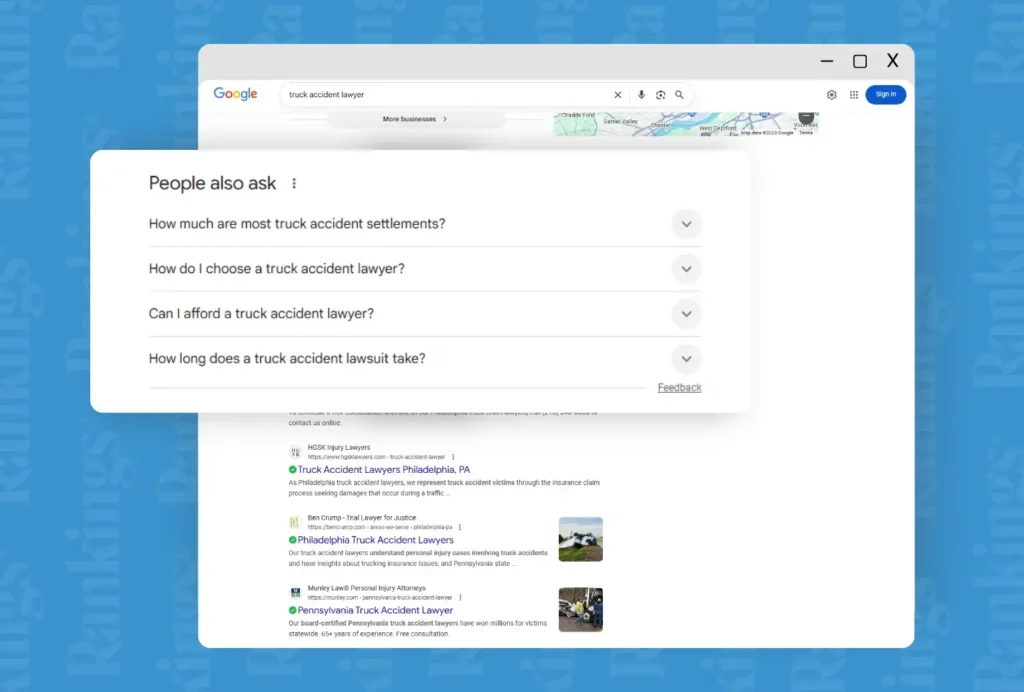
Each one of those questions represents a semantic keyword opportunity. You can use them to create blog posts or FAQs that support your main “Truck Accident Lawyer” page.
Google Autocomplete
Google’s search bar can be a goldmine for understanding real search behavior. Start typing a phrase like “personal injury lawyer” and notice what suggestions appear before you finish typing.
You might see:
- Personal injury lawyer near me
- Personal injury lawyer for car accident
- Personal injury lawyer no win no fee
These suggestions reveal semantic intent variations, what kind of clients are searching, where they’re searching from, and what specific services they’re looking for.
You can use this data to shape your page titles or build subpages for each intent (for example: “No Win No Fee Personal Injury Lawyer in Chicago”).
AnswerThePublic
AnswerThePublic visualizes questions and phrases connected to your keyword, organizing them into what, how, when, and why categories.
For instance, if you search for “workers’ compensation lawyer,” you’ll find clusters like:
- “How long does a workers’ comp claim take?”
- “What does a workers’ comp lawyer do?”
- “When should I hire a workers’ compensation lawyer?”
Each question can inspire supporting blog posts, FAQ sections, or even video content for your YouTube channel. Over time, these semantic pages link back to your main practice area, reinforcing topical authority.
AlsoAsked.com
AlsoAsked.com expands on Google’s People Also Ask results, creating visual trees that show how users move from one question to the next.
For example, a search for “medical malpractice lawyer” might show a chain like:
- “What qualifies as medical malpractice?”
- “How do I prove negligence?”
- “How much can you sue a doctor for?”
This sequence helps you understand the client journey: from awareness (“What is malpractice?”) to action (“How much can I sue?”).
You can use these connections to plan an internal link path between informational and service pages, helping both Google and users move naturally toward conversion.
For more insights on capturing intent through niche searches, explore our guide on long-tail keywords for lawyers.
ChatGPT (with keyword intent prompts)
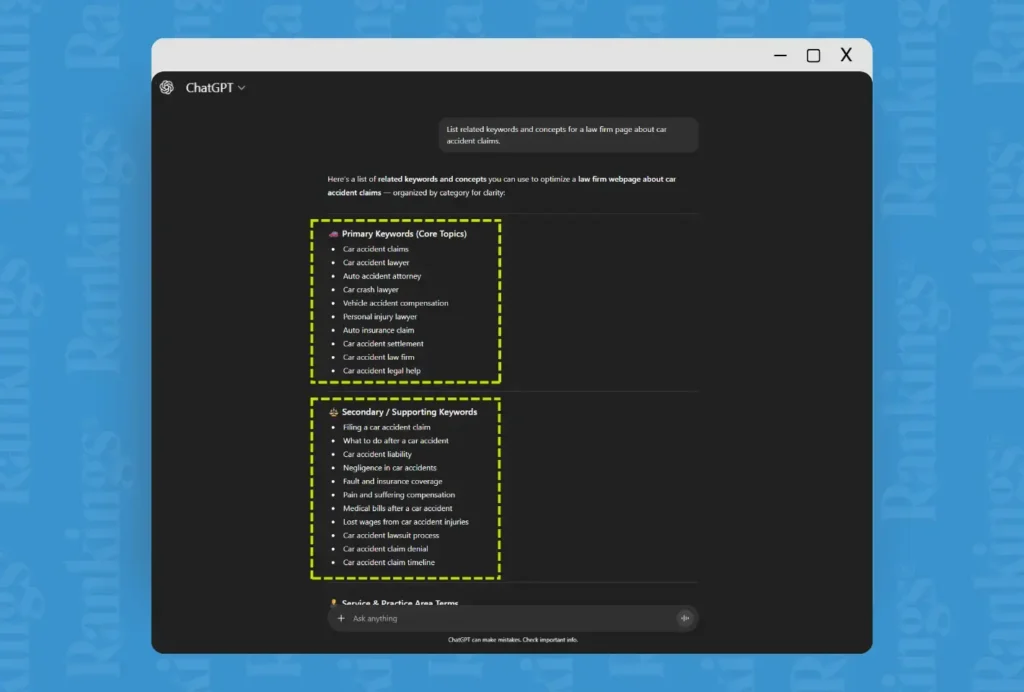
You can also use ChatGPT to brainstorm semantic terms quickly. For example, prompt it with:
“List related keywords and concepts for a law firm page about car accident claims.”
You might get responses like “rear-end collisions,” “whiplash settlement,” “auto insurance disputes,” and “comparative negligence.”
For even better results, check out our list of ChatGPT prompts for lawyers and explore how emerging AI tools like Gemini can support advanced keyword research and content strategy.
Then, cross-check those phrases in Google to confirm real search demand. This method works well when you’re brainstorming new content clusters or building a content calendar for each practice area.
By clustering these keywords by topic, you’ll know exactly how to structure your pages to build topical authority.
How Semantic SEO Benefits Your Law Firm
When implemented correctly, semantic SEO builds authority, improves engagement, and future-proofs your website. Here are five measurable benefits:
1. Stronger Topical Authority
Google now ranks topics, not just pages. The algorithm rewards firms that cover an entire subject comprehensively rather than chasing single keywords.
If your firm has one blog post about “car accident lawyers” but competitors have ten interconnected pages explaining “rear-end crashes,” “truck accident injuries,” “insurance negotiations,” and “what to do after a hit-and-run,” guess who looks like the authority?
By using semantic SEO to connect all those subtopics, your firm signals to Google that you’re the definitive expert on car accident claims in your area. Over time, you’ll see higher rankings across your entire cluster, not just one page.
Example: A firm in Houston that built out a car accident topic cluster saw every page on that subject rise simultaneously in Google Search Console, even for keywords they didn’t intentionally target.
2. Better User Intent Matching
Semantic SEO helps you align your content with how real clients search. Potential clients rarely Google exact legal jargon, they ask questions like “How much is a neck injury worth?” or “Do I need a lawyer if the crash wasn’t my fault?”
When your content addresses these related phrases, it’s easier for Google to match your pages to those searches. As a result, users spend more time reading, your bounce rate drops, and your conversion rate improves.
Example: Instead of one generic “Slip and Fall Lawyer” page, you might publish supporting posts such as “Common Causes of Slip and Fall Accidents in Grocery Stores” or “How to Prove Negligence After a Fall.” Together, these pages meet the full range of user intent, from curiosity to hiring.
This is how you turn browsers into leads: By showing you understand what they’re really asking.
3. Improved Internal Linking Structure
When your site is semantically organized, internal links connect naturally between related pages. This improves crawlability, distributes authority evenly, and keeps users engaged longer.
Think of your internal links as pathways guiding both search engines and readers through your expertise.
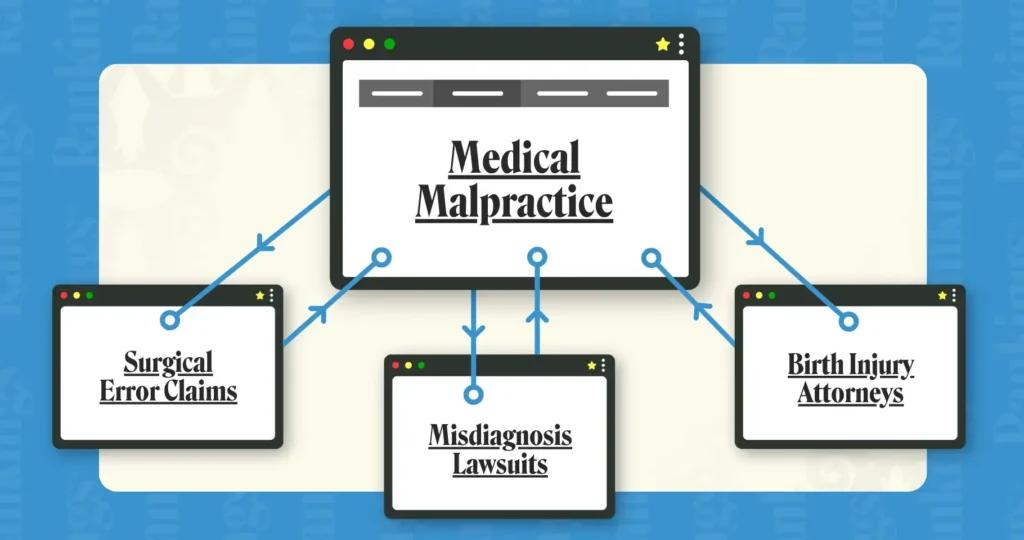
This structure tells Google your site is well-organized and trustworthy, and it helps every related page rise together in search visibility.
4. Higher Rankings for Long-Tail Keywords
One of the biggest wins from semantic SEO is ranking for hundreds of long-tail keywords without extra work. When your content includes related terms, synonyms, and questions, Google automatically associates your page with a wider range of queries.
Example: A single page about “motorcycle accident compensation” can also rank for “average payout for motorcycle crash,” “motorcycle settlement calculator,” and “what to do after a motorcycle wreck.”
These low-volume keywords may not drive huge traffic individually, but collectively, they attract high-intent visitors (i.e.people who are closer to hiring an attorney).
This is how smart firms outrank bigger competitors: By owning the long-tail search space their rivals ignore.
5. Future-Proofed Against Algorithm Updates
Google’s algorithm continues to move toward context-based ranking powered by AI and natural-language understanding (think BERT, MUM, and Gemini). That means keyword-stuffed or thin content is becoming obsolete.
Semantic SEO future-proofs your site because it’s built on meaning and relevance, not quick hacks. When Google updates its system to favor quality and context, your content already fits that model.
Example: Many firms saw traffic drops during the Helpful Content Updates, except those with topic-driven, semantically rich content. Because their websites were built for intent and expertise, not volume, they maintained or even improved their rankings.
When you invest in semantic SEO, you’re not just optimizing for today’s algorithm — you’re aligning with how Google will continue to rank content for years to come.
Implementing Semantic SEO: Step-by-Step Strategy
Applying semantic SEO is less about technical tricks and more about structure and clarity. Here’s how to build a system that works:
Step 1: Identify Core Practice Topics
Start by defining your core practice areas: The foundation of your site’s semantic structure. These are your pillar pages, covering broad topics like Car Accidents, Medical Malpractice, Slip and Fall, or Wrongful Death.
Each pillar should act as a hub, explaining the service in depth and linking to related subtopics.
Example: Your “Car Accident Lawyer” page might serve as the main pillar. Supporting pages could include “What to Do After a Car Crash,” “Common Car Accident Injuries,” and “How Insurance Settlements Work.”
By organizing your content around clear practice area pillars, you’re signaling to Google that your site has depth, relevance, and expertise across all aspects of that topic.
Step 2: Build Semantic Clusters
Once your pillars are defined, create semantic clusters: Supporting pages that explore the specific questions, nuances, and entities tied to each main topic.
For instance, under “Medical Malpractice Lawyer,” you might create related pages such as:
- “Surgical Errors and Patient Rights”
- “How to Prove Negligence in a Medical Malpractice Case”
- “Average Settlement for Birth Injury Cases”
Each of these subtopics links back to the main “Medical Malpractice Lawyer” pillar page, creating a web of related content. This helps Google see your firm as the most comprehensive and reliable source for that practice area.
Step 3: Use Schema Markup
Schema markup adds structured data that helps Google understand your pages’ purpose. For law firms, this includes LegalService schema, FAQ schema, and LocalBusiness schema.
Example: Add LegalService schema to your “Car Accident Lawyer” page so Google knows it’s a service offered by a law firm. Add FAQ schema with real client questions (like “How long do I have to file a claim?”) to increase your chances of earning a featured snippet.
Schema isn’t about ranking faster, it’s about communicating clearly with search engines so your expertise is properly recognized.
Step 4: Optimize for Entity Recognition
Search engines now rely heavily on entities, names, places, laws, and concepts, to interpret context. For law firms, this means you should naturally reference the laws, courts, insurance providers, and cities relevant to your practice.
Example: Instead of saying “our attorneys help clients with car accident cases,” write “our attorneys help clients file auto injury claims under Illinois negligence law.”
That one addition helps Google understand your location, topic, and legal context, making your content more discoverable in local and topical searches.
Also, keep your NAP (name, address, phone number) consistent across your entire site, directory listings, and Google Business Profile. Consistency strengthens your entity recognition and local SEO signals.
Step 5: Create a Link Map
Internal links are the arteries of semantic SEO. Each supporting page should link both up to its pillar page and across to related subtopics.
Example:
Your “Rear-End Collision Injuries” page could link to:
- The “Car Accident Lawyer” pillar page (upward link)
- “Neck and Back Injury Treatment After an Accident” (horizontal link)
- “What to Do After a Crash” (contextual link for user navigation)
Use descriptive anchor text, such as “learn more about negligence claims” or “see how settlements are calculated.” This builds context for both Google and readers.
A clear link map ensures your website feels like a connected, trustworthy knowledge hub, not a collection of random articles.
Step 6: Track Performance
Semantic SEO is a long game, but it’s measurable. Monitor topic-level performance rather than obsessing over individual keyword ranks.
In Google Search Console, look for growth in impressions and clicks across your entire topic cluster. For example, if your “Car Accident” pillar and its related subpages all begin rising together, that’s a clear sign your semantic structure is working.
Also track CTR and engagement metrics. If users spend more time reading your cluster pages, it means your content matches intent and Google takes notice.
To stay proactive, review your clusters quarterly. Use Ahrefs or Surfer to identify new semantic terms emerging in your space (like “AI car accident claims” or “rideshare liability”), and weave them into your existing content to maintain topical dominance.
Conclusion: Build Smarter SEO, Not Just More Content
Semantic SEO isn’t a trend; it’s the foundation of how Google interprets legal expertise. For law firms, this means moving beyond keywords and building true authority through meaning, context, and structure.
The result? More visibility. More qualified leads. And a digital presence that feels as credible as your courtroom reputation.
If you’re ready to turn your content into a client-generating asset, Rankings.io can help you build a semantic SEO strategy designed to dominate your local market.