Chris Dreyer:
You pour thousands into marketing to make the phone ring, but what happens when someone actually answers?
Yani Smith:
Everyone has 98% wants a conversion rate. Every mastermind talks about their conversion rate being that high and it is bullshit when you audit those numbers.
Chris Dreyer:
Today we're pulling back the curtain on the real numbers behind intake. We're talking about why your wanted case conversion rate might be a lie, how to fix a broken process and why intake isn't just answering the phone.
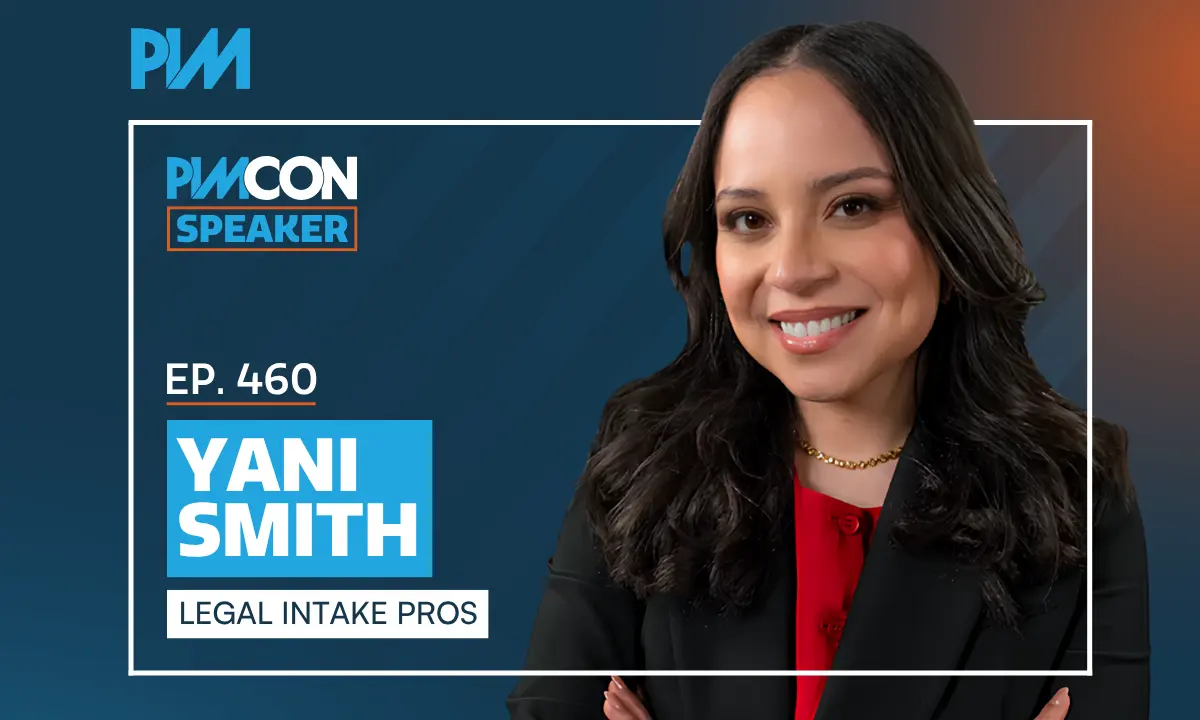
This is Personal Injury Mastermind. I'm Chris Dreyer, founder and CEO of Rankings.io, the elite performance marketing agency for personal injury law firms. We've got a fantastic episode for you today featuring Yani Smith from Legal Intake Pros. We're diving straight into the weeds on intake sales and the intersection of marketing and client acquisition. I'm also incredibly pumped to announce that Yani is going to be speaking at PIMCON 2026. We've had a ton of requests to cover intake, so we're bringing back the absolute best of the business to the stage. So if you like what you hear, then visit PIMCON.org to get your tickets. Join us in Scottsdale, Arizona, October 4th through 6th. All right, let's pick up the conversation with Yani with a discussion over why so many firms are continually undervaluing the importance of their intake department.
A lot of firms will drop an absolute fortune on the front end on ads and then they'll just kind of kick it over as an afterthought and hope it converts and the issue is always they want more leads. So why do you think law firms keep falling into the same trap of undervaluing the importance of intake?
Yani Smith:
There are many reasons why we've seen firms undervalue intake, but I do think that it is unique to every firm and a lot of it has to do with the philosophy at every firm. So if we've got law firm A, who has a strong belief that every intake prospect should speak to an attorney first, then that value can create some friction in the lead, the prospect experience with the firm. So there's that philosophy around the first impression has to be with an attorney instead of having perhaps an intake team member speak to the potential client, qualify them, pre-sell them if we say, with positioning the value and educating them on what comes next and then transferring it to an attorney for that close if that is what we want to do. But that's an example of on philosophy that can stand in the way.
And then the other is just simply not seeing it as an important nucleus to your firm. It is the growth engine. So often I think really great lawyers and attorneys who receive excellent results may have a limiting belief that they do not have to chase a potential client because they're great and they are and they are probably the best lawyers in their market. So they're not accustomed to having to sell themselves. So there's that limiting belief is that if I pay for the ads and they come in and I practice great law, then I should not have to follow up more than once or twice. And if I do, that just defines that potential client as a bad client in the future and that can't be further from the truth in 2026.
Chris Dreyer:
That's just painful to hear. Yeah, I completely agree. On the attorney side, I've had clients of ours ask about it and in certain markets their competitors have attorneys that are involved in the intake process. And I kind of look at it and the audience is probably sick of me saying this, but like a force multiplier, like maybe a dedicated intake attorney that can barge in if they're on the fence, they have legal questions that really fills that front end, that that's their job as opposed to they're in the weeds on a case and they're not fully there. I think that and the RevOps and all these different components can be a multiplier.
Yani Smith:
Yes. So I want to be very clear because our brand is around empowering your intake team and decentralizing the attorneys in a way in order to increase speed to value and sign up cases on the first call. And for firms that truly feel like they are betraying their values or their brand experience by removing the attorney from that experience, absolutely, but design the experience to include a dedicated attorney so that they are available. If they are wearing multiple hats and they have a caseload and we're trying to squeeze it in and hope that they are available and expect them to be when they have a caseload, it does not work, your conversions go down, but that brand experience that you're trying to preserve actually is threatened by not designing it around having that attorney be a part of the dedicated touchpoint in the intake process.
Chris Dreyer:
Totally agree. Totally agree. Do you think it's getting better? It seems like the cost to acquire a case just because of the competition and PE and all the competition, at least from my experience, it seems like more of our clients are starting to put more emphasis on building out their intake department and they're tracking things like their wanted percentage of conversions and that nature. Are you seeing that across or are you still kind of like, "Eh, maybe not so much."?
Yani Smith:
I actually have seen an improvement. I've been talking about this lately in that law firms are much more savvy when it comes to building business intelligence for your firm and improving their intake operations. So what that means is that speed to lead is no longer your competitive advantage when we have auto dialers today and we are able to call quicker or perhaps we have the shiny new CRM, maybe we have the AI product, we've got those playbooks. Maybe AI wrote them for you. The ability to create the content that you need and the assets that you need are more accessible today than ever. However, speed to value is the name of the game because what is the point of being able to reach them within two minutes if you cannot close them on that call? And if their experience is not one that leaves them walking away feeling like they're confident, they know what to expect next and that they're able to connect with you.
So I think it's about substance now in a time where we are seeing quicker response times and technology that allows firms to perhaps fill in the gaps that were much more evident even a few years ago. So there's a lot of growth, which means that the quality of that experience has to be stepped up.
Chris Dreyer:
So we know speed to value is the new standard, but to track that value, build real business intelligence, you have to have the right technology. I asked Yani about choosing between a native intake management system like Lead Docket versus a massive enterprise system like Salesforce.
Let's say you got firms listening, they're on some archaic CRM or no CRM. I'm going to give you two scenarios. The new firm, you still think, and let's just say CRM front end specifically. I know you guys have a lot of experience with Lead Docket. Are you still pushing Lead Docket for the new firm? And then what about the firm that's large? Are you pushing them to Salesforce with a RevOps or an IT? How do you think about, and I know that puts you in a weird spot because you probably have friends with all these different CRMs, but just in general, what do you think there?
Yani Smith:
I think that your average firm that is handling under a thousand leads a month that does not have an internal IT team, they may not have a developer on staff could or will receive much more value from an intake management system like Lead Docket that is natively functional for the lead management journey. So a firm again, that needs to ensure that they have access to those reports, that they're able to build out their sequences, their pipeline stages, their follow-ups with an open API, Lead Docket's going to be that approach for that. However, with a large volume firm, if you're getting more than a thousand leads a month and perhaps we need additional capabilities considering the tech stack that may be a bit more customized for that firm.
As long as you have an internal IT person that is integrated within the firm, understands the processes and your client journey, I think that it works well. But you've got to have someone that knows what they're doing and you have to be intentional about designing the lead management journey and getting business intelligence. What we've seen though is that if we get a system like a Salesforce, which is a very powerful system as HubSpot, but we do not know how to build that to include every touchpoint in the journey with the automations, with the workflows, it ends up becoming a fragmented mess and that can be dangerous territory to navigate within because the system then becomes much more broken than it was when you were operating on a Google spreadsheet.
Chris Dreyer:
I couldn't agree more. It's going to be really pricey even with that internal. We got the labor costs and then you got the license costs and that's a fortune. I personally, look, and I say my opinion on here, I am not a proponent of the Litify sales rep force wrapper. I think it constrains you more than... I'm going to get some heat for that one, but I think if you're going to go big enterprise, I think you just go Salesforce core, but that's just my opinion.
I did this with Gary Falkowitz on KPIs and I just want to have some fun with you.
Yani Smith:
Sure.
Chris Dreyer:
Of the like, okay, I'm going to give you a scenario. You got a PI firm, it's a standard car accident lawyer Chicago, let's say, I hate to even give you a geo, but car accident lawyer, heavy volume. Give me some KPIs of not like benchmark average. What's actually attainable? Because on wanted case conversion, speed to lead, all those things, because sometimes I'll hear, "Oh, our wanted case conversion's 98%." And I immediately just think bullshit. I think the stats are getting juked, but maybe there is. Maybe I'm wrong. So what are some of those that you see?
Yani Smith:
Everyone has 98% wants a conversion rate. Every mastermind talks about their conversion rate being that high and it is bullshit when you audit those numbers. But the reason why the numbers are inflated is because the leads are classified incorrectly in the system, or perhaps they're not entering the ones that they did not want in the system. They're not truly marking that as a lost lead. How you can get around that though is just to define that. Just because you called someone twice, a prospect twice and they did not answer does not mean that you rejected them. They were unresponsive, yes. But in this instance, you would need a full follow-up life cycle of up to 30 days depending on how recent that claim was. That's extremely intentional to that sub liability and it's then considered loss.
But the reason why prospects are sometimes unresponsive is because perhaps we delayed that initial response by a few extra hours than we should have so they are actually ghosting you. It's not them. It's that you ghosted them in those first two hours. Or perhaps when they called us, we didn't provide value in that very first call. We just interviewed them and then sent them an agreement and called it a day without actually assessing for their unique concerns. So what we often find is that leads are classified based off bias of whether we think that they were going to be a good client or not instead of truly the definition of the stages in your pipeline. So that inflates the numbers.
Also, what could inflate your numbers is simply entering the ones that you're about to send an agreement to. If you're only entering your warm leads that are getting ready to close, you're going to have a higher conversion rate. But I will say in most cases and in most audits, it's that they are just misclassified. And it is something that I think just kind of occurs over time because it just becomes the norm within that department and it's not properly monitored. So you have to audit the data. You have to audit for those leads that were considered unwanted to see if they were truly unwanted.
Chris Dreyer:
Thank you so much for saying that, but I'm sure you're the bad guy a lot of times when you audit these. But it comes down to the performance incentives. So if your intake team has some type of variable incentive on the wanted conversion to hit a quarterly target or a monthly target, they're going to try to juke them or anything that's on the fringe is going to go... Like you said, the predefined is the way to go.
Yani Smith:
Yes. So what is average? What's great? What exceeds the norm? So we would consider anything under an 85% to be poor, needs improvement. There needs to be recovery action taken. And then your 90 to 93% is going to be what we consider a great intake specialist, however still needs to be developed. Anybody over 95% is going to be your tier one elite rockstar. This person has a lot of experience. They truly lose very minimal leads and it's often because they can actually close on that very first call. They're not having to follow up as often after that first call. They're truly empowered.
And most likely that firm aligns more with a philosophy of qualify them with a well-documented criteria. And then you drop that file later if it turns out perhaps that some information becomes available that does not make it a viable claim. And then you have a process for that to do it quicker so that we don't fear the sign now, drop later approach. But that's what we consider to be an average performer, a rockstar. But that takes time and often not everyone on the team is showing those same KPIs, but anything under 85% definitely needs improvement. Your 90 to 93% is good and anything over that is going to be fantastic.
Chris Dreyer:
I've told this story a little bit. I was in a terrible job with no AC. It was construction/hauling and my sister got a job at West Telecommunications and she was making bank. She was the best closer. And I was like, "If I can just make one," and I just could not figure out. I had all the product knowledge and she just crushed me. And it was just like some people just got it. They got that ketchup popsicle that they could sell to a woman in a white dress or a guy in a white suit. But it's just that it factor.
Yani Smith:
I will say though to that.
Chris Dreyer:
Yeah.
Yani Smith:
So we do have a different belief around that some people just have it because we are in the sales enablement game. So we are in it to rehabilitate and develop someone who doesn't have it, as long as they're hungry and can be accountable. But I do think that it matters more that they're willing and that they're coachable. You can take someone even without sales experience and they're a rockstar. One of our firms in Louisiana, we hired someone who did not have sales experience. There was no hospitality experience. And she is a total rockstar. Her conversion rate I think is like a 97%. They've been with us for a little over a year.
So you can teach someone as long as you have the sales enablement, so training, coaching, quality control, we've got KPIs and we've got the ongoing development for this team member always that never ends. So as long as you have that in place, then you can actually afford to bring somebody in with less experience. But if we do not have that infrastructure, that support internally, then it makes sense that we have to have a higher competency to have a seat at the sales table within an intake sales floor.
Chris Dreyer:
Once a firm hits that massive threshold of one to 2000 leads a month, team dynamics have to shift. I want to know how Yani approaches segmentation when you have 20 or 30 intake specialists. You divide them by inbound and outbound by marketing channel or by practice area. Ask her where she sees the most success when structuring a high volume team.
Yani Smith:
For a high volume law firm that has your 20, 30 plus intake team members, what we have found to be much more effective is to, because we've measured them, group them by their competencies. So you've got those that are strong closers that are meeting their KPIs. You need those for your frontline. We need to ensure that they're able to answer that call and close that call. However, having a system in place so that someone is able to transfer that call to them to pre-screen it so that they can either reject or refer it if it's not a warm lead, but it needs to be on that very same call and they need to be available to close. However, the career path in the firm should be to ensure that everyone is moving up towards that tier, that performance tier, so it's not a fixed role.
So those that are perhaps handling rejections are going to be in that lower tier. It's still monitored. There is still a standard here in terms of the customer service to ensure that we are creating a relationship for life. And then you have those that are handling those referrals as well. So rejections and referrals I think can be grouped in together. And then those that are handling those outbound calls, they also should be meeting that at least one first or second tier competency so that they're able to close on that very first call. But what we would recommend is to ensure that you have a pre-screener for those call-ins. And then for those outbound calls, you can assign those internally. This can ensure that whoever meets the competency level based on the complexity of this claim and their ability to close it is the one calling first.
So it's more about matching them based off of the tiers in terms of their strengths and performance so that lower stakes are moving to those team members that are meeting the lower end of those competencies. But if we're going to have the top tier employees in the call-ins, protect them from all of the messy leads that come in during the day for those cases that you don't accept by having a pre-screener that does a warm transfer before it connects over to them.
Chris Dreyer:
Love every bit. Thank you for sharing that. That was amazing. Kind of closing this up, maybe give us a preview, PIMCON, what you're going to be talking about. And maybe you're still in that ideation phase, but the exciting thing I'm excited to share with the audience is we're doing marketing and intake. And last year we had a lot of people request intake so I immediately though of you and I'm excited to have you on the stage as well.
Yani Smith:
Thank you. I'm stoked for PIMCON and we're still in ideation mode working with your amazing team. But what we're really excited to talk about is lead to value and the chase. So the importance of really nurturing those leads that are in your pipeline, but going beyond just response time and going beyond touchpoints towards substance. So more on that at PIMCON and I hope to see you guys there.
Chris Dreyer:
Amazing. And Yani, for anyone listening that has questions about this pod, wants to learn more about Legal Intake Pros, what's the best way to get in touch?
Yani Smith:
To get in touch with me, you can reach out to me, yani@legalintakepros.com or get in touch at legalintakepros.com.
Chris Dreyer:
Amazing. Yani, thanks for coming on the show.
Yani Smith:
Thank you, Chris.
Chris Dreyer:
A huge thanks to Yani Smith for joining us. Stop letting your marketing dollars fall through the cracks of a broken intake system. Measure your data honestly, build your benchmarks and empower your team to close. If you want to dive deeper into intake strategies that actually move the needle, make sure you visit pimcon.org to get your tickets to PIMCON 2026 in Scottsdale, Arizona. That's it for this week's episode. I'm Chris Dreyer. We'll see you next time on Personal Injury Mastermind.