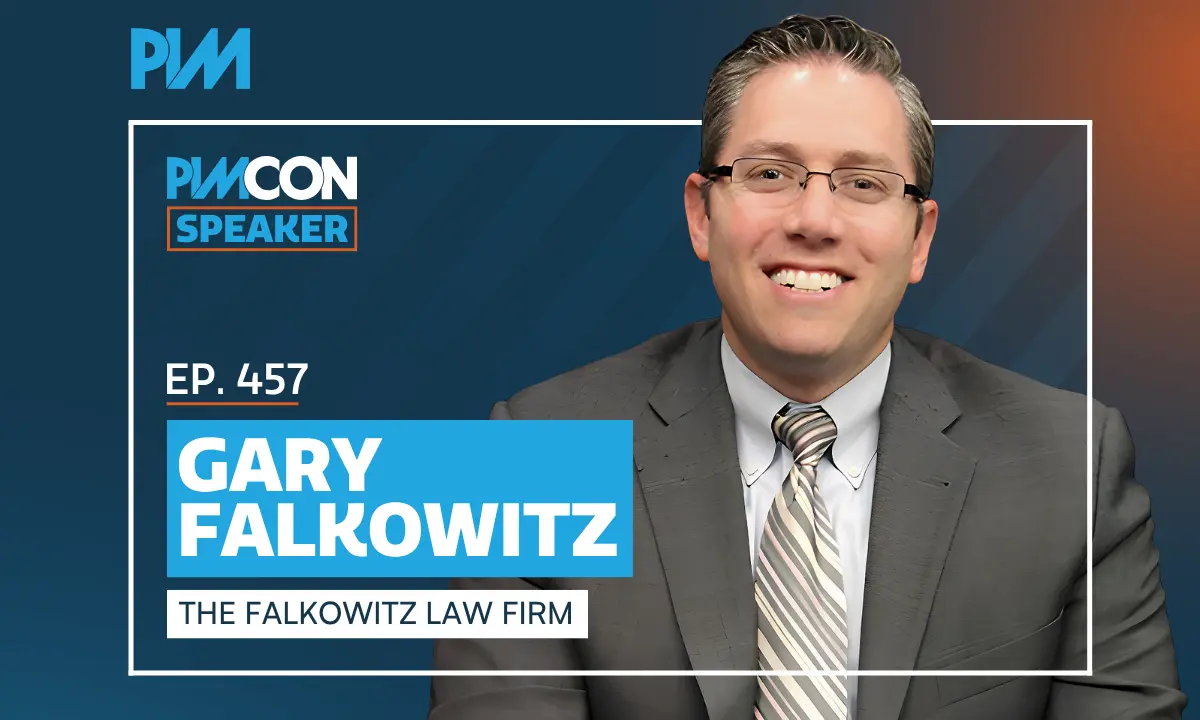
Gary Falkowitz:
Intake department, there's a word I want everyone to understand right now that we have to look for and then remove. And that's friction. Remove the friction.
Chris Dreyer:
You're spending thousands of dollars to get the phone a ring, but what happens when a prospect actually reaches out?
Gary Falkowitz:
If there's a long ring time, that's friction. If you're putting somebody on hold, that's friction. If you don't have the authority to make the decision and you got to call someone back and let them know whether you can help or not, that's friction.
Chris Dreyer:
Every time there's friction in your intake process, you're losing money one way or another. So in this episode, we're going to help you identify all the points of friction and help you solve them.
This is Personal Injury Mastermind. I'm Chris Dreyer, founder and CEO of Rankings.io, the elite performance marketing agency for personal injury law firms. Today I'm joined by Gary Falkowitz, round two. You know who he is. He's the expert on intake, the creator of The Intake Playbook. We dive into exactly how the top 1% of PI firms handle their intake, why you need to completely eliminate friction, and the true definition of a relentless chase. I'm also excited to announce that Gary is a speaker at this year's PIMCON in Scottsdale, Arizona. Today's episode is just a sample of what he's going to be sharing on stage. So get your tickets today at PIMCON.org. All right, let's get into it.
Guys, I'm so excited. I've got Gary Falkowitz back on the pod. Gary, welcome back.
Gary Falkowitz:
Thank you, Chris. Nice to see you, pal.
Chris Dreyer:
And it's been five years since you were on the pod the last time. And it seems like just like yesterday, but-
Gary Falkowitz:
And neither of us have aged a moment, so it's great.
Chris Dreyer:
Right. And also we got to say, we got to lead with, you're going to be speaking at PIMCON in October and we're expanding. The past PIMCONs, the first two were just marketing. It was just all marketing. And we got from the audience that we wanted the top of the top to speak about intake. And I immediately though of you and I'm excited to have you speak at PIMCON this year.
Gary Falkowitz:
Thank you. Yeah. I mean, dude, you crushed it. Your brand, I have never seen, and you're not paying me to say this, I have never seen a brand scale as quickly as yours has. And let's be very clear here, you can't buy that. You got to jump all in. You got to commit, you got to dedicate. You cannot passively create a brand. I know that firsthand. So I congratulate you. I applaud you. And I am a fan of yours. So I am excited to speak at PIMCON. I am excited to share everything that I know about intake to help law firms. So thank you for the opportunity.
Chris Dreyer:
Yeah, thank you for saying that too, Gary. So let's kind of dig in. I know you're involved on the CaptureNow with Michael Mogill and AI is kind of emerging. What's the latest with the CaptureNow? I guess let's start there on the intake product. Last I used it, it's getting better and better on the voice. And where are we at on the update there?
Gary Falkowitz:
Yeah. So really proud of that product. And I could jump into the why in a moment, but in terms of where we are, it's conversational AI that removes the friction and creates automation, integration, transparency, reliability, all the fun words we like to use in business. It's checking those boxes. In our industry, AI should not be a scary term anymore. I understand maybe a year ago because of how fast things are moving, but a year ago everything was different. Now if you're not using AI, you're going to be lapped. You're going to fall, you're not going to have a chance to get up. It's going to take too long to catch up. And I want, whether it's CaptureNow or any other AI tool, every law firm out there has to understand jump in, jump in. I don't care where you're jumping in, but if you're staying away from it because you're scared of it, you're going to leave money on the table and you're likely looking at the demise of your business.
So CaptureNow, we're picking where we're doing inbound and outbound calls. So inbound, everybody's aware of that. We do the nights overflow on weekends, we do primary, we do reception. Outbound, something really cool and important. Why? Because when people submit web inquiries to your law firm, we're so distracted as human beings these days that we literally will change our direction within seconds from, "Oh, I was looking to buy something," to, "Oh, I have to go there. Oh, I'm really interested in using that." I mean, completely different topics within seconds than when somebody submits a web inquiry to your firm, it can't be up to when someone's available, we'll call them. That is an antiquated approach.
So CaptureNow has an immediate callback. You're looking at two seconds, two seconds where a call comes back to the person who reached out to you and you get to have that conversation. We have a million other little features that are extremely valuable, but at the end of the day, we're removing the delay. We're using conversational AI and everything goes into your CRM. So it's a very cool tool.
Chris Dreyer:
That's amazing. And look, I've used CaptureNow with clients in the past and I'm super excited about the Chase feature. Honestly, that's one of my favorite features of AI. It just seems like the labor costs, especially some firms will chase for whatever, 14 days, some it's less. And then post 30, it's like, do you really want your intake team doing that or do you want the AI doing that?
Gary Falkowitz:
Or let's rephrase it to how many times are they making that outbound call in the first three, five, seven, 12, 15 days? And listen, I've consulted with hundreds of law firms. So I've had access to look at hundreds of CRMs and millions probably, hundreds of thousands of intakes. No matter how strong the brand or how great the management team is, the follow-up is not following the appropriate cadence. They're missing moments that are really important to reach out to somebody. And when you are relying on technology, you don't miss those opportunities. And you can't play games. You can't say, "Oh, well, I trust people to make that call." That's a mistake. That's a mistake. People have their strengths, but calling back three times a day for the first five days, that's not a strength of your intake team. They're not going to do that.
Chris Dreyer:
Let's dig into there. Let's dig into the top... Let's just say top 1%. I like to give these KPIs and speed to lead and wanting conversion and chase. Let's stick on the chase. What's the top 1%, these big PI firms that have really got it dialed in? What's their chase look like?
Gary Falkowitz:
I call it a five by three by three. So it's for the first five days it's three methods of contact three times each for the first five days. Because that's where you're going to have the highest rate of success to speak with somebody when you are persistent. Now on top of that, you got to be fast. If someone said, "Gary, you got 20 seconds to tell us what's important in intake and that's all you have and you can speak to the whole legal world right now, go." It's like, all right, be fast, be first and be persistent. Mic drop. I'm out. That's how it's got to be. I don't care how much money you're investing in marketing. I don't care what law school you went to. I don't care how many resources you have. I don't care how many lawyers you have. I don't care how much money you made last year.
I don't care about any of it. I want to know if you're the first person that's going to reach out to me. If you're going to answer my questions, if you're going to tell me if you can help. If you're going to be persistent, if I'm busy because I'm helping my kids taking them to their sports, you're going to call me later tonight when I have some time. That's what I want to know. Because I am likely going... If I'm a claimant, I want you to be available when I'm available. And that's what the top 1% are doing. They're not leaving it the chance or to gamble.
Chris Dreyer:
So stick it on chase, because I find this really intriguing. I think a lot of firms, at least are in regular business hours, they're answering pretty quick. And it seems like when things go to crap, so to speak, is off hours, weekends or on the follow-up. Let's just say human base, like human. We know that AI changes everything and off to the race is AI. If you're going to staff an intake specialist to do... What do you see best for size? Is it full cycle intake specialists when they're not on an inbound call they're doing the outbound? Is it segmented where maybe you have just a chase team? What have you seen? I mean, I'm sure there's exceptions for everything, but what do you think about?
Gary Falkowitz:
So a lot of it's dependent upon luxury of resources and also supply and demand. So how many leads is... If you're a solo practitioner, you're not getting a lot of leads yet. It's hard to say go hire an intake specialist. You're not investing yet in marketing. It doesn't justify you're getting one lead a week. It doesn't justify having an intake specialist dedicated just to intake. But as you get larger, as you get into the 25 to 50 leads a week, now you need someone who's dedicated to have conversation, to make those outbound attempts, phone calls, email, texts, and to be trained and authorized to make decisions. A word I used earlier and sure, I said it with AI, but remove the AI for a moment and remove CaptureNow.
Intake departments, there's a word I want everyone to understand right now that we have to look for and then remove. And that's friction. Remove the friction. Let me give you some basic examples where friction lies. Ring time. If there's a long ring time, that's friction. Hold time. If you're putting somebody on hold, that's friction. Callbacks. If you don't have the authority to make the decision and you got to call someone back and let them know whether you can help or not, that's friction. Referrals. "Hey, let me go share your information and someone's going to review it and get back to you." If you can't make a decision, that's friction. "Hey, I'm going to have an attorney call you back because they're all busy right now." Friction.
So you've got to look in... And there are two dozen other examples that I can come up with right now, but you got to look for the friction and then create a solution for that friction. But to answer your question, because I don't think I did, as you get larger, I do believe in, especially because you want to make things a little bit more exciting for your team, so you want to change them up and give them different shifts. I do believe in having shifts that are focused on outbound calls to new web leads, shifts that are focused on inbound phone response, shifts that are focused on chasing open leads, shifts that are focused on just going after qualified leads, things of that nature. And then coming up with a rotation that makes sense so that you can keep them, whether it's on a daily basis, from nine to 12 you're doing this and from one to four you're doing, what have you. But I don't want someone to get bored or numb at their job. So as you get larger, you do have to think about having different rotations.
Chris Dreyer:
I think that's super smart. I'll just say on my agency side, and I can't speak to the intake on a firm very well, our business development reps, our call team, our field team, they want upward mobility. So then we create leads. So then it's like lead referral, lead this. And also the name we've even experienced, no one wants to be called a business development rep versus a law firm growth specialist. And I think the same applies to the intake team. It's tough, right? You're dealing with feelings and it's a lot of work. It's a lot of calls. That could wear you out.
Gary Falkowitz:
Which brings us to another point, which is culture. So you're asking your intake team who is your first responder, the cover of your book, speaking to claimants. Claimants are literally making a decision about whether they want to work with your firm more based upon the relationship that they have with an intake specialist than based upon the fact that you may have gone to Yale Law School and graduated number one in your class. I mean, literally that's what we're doing. That's what people are doing right now. And they're also, and our intake specialists, they probably get paid at least in the lower 10% of employees at the firm. Let's be honest. And there's probably minimal room. People are like, "Oh, we like to promote our intake specialists into paralegals." Why would you do that? If they're great at intake, you want to keep them at intake. You want to continue to reward them for the work, not take them out and now go out and train somebody else, cross your fingers and hope they could figure it out.
So when you think about culture, that's one of the reasons people stay out of business. If there's great culture, they might think twice about leaving, even if the pay is nowhere near where they want it to be. And when it comes to intake where these folks are having some really difficult conversations on a daily basis, you got to be thinking about giving them breaks, giving them team activities, giving them a rec room to go do some things in, and letting them take their own breaks. "Hey, I got to take a five-minute break. That was a tough one." Absolutely. If you're going to come down hard on someone who's got a really important job and they're not getting paid very well, well, you're going to have that revolving door at intake, which everybody sees.
Chris Dreyer:
Think about what Gary just laid out. You can have the absolute best marketing campaigns in the country, but if you don't build a culture that retains your top intake talent, or if your process is filled with friction, you're throwing money away. Eliminating those operational bottlenecks is step one. Once you clean that up, it all comes down to tracking the data. I ask Gary where your benchmarks actually need to be if you want to compete with the top 1%.
Let me give you some numbers. This is going to be fun. And what I want to do is I don't want you to be afraid to hurt my feelings here or I'm wrong.
Gary Falkowitz:
All right. I will.
Chris Dreyer:
Like, I just don't know. Okay. So KPIs, benchmark KPIs. Let's step away from that top 1%. However, if you want to answer and say, "This is what the top 1%." Okay. This is what I've heard and you can agree, disagree. Also, PI auto attorney.
Gary Falkowitz:
This is my specialty. Let's go. I'm ready.
Chris Dreyer:
Okay. Wanted conversion percentage, 92%?
Gary Falkowitz:
- 95 to 97. That's where you want to be. And I've seen it. If I'm saying that, it's because I've seen it and I've seen it with large law firms. Remember, these are... Let me just give you some psychology here for a moment because obviously this isn't just about you. It's for everyone that's watching this. The psychology here is that we as an industry are unable to solicit for clients. I can't call somebody up and tell you, "Hey, by the way, I saw you in an accent yesterday. I could really help you with that." No, no. So what do we have to do? We got to hire, Chris. We got to promote ourselves. We got to market the heck out of ourselves. And then hopefully somebody needs a lawyer saw our advertisement and then reaches out to us.
Okay, great. What does that mean though? That means that 100% of the people that we qualify reached out to us first. They wanted us first. They wanted us first. So the goal really should be 100%. You wanted me. I'm now telling you that I want you. It's a match made in heaven. Why is it not 100%? Because of the friction. Because of the friction. Where did we go wrong? Were we not fast enough? Were we not decisive enough? Were we not likable enough? Did we not get a lawyer on the phone? Did we not tell them what the other side looks like when they become a client in an appealing manner? Not where did they screw up? They called us. They did what they had to do. Where did we screw up? So when you think about it that way, 95 to 97% is where we have to be. These are people that wanted us first.
Chris Dreyer:
That is incredible. That is the most thorough explanation of that and I absolutely loved every bit of that. So good. All right. We're kind of circling.
Gary Falkowitz:
Circle around. Go left and right.
Chris Dreyer:
Right. Okay. So let's go speed to lead on an inbound call. I have heard, right, and this is where... I've heard less than 20 seconds.
Gary Falkowitz:
Yeah. Three rings. It's three rings. Yeah, three rings because you think about, and rings are between four and five seconds. You have to remember that we're a commodity. So we're not very special. I know we think that we're special. I know that we want to be viewed as special. We're not special. We are literally whatever Amazon offers, they could just start offering a lawyer. And we're just one of the options. You can scroll further down, down, down, down. Okay. Now that being said, when we call up a commoditized service or product, let's go with a restaurant. I'm making reservations Friday night. When I call that restaurant and I get to the fourth ring, and I'm speaking for the general public here. And I'm not talking about the one restaurant that everyone wants to go to. I'm talking about a restaurant, any restaurant, because that's where we are.
We're any law firm. By the fourth ring, I say to myself, "They're really busy or they're not open and I don't want to wait anymore." We got three rings. Now I'm going to say something and I don't want it to sound like a sales pitch for CaptureNow or any other voice bot, but hear me out for a sec. In this day and age, if you start to hear the ringtone at all, the longer you hear the ringtone, the smaller your perception of the business you're calling is.
Chris Dreyer:
I agree with that wholeheartedly.
Gary Falkowitz:
I'm going to say that again because I want you to understand it. Okay?
Chris Dreyer:
Right.
Gary Falkowitz:
Because it's like a voicemail, Chris. Right? If I get a voicemail, I immediately think you're an antiquated business. Doesn't matter. You could be the President of the United States, you could be the CEO of Amazon. It doesn't matter. I think you're antiquated. Why are you using voicemail? We're getting to that moment with ring time. The longer the ring, the more I think you're small and antiquated. The faster the response, the more advanced and the larger and the more resources I think you have. That's the direct logic there. Don't fight it. Accept it and figure out a solution that's consistent with it.
Chris Dreyer:
I agree with all that. And the restaurant analogy is a great analogy because I think everybody's done that. And I have those assumptions as well. Like, "Hey, they're super busy. Maybe we go to a different restaurant."
Gary Falkowitz:
I went to a great popular pizza restaurant a couple summers ago and there was a line out the door. This is before AI and all that other stuff. And line out the door. And when I finally got... it was the only pizza place in the area, which explains a lot by the way. I'll get there in a moment. It was the only pizza place in the area. And I finally get to the front to order my pizza and their phone is ringing off the hook, just ringing. But no one can pick it up because you got one guy making the pie, you got one guy taking the orders in person. You got two people in the kitchen, in the kitchen. But I'm with my buddy. I'm like, "The phone's just ringing. What are they doing? They're leaving business on the table." They're just leaving so much business on the table.
But here's the thing. There are a couple of factors here that we have to consider with that story. Number one they were the only game in town. So they could afford to look at that long line and pat themselves on the back and say, "No one's got any other options. So they'll just wait." They could afford to do that. And I applaud them for the moment for accepting that. They did not think ahead. Now there are multiple pizza places. Now speed beats quality of pizza. Convenience beats quality. Let me say that one more time. I say it a lot on stage. I say it a lot on podcasts and in my masterclasses. Convenience beats quality. Now quality is important when you create the relationship. When you have the product you purchased, you want to make sure that that product does what you though it was going to do or that service is what you thought they would do. But if you're looking to create that relationship, if you are not convenient, you will lose. Friction. Inconvenience equals friction.
Chris Dreyer:
So good. My thought was going through my head was DoorDash. It's like there's some restaurants locally here that are great that aren't on DoorDash. And I always get mad. I'm like, "Why aren't you on DoorDash?" And then I don't use them as much because it's inconvenient. I got to travel, right?
Gary Falkowitz:
Dude, go one step further. Go one step further on DoorDash. DoorDash, what's one of the factors that you look at-
Chris Dreyer:
It's the time.
Gary Falkowitz:
... when deciding whether to order from a restaurant on DoorDash?
Chris Dreyer:
Who's the shortest time?
Gary Falkowitz:
How quickly am I getting it?
Chris Dreyer:
Yep.
Gary Falkowitz:
How quickly am I getting it? 30 minutes or 72 minutes? I don't care that the restaurant's 72 minutes. I'm not waiting 72 minutes for your food.
Chris Dreyer:
Okay. So let's do the outbound side, right? Now here's AI, could do it immediate, within seconds. Human, I typically hear less than two minutes.
Gary Falkowitz:
Yeah. I mean, it's a question you know the answer to already. So less than two minutes is better than less than three minutes. Less than one minute is better than less than two minutes. AI allows you to make it in two seconds. Well, the thing you have to worry about here is because let's take the next, what's the next question that you need to ask after you ask how quickly should you call? And the answer is, okay, well, what's your contact rate? What's your successful contact rate for web leads? The answer should be 95%. You should have a conversation. That's what we're talking about here, not qualification. You should have a conversation with 95% of the people that reach out to you. And when you look at the metrics, what you learn is speed plays the most... Then persistence. Speed plays the most important role in determining whether you're going to have a successful conversation.
It's the reason why AI has such a high successful conversation rate because it's immediate. Less than two minutes from a human, it's good enough. It should be good enough. It should be good enough. I could tell you that there are plenty of times, plenty of times where I could see in the CRM. So I could actually see it. Lead generated at 3:57 PM and I could see voicemail left at 3:58 or 3:59 PM, voicemail left. Sure, it's possible that they just, maybe they're on the line or they call, whatever. The longer it goes by seconds, no more hours, no more minutes. The longer it goes, the less likely someone is going to pick up. I'm going to add one more aspect here, Chris, which is really important that nobody talks about.
When you call a claimant who reaches out to you, they see a phone number most of the time that's not associated with the brand name. Most of the time. Sometimes some of these law firms have these, they're working with these third party companies and they could get your name. I still don't buy that. It happens all the time, but put that to the side. So most of the time they're getting a phone call from a random number, preferably local, and they ignore it. Just like I've ignored when my kid's school calls me because I don't know it's the school. Sometimes they have different phone numbers that they're calling from and I don't have them all saved every different number within the school saved as my kid's school.
What's my point? Here's the point. They then call again right away. It's a local number calling twice right away. Now I go, "Oh, shit, could be important. It might be my kid's school. It might be a doctor. It might be the lawyer I just submitted a web inquiry to." So what's my solution? Call twice. Call twice right away. Right away. You leave a voicemail, you call again because now you're important. Now the visitor, the potential client says, "I should probably pick that up. They're calling again." This isn't some bot that isn't some spam call. We all get spam calls. Spam does usually call you twice in a row, usually.
Chris Dreyer:
I've got someone I'm going to share this with that's maybe listening. And what they will say is, "Well, when we do the follow-up, we send the pretext. Then we call. So they should already know." I still think pretext double dial.
Gary Falkowitz:
Absolutely. For sure. For sure. I mean, the whole point is what makes Chris Dreyer happy? What you order at a restaurant might be different than what I order at a restaurant. But we've got to make sure that we're doing everything in our power to put the odds in our favor. So calling once 12 minutes later compared to calling twice right away, compared to calling twice right away, the pretext. Guys, the more, and ladies, the more we do that puts the odds in our favor to create a successful communication and conversation, the more we're going to win. And I think you talk about conversion and retention. It starts with a conversation. Are we doing everything in our power to create a conversation? Oh, by the way, do we send that email? Did we send a text? Do we let the claimant know in the text, "Hey, by the way, if this is a tough time for you to speak on the phone, we could also text with you."
Did we say that? I'm a texter. I text people. I like to multitask and answer your questions. And if you call me while I'm texting, I might ignore it because I'm in the middle of a Zoom. Who knows? So we got to put the odds in our favor.
Chris Dreyer:
So I like giving just some generalizations. And this is going to be different for everyone. Again, this is kind of KPI, but feel free to say, "No, I have a different opinion." I'm kind of like one intake specialist per 150 leads. So per hundred leads, per 200. How do you forecast? I know there's workforce management and you can do the utilization, but how are you thinking about staffing? Especially if somebody's using a third party and thinking about bringing it in-house.
Gary Falkowitz:
Yeah. I'm an attorney, right? I'm going to give you the attorney answer. It depends. It's a tough one because there are so many other factors that play a role in that decision. For example, what's your qualification rate? What practice areas do you have? How much training do they have? Do they have the authority to make decisions? Are you having them try to stay on phone for signature? Are they warm transferring referrals? And these things take time out of their day that will have an impact on the decision. Generally speaking, one to 150 is where I've been comfortable at number of leads per intake specialist. But as you get larger, it's not that simple because there are more responsible... All intake related. So by the way out there, no non-intake responsibility should go to an intake specialist. No non-intake responsibilities should go to an intake specialist. Having said that, there are so many different things you can have them doing that it wouldn't be okay for me to give you a number and walk away.
Chris Dreyer:
Hey, I'm good with that answer. I'm good with that. That's perfect. I've been recently calling this segment like force multipliers. So a rev ops manager is working with the CRM, could be a part of the sales or intake team. You've got a quality assurance supervisor. I know there's some AI in tech that does that, whether it's ACE or speed. There's a number of them. What do you think about the force multiplier roles? Which ones really come to mind? Which ones do you like in those seats?
Gary Falkowitz:
It's a good question. I like it. I always appreciate the value that shift leaders and folks who are doing call critiques bring to the table because, and I'll bring up something that I created from an audit standpoint, which is consistent with what you're talking about. But I think as you get larger, there is a gap. Presumably you have this intake manager and this intake supervisor. Well, now there becomes a gap created between your intake team and your supervisor. And it's not that they're not in the same team, it's just that they're playing completely different roles. Usually the supervisor, the manager's rarely getting on calls. They're looking at a lot of KPIs. They're doing their group meetings, maybe some one-on-ones and then they're the conduit to the legal team and then they're going back and forth and changing criteria. So they go into the business, into the real business side of it, not to the intake business side of it.
I really appreciate when there's a shift leader that has a responsibility of, let's call it three to five intake specialists. And they are just working with and constantly looking to improve the work product, the productivity, the little stuff that the supervisors aren't really seeing unless there's a fire. So I like the proactive approach there. Similarly, anyone that is taking time, because whether it's ACE or Speed.ai and other products that do similar things, I know CallRail now does a lot of that stuff. Regardless if it exists, you do need somebody other than the intake specialist who's going to have a hard time on their own finding time to critique themselves or use a product to critique themselves. You do need somebody who is pointing out both the positive as well as the areas of improvement. And the ways in which that pays off for your team are really hard to articulate because if your intake staff... This is a basic example, if your intake specialist...
I was on a call this morning actually with a law firm and there was one intake specialist at the firm that kept using the term, "We're going to create a file. We're going to create a file. We're going to create a file. Now all of our calls, we're going to create a file for you." And it was sort of like, "Stop using those words. We're not creating a file." This is not a business with respect from the claimant's perspective. We're not creating a file. Now, we're going to start a claim. We're going to investigate. We're going to represent you. We're going to maximize compensation for you. You're a part of the family. Go down that path. But stop saying create a file, but you need someone to find that. You need someone to look into, "Hey, we got to answer this question better or we've got to ask this question better. We have to explain referrals better," whatever there is that can help.
And I'll go one step further. So something that's been bothering me for a few years, I've consulted with hundreds of law firms and I've seen so much about what's going on inside of these law firms. And I said, "I really want to create a solution that can help many, many law firms." Sure, I have CaptureNow and I have my masterclass, but with the technology available to us and with all of the proprietary information and experience that I have and the methodologies that I've created, I now created something called the Intake Performance Audit, the IPA. And what I do is I take a law firm's, it's called a hundred data points in their CRM and then I run it through my system and on a weekly basis send to the law firm a whole list of cases and reasons and KPIs about where the holes were and how much money we possibly lost or how much we could possibly save or what's re-engageable.
And it's just for me, I'm really excited by it because it's a proactive approach as opposed to a responsive of, "I think there's a fire, let's look into where the fire is." But this is telling you, "Here's where the smoke is, put it out immediately. Here's where we lost a case that we shouldn't have lost and why we lost it. Here's a lead we closed by accident. Let's reengage it." And that's something I guess when you talk about opportunities to increase the revenue or increase output, that's something I'm really excited about, the IPA.
Chris Dreyer:
I'm so excited about that. And I love the answer on the supervisor, the shift leader, basically can just level up the rest of the team so they can learn through immersion and the words matter.
Gary Falkowitz:
Like sports, Chris, sure you have the manager and then the manager will have his like, we can call them captains, but it's more than captains. These are my clubhouse leaders. And they're the ones that are sort of my conduits to the rest of the team. They know what I want from the team and they're going to be able to dig really deep, whether it's take them out for lunch or dinner and sit down and figure out, go over their swing or the way they play defense, what have you. And I think we're a team. We have a business. I'm competitive. You're competitive. Anyone who starts their own business is likely very competitive because you have that entrepreneurial spirit. And we have to understand we're on a team here. So what can we do to ensure that everybody is both pulling in the right direction as well as executing to the best of their abilities?
And I can't give you one answer there. I can give you many, but everyone's going to have answers. As long as we're looking into how to fix that, then we're going to do okay.
Chris Dreyer:
Love that. Gary, again, so excited you're speaking at PIMCON October 4th through 7th is when PIMCON is at the Phoenician in Scottsdale, Arizona. For anyone that has questions that wants to connect with you, wants the audit, just has questions, wants to connect, what's the best way to get in touch?
Gary Falkowitz:
Yeah. I mean, listen, it's gary@intakeplaybook.com. Reach out to me. I can give you my number if that's okay, Chris. I don't mind anybody reaching out. My cell phone number is 917-226-4833. If it's intake, if you're looking to improve upon intake, and by the way, that's the lifeblood of your law firm so you cannot ignore it. You cannot push it to the side. I don't care how much money you made last week or last month or last year. You need to make sure that you're honing in on how things are going at intake, right? Where are the holes and then how to fill them. So if you have any questions, you reach out, have a conversation. As you can tell, I'm very passionate about this topic and I'm always looking to help.
Chris Dreyer:
Love it. Gary, thanks for coming on the show.
Gary Falkowitz:
My pleasure. Talk to you soon.
Chris Dreyer:
The math here is simple. Your marketing creates a demand, but your intake team has to capture it. If you're qualifying leads, but your conversion rate isn't hitting that 95%, the 97% mark, it isn't a lead problem. It's a friction problem. Before you can optimize your growth, you have to take a hard look at your ring times, your hold times, and your chase cadence. But how do you do that? Gary can tell you in person at PIMCON in Scottsdale, Arizona from October 4th through 6th. If you want to hear more from Gary firsthand and completely optimize your firm's operational engine, you need to be in the room with me and the rest of our amazing speakers. Head on over to PIMCON.org right now to lock in your spot and grab your ticket. I'm Chris Dreyer. Thanks for listening to Personal Injury Mastermind. We'll catch you next week.