Chris Dreyer:
Today's episode is a wide-ranging conversation full of the sort of deep philosophical insights that could fundamentally change the way you run your law firm.
Steven Levin:
Are they looking for justice? Are they looking for retribution? Are they looking to be recognized? I would walk away from settlement offers of all kind and I would go home and I almost become physically sick. You change the value of a case by your belief. So if theoretically I'm the smartest person in my firm giving strategy discussions back and forth to everyone else, who do I talk to? I talk to artificial intelligence.
Chris Dreyer:
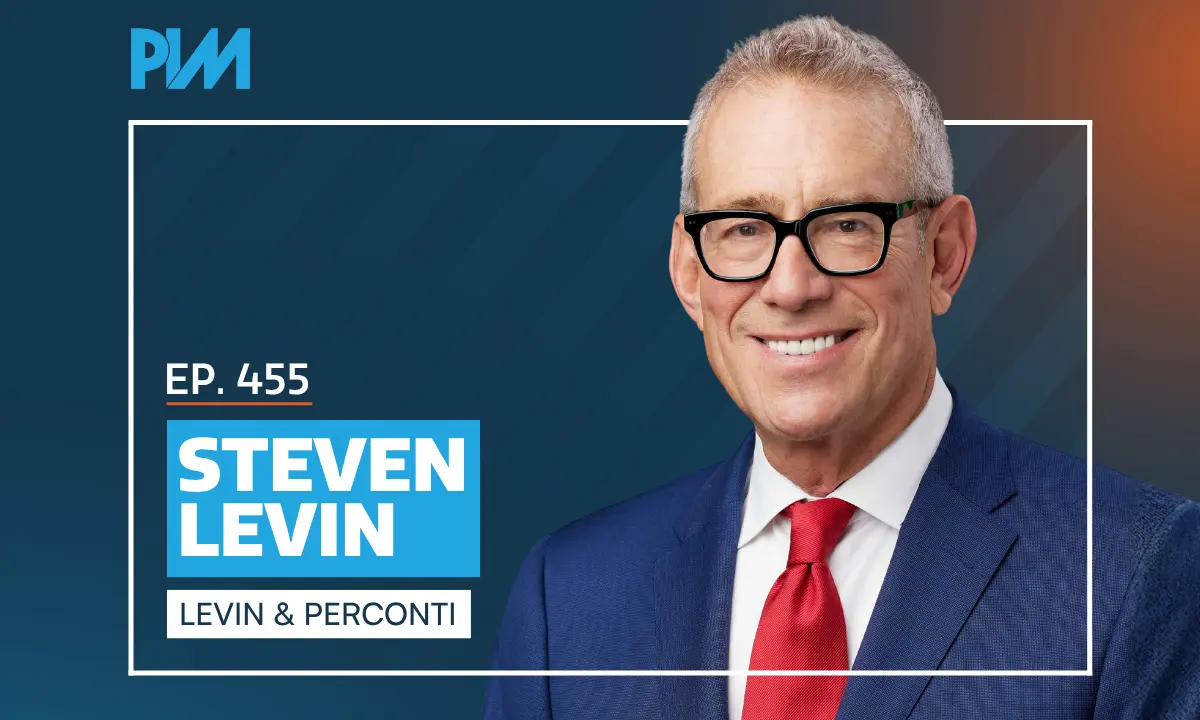
So if you want to walk away with the advice that could change how you think about running your business, then you need to keep listening. This is Personal Injury Mastermind. I'm Chris Schreyer, founder and CEO of Rankings.io, the elite performance marketing agency for personal injury law firms. I'm speaking with Steven Levin, founding partner of Levin & Perconti in Chicago.
Steve's firm has over 30 trial attorneys and has recovered more than $2 billion since 1992. He's also a pioneer in nursing home abuse cases. Today we talk about authenticity, how specialization fundamentally reshapes your staffing choices, the psychology behind strict case evaluation and mediation and using AI for trial strategy. Let's get into it.
Steven Levin:
I wonder if lawyers haven't overdone we recover billions because there's no lawyer that advertises that hasn't recovered billions or claims to have recovered billions. So how does the consumer separate all the different lawyers who have recovered billions or list their verdicts or list their settlements? That used to be very impressive.
Now everyone has some version and I guarantee you couldn't find a consumer who said, who advertises they have the highest amount and that's the one they go to. I don't think that happens. So my lifelong search has been to find out what is, how do you connect? Certainly part of it is connecting by trying to tell your story through your potential client's eyes. Are they looking for justice? Are they looking for retribution? Are they looking to be recognized?
And we try, and again, it's always a work in progress to look at sources outside the law to see how they do it. I mean, our current president is an expert at communicating with what his base is. Just an expert. He is 100% in tune with his base all the time and never goes out of character. I'm not getting into politics. I'm getting into technique here. Never. And so how does he do it? And despite the fact that he's not known as the greatest truth teller, he's authentic.
So how can you be maybe not telling the truth and be authentic at the same time, which is by the way, not the goal, but the goal is to somehow be authentic. So what makes him authentic? And you see the occasional other politician and they just stand out. I believe that people are looking for authenticity and if they believe he's a real person and they believe that somehow they could connect. So how do you communicate that through your marketing? That's the goal.
Chris Dreyer:
Seth Godin wrote that book per Purple Cow. I've heard Dan Morgan spoke about the Purple Cow Committee. It's like, "How do you do things that are a purple cow that stand out among the herd? It's like, what are the things that you can do different?" I also think Harlan Schillinger, he's been in the game for a long time and he's like, "Hey, you get what you ask for."
And it's like, "Well, you're talking about nursing neglect, you're talking about birth injury now." And for whatever reason, the world and the ether, you put it out there and it seems to reward you and people seem to understand that association. So I don't know. I think there is an art and a science and the story and all to it. And it's like even the authenticity, well, what does that mean?
Steven Levin:
Right.
Chris Dreyer:
How do you show authenticity in a manner that the consumers would appreciate, right?
Steven Levin:
Right, or even more fundamental, what is authenticity? No one has watched more podcasts, seen more YouTubes and read more books on these subjects than me and everyone talks about it authenticity, charisma. They say charisma is not you impressing someone else, but allowing someone else to feel that they're impressing you and all that's true. And it's a very similar principle to jury selection, but still no one that I've read or seen or heard has actually put their finger on exactly what it is. And you reminded me of something very early in my career, what Harlan said about you get what you asked for.
So lawyers would say to me when they referred cases, "Well, I'll be happy to give you my good cases, but you have to take my bad cases." And I would say, "I really can't accept that because we don't handle volume soft tissue motor vehicle cases. In fact, if you sent us one, you'd be sending it to the wrong place. And if I had a simple one, I wouldn't know all the different tricks of the trade of maximizing value for your client and those kind of cases. So it would be counterproductive because if I was trying to figure out how to do soft tissue cases, I could not give your case the important case that you have, the attention it deserves."
And the same thing applies to young lawyers that say, "Well, I want to take these bad cases or these little cases because that's how I'll establish rapport with clients." And I said, "You'd be better off establishing rapport with clients by taking them to a baseball game because if you handle their little case, first of all, it's not going to work out probably for you or them. And naturally speaking, they're going to blame you because you're the lawyer and when they get a substantial case, guess what they're going to do?
They're going to go to a lawyer and this is what Harlan says, "Get what you ask for." Who handles big cases? Not you, but it takes patience and in a way what this is, the lessons in patients. And whenever you move to a different area, if I was going to start a birth injury practice, would I take the marginal case? The case that may not have a significant enough injury, not to the client, but to make it worthwhile to litigate.
Well, if I took those, I'm just not going to develop the expertise or the reputation to take the cases that are more substantial, if you will. I hate to say that because from the client's point of view, it's always the injury, but there is cases that work out better or not in the legal system.
Chris Dreyer:
Chasing every quick dollar completely dilutes your authority in the marketplace. What Steve is saying is that true authority requires the discipline to turn down minor volume cases so you can preserve your resources and build a reputation for winning the massive ones. Next up, we shift from the macro strategy of positioning to the actual operational mechanics of running the shop.
A lot of law firm owners make the mistake of treating the personal injury landscape as one massive monolith, but as Steve explains, true specialization completely changes how you staff your firm and evaluate your files. I want to dig into this. I think this is a unique, kind of an interesting topic. I see it. Look, I'm not an attorney, you know what? I'm not an attorney, but I see it from the staffing, right? When I see the bodies on case managers and hardly any paralegals, I'm just assuming it's case manager, they're just using a tool to do the MedChron, try to just settle, right?
But then I see different organizations, it's like the pre-lit paralegal or the litigation paralegal to a turner ratio is tighter because look, as far as I know, I guess the paralegal's trained in legal compared to the case manager is more like the communication cheerleader, not to be negative, but would you say that that's one of the things like, "Hey, if you're doing all these soft tissue, the focus isn't there and the staffing is changed?"
Steven Levin:
I think you've hit on it. I think what we're really talking about is PI is not one field. There are lawyers that handle PI case, and I'll give you an example because we refer out routine auto cases. Sometimes we make the mistake we have, not anymore of trying to handle it ourselves. And now you say, "Well, that would be much easier than a complicated medical malpractice case, but we usually would make one mistake."
We wouldn't send it to the right doctor or we wouldn't get the right ... Or we would do something wrong that someone with expertise in that field, which is a different field could handle nursing home cases any smart lawyer can figure out how to handle one, but when you become an expert in one, you just have the ability to handle it on a different level. And not only that, and this is probably more appropriate to your point, your entire staff is trained that way.
If I gave one of the lawyers in our case a routine auto case, they would not know what to do. They would ask a million questions, "Joe, is there uninsured motorist?" There's a whole bunch of stuff in that field that you have to know and they are clearly different fields. Nursing home to medical malpractice is another field. And I'll tell you where it's really important to have the expertise is in case evaluation, like two of our birth injury partners, Dov Apfel and Seth, are excellent.
They're the smartest birth injury lawyers in the country, in my opinion, but what that gives them the ability to do is evaluate a case quickly and you're referring lawyers like that, your clients like that, they can evaluate a case in two hours that an experienced medical malpractice lawyer who's never done a birth injury case might take three months and that is such a huge difference.
I told Dove when we went into this partnership, I said it's a great partnership or a joint venture for many reasons, but one of the most important reasons to me, I consider myself a good lawyer and a skilled trial lawyer is I never have to worry that the defense is going to know something that we don't know. And you know that Dov, because you've been doing this for 30 years at the highest level and that gives you a power if you don't know it, to really focus on what you're good at.
Chris Dreyer:
Lately, there's been an undeniable surge in massive verdicts across the country and Steven spent us a lot of time trying to understand exactly why juries are suddenly awarding so much money. Understanding the shifting psychology behind these numbers gives you immense leverage at the negotiation table, allowing you to position your files for maximum recovery forever stepping into the courtroom. Steve has some fascinating theories on how a changing society has completely rewritten what a jury is looking to award a plaintiff.
Steven Levin:
I went through periods of time where person injury lawyers were scorned. They were blamed for all kinds of societal troubles. They were thought of very unfavorably till it was great to be a trial lawyer. That changed and then the verdicts were too large and there were ads on TV, someone standing in front of a burned out factory saying lawsuit. The other side did a great, great job of demonizing personal injury lawsuits.
For whatever reason now, I have theories I don't know the answer. You don't hear about that anymore. You don't hear about verdicts are too high. You don't hear about tort reform and I think that's in part how society changed. Everyone is angry and if you're on the right side in a case of that anger and that anger is typically directed to some elite, somebody most people have problems with you.
How do you get medical care? How do you get an appointment with a doctor? Corporations do irresponsible things all the time. But even yourself, Chris, ask yourself, if you hear that a major New York Stock Exchange company did something wrong and they were fined $22 million, you'd say that's probably not that bad because when things bad happen, they get fined billions. Now, and everyone talks about billions. No one even talks about millions.
So I think jurors just like us don't feel that they can sufficiently acknowledge a wrong by their verdict unless the verdict is in the multimillions of dollars because that's how we all look at society now. And if they're angry at the defendant for the defendant's conduct, they will punish the defendant or I don't know, you could call it punishment, but they're really doing is acknowledging the wrong and the impact of the wrong on our client.
Chris Dreyer:
Can I ask you just some follow up details? And this is just I had a mesothelioma attorney on earlier today and like I'd always heard the cost to acquire a case was $60 to $80,000. And I was asking about, if you don't mind sharing, what's an average cost to acquire a case?
What's the timeline on desk? What's an investment look like for expert witnesses? I don't know. And you probably hate the generalizations because every case is unique, but I was just wondering if you could share some of those nuances on the nursing case, neglect case.
Steven Levin:
We still don't have exact numbers on the cost to acquire cases because our cases come from so many different sources and despite our best efforts, separate phone numbers, separate marketing, intake to do it's very, very, very hard to do that when your cases come from multiple sources, old-fashioned networking, which I think is a usually important trait that people forget. Cases that come from your current or former clients, that's another category that's hard to capture. Is it coming from a TV?
There are people today, our TV advertising, we don't do much anymore who still today tell me they saw my ad on TV. I mean, I spoke at a seminar from some lawyers. They said, "Well, it's easy for you because you're advertising on TV." And I'm telling the lawyer, "We don't advertise on TV, but he thinks we do." So somehow we've got our name out there in other ways that thinks that.
Chris Dreyer:
So far we've talked about how deep specialization fundamentally transforms your firm's staffing structure and slashes your case evaluation speed down to a matter of hours, but doing what a file is worth on paper is only half the battle. Next, Steve breaks down the profound mental shift you have to make to build the confidence required to set your number and hold your line when you're staring down the insurance company.
Steven Levin:
One of my topics that I speak a lot about is mediation. It's really valuation, negotiation, and mediation. And lawyers say, "Well, how can I get a maximum settlement if I don't want to try the case?" I said, "Well, you can't. How can I get a maximum result if I settled within the first two months?"
I said, "You can't. I'm not saying it's right or wrong and maybe your client wants to take less than the case is worth, but you're not going to get full value. Full value comes when they know you will spend the money and the time and are willing to go to trial, period." So people think many times, and this is a good lesson for any sort of negotiation or mediation, that it's just about the facts, what the defendant did wrong, the horrible tragedy they visit, but it's other factors.
It's the knowledge of the other side that you will go to trial and that you will comply handle the case and people, defense lawyers say, "Well, what's the value of the case?" I said, "The value of the case, it's really how much risk are you willing to take?" I'm not saying it's right or wrong, but I can't tell you. People say, "Well, that case is worth four million."
How does anyone know that? You have to agree on a value to settle a case, but that case could be tried and it could get not guilty or it could be 25 million. And all the different sayings people say at these mediations, "Oh, this is the wrong county. Your client looks to ... It's a wrongful death." They're all made up because every case has individual facts and there's no such thing as a... They say this in nursing, "Well, that's a $300,000 hip fracture case." That's just unclear thinking.
There's no such thing as a hip fracture case. Something happened to your client that may involve a hip fracture, but my hip fracture is going to be different than your hip fracture than how it's going to impact my life. The conduct that causes is going to be different. There are so many variables that you can't look at a case that was tried three years ago in a different county and say, "Well, that's the value." People do that because that's how they resolve cases, but it's just not true.
So you can, if you're going to really practice at the higher level, right or wrong, you have to use your expertise and experience to set the value that you think is the value and stick to that value and figure out ways to get to that value or be willing to try the case if you don't get there. And that's the hardest thing. So I'll say to a lawyer, I'm going into mediation, "What are you trying to accomplish?"
"Well, I'd like to take between... I think we'd sell it between two and three million." I said, "That's really not a plan. That's just saying we're going to take the best offer." You should go into the mediation thinking it's three million and maybe your aspirational number is four million, but you're never going to take less than three million and through the psychological principle of anchoring in other ways and just your belief, you change the value of a case by your belief.
So everyone does that. So when get back way back to your earlier question, so if you specialize in this kind of work, you look at things differently than lawyers that maybe do a more volume practice. I'm not making any judgments at all. I'm just saying at the elite level of our profession, medical malpractice, birth injury, catastrophic injury of any kind, you got to realize that you're in charge and that you have an opinion and that you're valuing a case at a certain amount and you're either going to get that number or you're going to try the case, period.
And I remember I used to do this when I was younger and I would walk away from settlement offers of all kind and I would go home and I would almost become physically sick. I said, "Who am I to turn down a million here, a millionaire?" And I hid that hopefully from the other side to the point where now I really mean it. It's just, you could do what you want.
I'm not saying I'm right or wrong, but this is my opinion and this opinion is going to dictate the result or we'll try it and maybe I'll be right and maybe I'll be wrong, which in and of itself is a powerful thing to say to the other side because I can't convince them what it's worth if they don't believe it. It's just how much risk they want to tolerate and how much risk we want to tolerate and that's valuation in our business
Chris Dreyer:
A lot of business textbooks treat firm culture like an abstract manufactured buzzword you just check off a list, but building a true lasting legacy requires understanding what culture actually is and why it matters to survival of your firm. Steve looks at it through a very relatable lens breaking down how real culture takes root through daily consistency rather than corporate slogans.
Steven Levin:
I used to read a lot of books about business culture and it always sounds sort of like, what is a culture? In those days it just sort of sounded made up, develop a culture, develop a culture. But over time as a result of both having a very large family with four kids, 15 grandkids, I realized that business is the same as a family. It's a series and this is what wife people should stick to their own knitting.
It's a series of micro encounters, unspoken, spoken, casual, formal that happen every minute of every day when you're working with other people. And if you're consistent in that, if you're consistent how you approach cases, if you're consistent in your philosophy, that culture will be passed down to the younger lawyers. And I think we've been very successful in that. My partner and I are not at the beginnings of our career to say the least, but we have, and he's been on the show, Mike Bonamarte, maybe Margaret Battersby.
They're the future of the firm and all the other young lawyers that they work with, but I am confident that as a result of being with them for 20 years, that they have least taken in their blood the foundation of the culture, which is a base for which they can expand out because if the culture is good, it includes just because we're doing it this way doesn't mean we should do it this way and there's other ways to do it. There's other ways to market. There's more efficient ways to handle personal injury cases, the money ball approach.
Chris Dreyer:
Our last topic today is artificial intelligence. Steve breaks down the surprising reason why plaintiff attorneys might be better positioned to leverage AI than other attorneys on the other side of the courtroom. It turns out according to Steve, that it might all come down to the structural alignment.
Steven Levin:
People have just scratched the surface of using artificial intelligence. I gave a talk the other day and I said, "Younger lawyers, it's impossible for you all to imagine what I'm going to tell you." When we had a medical malpractice case and there was a medical issue, sent someone to a medical school library to find one book to photocopy maybe the whole article or maybe just two pages out of the book and that was our medical literature preparation or sometimes we'd buy the book and then you're buying these expensive, huge medical books and they're too general really to help and that's how we researched the medical malpractices.
Then we had the internet and we're getting better and better where people, there were specialized medical databases in the internet. Then everything became Google, you didn't need it. Then they had something up to date and now you're even better. So now there's no secrets. We know as much as the doctor that we've sued more probably because we've now studied everything out there on that topic and doctor didn't have time to do, so that advanced it.
Now we have artificial intelligence. And as you said, when you're doing a presentation, I mean, I use it every day. So if like theoretically I'm the smartest person in my firm giving strategy discussions back and forth to everyone else, who do I talk to? I talk to artificial intelligence and there's no better tool than they say I say. I don't use it. I do, but its highest use is brainstorming really. And for some reason it has the ability to really clarify certain issues.
I worked on one case for this one case I was talking for a year and a half and I was having difficulty articulating the concept, which the defense was going to say that that horrible event of instructing the others residents to beat our client, they were going to say, "Well, that was outside the scope of his employment, which would immunize the company from the conduct." And I had lengthy discussions with artificial intelligence and I give them a lot of credit for just helping me articulate why that's wrong.
And once you incorporate that, there are so many steps in a case that occur that are unnecessary and that's because people haven't fully incorporated this in our business. And what's fascinating, which I have a feeling that you enjoy too, is trying to understand why businesses work the way they work. Why did baseball pick players in a certain way and why did it turn out to be that was wrong?
So why does our business work the way it worked? Because our side is working on a contingent fee. So our job is to get the best possible result in the shortest period of time from a business point of view. The defense side is working on a highly leveraged scale. So the main lawyer in the firm gets the business and parses it out through a lot of people and those people earn hours and it's some multiple of those hours that makes that firm money and then the big person maybe jumps in the case at the end, but it's leverage, pay a lawyer $100,000 and get a three time hours.
And again, I'm not casting a value judgment or not, but that's how they work. Well, that subconsciously influences how they practice. They're not really motivated subconsciously or consciously, but let's just say it's subconscious to get the quickest result in the least time. They're not necessarily motivated to use artificial intelligence because they can't bill hours for artificial intelligence.
If you could do a document review with artificial intelligence in 15 minutes, you could bill hundreds of hours of a lawyer reviewing the same documents. So when you realize that, you realize a lot of things that we're doing we don't have to do on our side. We really need to take expert depositions when we know everything the expert could say because we have access to information that same that they do.
So some young lawyer is going to incorporate what I'm saying and just revolutionize the steps in our business with the ultimate goal is to get to the end either by settlement or verdict in the quickest period of time without sacrificing any of the steps along the way. Our business is just ripe for that.
Chris Dreyer:
This is a really insightful conversation, a ton of wisdom there that I was thinking about the competence and the confidence when you're talking about those numbers, say it's three million versus the two to three and all the positioning elements. For our audience, Steve, that has questions that wants to connect with you, the has a catastrophic, a birth injury, a nursing case, what's the best way to get in touch?
Steven Levin:
Call 312-332-2872. We have a big presence on the internet. Always contact me directly at sml@levinperconti.com, that's S-M-L@levinperconti, L-E-V-I-N-P-E-R-C-O-N-T-I. People call my cell phone. I'll just put it out there. Call me there or text me 312-670-5504.
We have a complete case intake department that's excellent and prides ourselves on its ability to being instantaneously responsive and we'll get you the answers you need and we'll get the material that the lawyers need to evaluate the case. We'll give you a quick and fair decision and if we're the right law firm for you and you're the right client for us, you get the best possible result at the highest possible level.
Chris Dreyer:
Amazing. Steve, thank you so much for coming on the show.
Steven Levin:
Thank you, Chris. I enjoyed it as well.
Chris Dreyer:
Always. Steven Levin has built the firm that he wants. He's focused on building a winning culture, embrace the transformative power of AI, and not only niched up, he created an entirely new niche with nursing home litigation. If you've read my book, Niching Up, you know that true specialization requires sacrifice, actively rejecting standard settlement bill volumes so your firm can exclusively dominate on high stakes value.
Steven is living proof that if you want to niche up, that means saying no to anything outside your specialization. Remember, real success comes down to defining exactly how you want to play the game and having the patience to see it through. To see how we help elite personal injury attorneys dominate their niches, go to Rankings.io. I'm Chris Dreyer. You've been listening to Personal Injury Mastermind. I'll catch you next week.