Chris Dreyer:
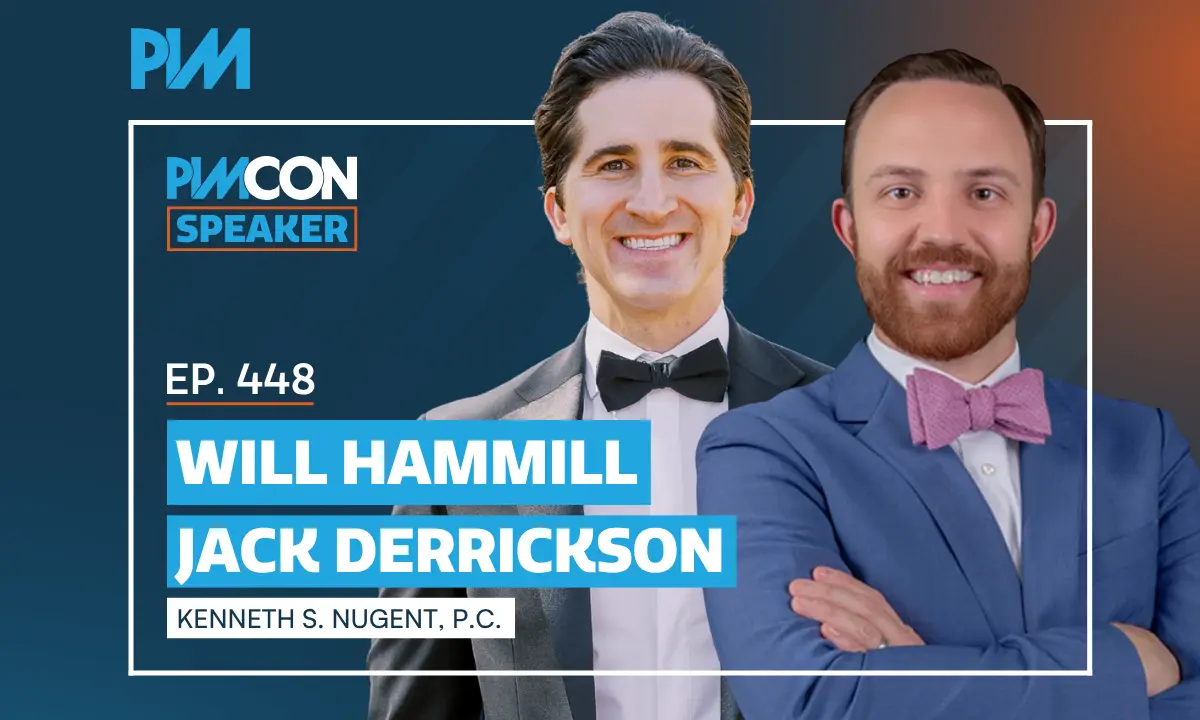
The old personal injury growth model of dominating local TV and watching the phone ring is dead. As leaders at Ken Nugent's firm in Georgia, they've helped secure over $5 billion for clients, but they aren't slowing down by revamping their marketing and intake, they are currently signing a hundred or more cases a month than last year. If you want to know how they're out maneuvering the competition to capture that massive market share, then keep listening. This is Personal Injury Mastermind. I'm Chris Dreyer, founder and CEO of Rankings.io, the elite performance marketing agency for personal injury law firms. Today, Will and Jack break down their modern marketing mix, intake operations, and the client experience. We only scratch the surface here so to see exactly how they're growing, catch them speaking lit PIMCON this October. Grab your tickets at PIMCON.org. All right, let's get into it. Hey guys, got another couple amazing guests today. I got Will Hammill and Jack Derrickson. Welcome to the show.
Jack Derrickson:
Yeah, thanks for having us.
Will Hammill:
Good to be here.
Chris Dreyer:
I'm so stoked you guys are both speaking at PIMCON on omnichannel marketing, so we got that later in the year, but I like starting off with some wins. Anything top of the dome, Will, I'll start with you first. What's something that comes to mind?
Will Hammill:
We signed a hundred more cases last month than we did in April of 2025. Signups are up and we're trending in the right direction.
Chris Dreyer:
Let's go. Let's go. And then Jack, what about you?
Jack Derrickson:
Yeah, same here. We're trending the right direction for May too based on accidents out there and getting incrementally better at understanding why.
Chris Dreyer:
That's amazing. You guys have helped over 300,000 clients. You've recovered more than 5 billion. Ken Nugent is a powerhouse in the PI space and it's exciting that even with this many years, still it's like, "Hey, we're a hundred plus versus the previous year." That's amazing.
Will Hammill:
Yeah, certainly very excited about where things are trending. Signups matter, but our real focus right now is customer service and then also generating more out of each and every case because the cost of doing what we do, the advertising expenses only more and more every single month as big players come in, as PE comes in, we've got to be better and better with each case that we work recognizing that if we can't get our average fees up, it's going to be hard to stay in business long term.
Chris Dreyer:
Yeah, well said. You guys talking about omnichannel marketing and I know we have a mutual acquaintance, we have Gary Sarner and you guys are all over the place, TV, radio, digital. Was it the marketing mix that changed the distribution change? What do you think some of the core factors were to plus 100 versus the previous year?
Jack Derrickson:
Yeah. I think Ken started the firm in that super early TV adopters. I think he was with that first class, I guess you could call them. And growing up, I was a kid and you put a little more money to TV and you're going to get more cases, no questions asked. But up until probably a year ago, that was still our main focus. Will and I got the opportunity to come in and take some things over and our first thought was how do we modernize our marketing mix? And the most obvious way to get up with the times is radio. I mean, what screams 2026 more than radio? But that was our first step in really diving into this thing and we've loved between radio, more digital, just really taking what was a huge focus on TV and spreading it out so we can hit more ears and eyes.
Chris Dreyer:
Well said. And Will, they got you on social now as well. They got you doing the rap songs and then getting the entire ready for the courtroom. So do you have an in house social, like you've leaned into the social side, having fun with it. Talk to me about that, that channel specifically.
Will Hammill:
Yeah. So we work with Ray Lakhani of Raw Law Media. Ray has been great to us. Ray stops into the office pretty regularly and we'll film several different social takes at the same time. He does some unbelievable things with the editing for those, but we've certainly treated social as the next opportunity to meet a younger generation. We did some studies and also used some of our marketing partners to get information about just where different audiences were consuming media. And certainly we've had a hold on that audience that is 40 plus, but recognized that we weren't reaching the younger generation. We still do reach the youngest generation with some YouTube stuff because we're prolific with our YouTube advertising and kids see us quite a bit on YouTube, but that 18 to 40 year old age gap we really weren't connecting well with we found. And so we're trying through several different mediums to reach that group, recognizing that as the 40-year-old plus gets older, unless we're hitting the younger generation, it's going to be hard to maintain the market share that we have.
Jack Derrickson:
In the past, we've done social media and we were always very focused on matter of fact, here's what you do when you're in a car accident, here's the settlements. Ray has come in and he's so creative with what he's coming up with. We're very lucky to have Will and Ken, who's really game for anything. He's not afraid to be the butt of a joke in a video. He understands that he is not just a lawyer but also a personality at this point. And Ray comes to us with stuff that we look at each other and we're like, "How is anybody going to like this or watch this? " And I think we had one video of Ken throwing a cup of coffee at a car and it got 800,000 views or something like that. I mean, it's insane what works.
Chris Dreyer:
Getting 800,000 views on a video is incredible brand awareness, but likes and views don't pay the bills. Signed cases do. If your intake process isn't dialed in, all that creative marketing spend is just a donation to your competitors. Will and Jack knew that they had to tighten up the back end to handle the massive volume they were generating. Let's jump back in as they explain how revamping their intake leadership and implementing a relentless chase protocol transform their conversion rates. We'll go over to intake. Obviously with the increase in caseloads is complexity and development on your intake. So maybe you could just talk about how the team has evolved, maybe any tech stack that helps facilitate and give you those force multipliers on the intake and I'll tee that up, whoever wants to answer or start on the intake side.
Will Hammill:
So along with the change that we made just in the management team back about a year and a half ago, we did make a change too in leadership of our intake team and we've implemented a lot of good process and procedure around follow up that maybe we didn't have as much emphasis on in the past. That Chase tactic certainly has helped significantly with increased signups. We rely a little bit on technology but certainly are always evaluating new products to see what might be best for us in that space. It's in a lot of ways a manual process and we've got a great team of people that are constantly following up.
That's a part of their daily ticker and whether it be emails or texts or phone calls to try and follow up and seal the deal, we're working on that constantly. And I think it's a credit just to the leadership that we have in the intake team that we've started to sign more cases where historically we've been on a bit of a decline as of about a year and a half ago where month over month those numbers are growing again and that's a very positive sign for us and certainly we believe for the clients that we serve too, because it's getting harder and harder in the market of Georgia to recruit cases as there's so many other players in this space.
Jack Derrickson:
To jump on Will there too, our people are incredible. What we know is we have a very strong brand. There are people out there looking to call us every day. I mean, I think we saw a report that we were the third or fourth most searched law firm in the country, something like that. And people want to call us, but what happens is they're Googling us, they're calling us, but if we can't help them, there's four other names sitting right below our name there ready to help them. We're not just in the business of signup cable, we're trying to help people. So our intake team is exceptional at trying to figure out a way to help people and if we can't help them, how do we get them to somebody that can help them? At the end of the day, the best way to grow our business is to be there for the people of Georgia. We love everybody here. It helps that if we can continue to help them however we can.
Chris Dreyer:
Let me ask you, this is like Georgia specific. I see a lot of people talking about the runners. I saw Morgan's running an ad. You've got Darl Champion has talked very, he's been very public about his thoughts on the runners in Georgia. Have you had to make any changes in maybe what you capture and sign the client just like, "Hey, just so you know, Georgia's going to... You're going to have 10 attorneys be calling you or however they're doing it." Has that impacted the business? Have you seen things on that side of the coin?
Will Hammill:
We're fortunate that we haven't had a whole lot of lost business once we do in fact get that client signed up. They recognize the brand. We have a lot of our business, 35 to 40% on a monthly basis is referral or return clients. And so they know us, they've potentially worked with us or family members worked with us before and they stick around, which is great. We do have a process in place for lost business in the event that there is any sort of concern about that. We've got a dedicated person that is working to save those cases and prevent them from being lost business cases, but you're exactly right.
I think we got some information from Cox Media around just the number of runners in the state and the number of potential clients that don't realize that running cases is illegal and that ultimately they shouldn't be working with a runner to place their case. And so it's something that we're competing for probably half of the pie in terms of potential clients because the other half is going to runners, at least from the studies we reviewed and that's a crazy reality to think about how hard it already is to get cases, but then that makes it a lot harder too.
Jack Derrickson:
Well, we still get clients all the time that get called by runners after we signed. And it doesn't stop because we're two months into the process by any means.
Chris Dreyer:
That's insane. 50%.
Will Hammill:
Darl did a lot of good work on that committee. We had a lawyer in our office too that served on the Georgia Bar committee too, but unfortunately we would love for the bar to be even more involved in preventing that long term.
Chris Dreyer:
Yeah, that makes sense. I'm going to ask a question and you don't have to be specific or share as much as you want to share. I've said a nationwide average for an auto case, if you can get it below a 3K CAC is good. And in California it's maybe four or five and Florida's like, I'd say maybe four. What's Georgia? How is it trending and the cost? How do you think of like a good target CAC as much as you want to share?
Jack Derrickson:
We've been seeing a lot near maybe this time last year around what, 4,000 and going down and continuing to find ways to go down further. I think there's always the age-old, 50% of our marketing budget is wasted, but which 50% is it? Oh yes, we've seen great trends in the right direction. We know people are out there trying, not afraid to increase that cost per acquisition, but trying to find ways to combat it always.
Chris Dreyer:
Yeah. And I like the way you guys are approaching it too, because like, hey, even if you covered your average fee and it goes towards a brand, I mean, well then how do you factor in the referrals from the future that's generated and how does that track towards things? So thank you for sharing. I'd just like to give our audience information like the State of the Union, so to speak, in regards to where the metrics are trending. Going on to the delivery side and the volume and you guys are pre-lit in litigation when it's coming in, we're going to speak to Chad Dudley later today actually and he's got a way of identifying, I guess within the first maybe 90 days of these different tiers of cases. And talk to me about how you're organizing your team to do the best legal work and cherry-picking the best cases for the best attorneys and those types of things.
Will Hammill:
Yeah, certainly. So we've been working with our teams on centralizing some of the functions. Historically we had teams set up with case managers, paralegals and an attorney and we had two attorneys that worked cases at any given time because we wanted to make sure that there were two sets of eyes working on those cases. We've centralized some of the team member functions just so that we can try and control or better control our time on desk and get that number down, getting medical records in faster, getting liens and reductions done more quickly so that we can move cases because one of the main client concerns of course is speed. They want to recover as fast as they can. At the same time, we've been pushing to litigate more cases recognizing that there are some firms that are set up to do just that as we are and in doing so we can get better values for each of the cases that we have, which is of course better for clients too, but there's a speed component to that.
So we're thinking about how we restructure just the process of negotiating cases, whether we might put cases into suit even earlier than we've done in the past to try and drive value. Back to part of your question on, all right, how do we get the right cases to the right team members who have the most experience? We've always treated our cases on the front end. We've assigned a value or a letter system to them to know, all right, this is an A case, this is a great case, this is a D case, only meaning that, hey, there wasn't any hospital treatment and there's a variety of cases in between.
And then we're making assignments based upon the different talents in our office and geographic assignments as well. While we have our intake team here in Duluth and so all of the new calls come into Duluth. Of course, we want to assign the case to lawyers that are closest to that particular client and so we're making decisions there, but we're excited about where this centralized process is going because we're certainly getting a lot of good metrics from that work and intend to continue to grow that to other attorney teams in the firm because we're seeing a lot of efficiencies there and better things for the clients that we serve.
Chris Dreyer:
Yeah, that's incredible. And you mentioned the time on desk, it's the clients, you can take the happiest client, but if they got to wait for the fee and then the case extends out, then they can turn and be unhappy. And sometimes it's nothing you can control, but sometimes there are things that you can control.
Will Hammill:
We're finding that offers of settlement in Georgia are certainly helping in that process while insurers want to make low offers pre-settlement. You get a case into suit, you get an offer of settlement out the door quickly for a very reasonable but fair number that of course client agrees to. In many situations, insurers are coming to the table to get those cases resolved and that's certainly helping with that time on desk, which is of course what client wants in trying to get the case resolved as quickly as possible as long as it's for the right value.
Chris Dreyer:
Centralizing operations to decrease the time on desk is a massive operational win. Clients want speed and pushing to litigate faster forces the insurance companies to the table, but reducing the timeline of a case does more than just help your firm's cash flow. It also directly impacts your ultimate growth engine, the client experience. Jack and Will know that marketing doesn't stop when the retainer is signed. Let's hear how they're turning a massive volume of cases into a self-sustaining referral machine.
And you mentioned early on the show, so just circling back, you said, "Hey, there's things that we're doing in terms of the client experience and how that's impacting the firm and getting more business." And you mentioned also the 30%. So Jack, I know you got the front end of the omnichannel marketing and everything, but marketing's really everything. It's the client experience, it's because then the importance of review. So with the volume you've had today and in the past, how are you nurturing? How are you staying in touch with these clients? What are some of the strategies there that it's not just, "Hey, you're done onto the next." where you have the opportunity to get referrals?
Jack Derrickson:
Yeah. I think another thing that people don't think about enough is we market a message and that message is what people expect. We set up client experience by marketing. I mean, we're part of the greater tagline of One Call That's All that many people use. People expect it. We're not just doing that to get cases in the door. People expect that to be the case throughout. Will's been doing a great job with a number of other people around here with centralizing in an effort to become more client focused. We want to make sure we are getting to these people. We'll probably hint it at more than said even is people are so focused on this case is going to be worth this much, this case is going to be worth this much. Clients don't know what a case is worth. They're looking for experience.
I would probably tell you the lifetime of a client on that D list is as valuable as a client on that B or A list because those are the people coming back. Those are the people promoting our services. A lot of people that are getting in these major accidents maybe aren't going to tout the service the same way because they're not part of the same group of people that would regularly sue. So for us, it's about getting more people available to talk to people, touching them more, getting in front of the call. We call them instead of them call us, giving them all the resources to understand setting the correct expectation because we know it pays dividends on the end. Treat every client the same because a $2,000 settlement could mean well more than a $50,000 settlement to somebody else.
Will Hammill:
Yeah. And I think just some basic examples of what we're doing. We've had direct phone numbers for every attorney, every case manager, every paralegal, every person on the client experience team, everybody for a long time. You can text, you can call, you can email your team member always and we work to get back as quick as we possibly can. And then we're also very proactive in our communication, built on checklists and workflows, of course, to continually remind to reach out because the more we're in touch with the client, of course, the better their experience, but the more we can drive case value too.
On a monthly basis, we track our net promoter scores. We've used case status for a long time for doing just that and we check on that net promoter score throughout the entire process. Every time a case changes from on phase to the next, the client gets a quick survey to ask how they would promote us. It's a one question survey and then those are numbers that I'm getting every month. We're of course updating our teams with how their scores are and what opportunities there are for growth in their communication at different phases of the case. Some teams we see great communication early. Other teams, we see great communication at the end. We want to see excellent communication throughout the process. So the Net Promoter Score helps us to do that.
And then you may have seen, but we have thousands of organic reviews online. We have never paid for a single review, nor will we ever do that. Those are all our clients promoting the services that we've provided and certainly we encourage clients to post about their experience because we want to learn from that just as much as we want them to promote what we do. The more we can learn, the better we can get with each and every client that we serve. So it's something that we're continually focused on that every single month when I send out a monthly review to each one of our team members via Microsoft Teams, I'm including, "Hey, here are where your scores are. And if there are opportunities to improve, let's figure out how to improve it."
Chris Dreyer:
I like the objective data. We've had case status on before and then from what I've heard, I was in Tahoe with a small group of attorneys. They mentioned they love case status. And then it's actually the first time, which is odd that most times when people talk about reviews that I've had on the shows, it's specifically to just LSA and the marketing, but I liked how you mentioned, hey, it's a feedback loop. We get to hear what we did and the changes and adjustments we can make. And I think that's really helpful to continually to make progress, especially just the growth that you guys have had.
Jack Derrickson:
Chris, we've also made a push with trying to get video testimonials, trying to really hear from our clients. I mean, obviously with our push on social, we're trying to get as many videos as we can of people and really once again, gives us awesome feedback on multiple parts of the process. When we can just ask them open-ended questions, we can learn a whole lot more.
Will Hammill:
Great. Chris, one more thing I should have mentioned that I think would be great for your audience. We also have a client experience team and it's a team of four that are there when ultimately a client can't reach a member of their team because maybe a case manager is on the call with somebody else or an attorney is in a deposition or whatnot and they're unable to reach their team. We have a means of client getting to a client experience team member that's there to listen, that they're ultimately to hear out the concern and to work to solve for that. And they've got a great follow-up process in place to ensure that we do get the issue resolved quickly, that they get the right team members on the phone or can get that person calling the client back. So we certainly want to make sure that even if the client can't reach a team member because of a certain reason that there is still an opportunity for them to reach someone in our office who can provide a solution or an answer or address an immediate need.
Chris Dreyer:
Love that distinction. That's like a concierge level in between because most of the time the case managers doing that, that's just an added layer of service. So I think that's fantastic. Just final question for you guys, the vision for what's the future look like? What's something that you're interested in trying or excited to test or something coming up in the future that you'd like to share? And I'll start with Jack and then Will, you can close us out.
Jack Derrickson:
Yeah. I mean, in marketing, the things I'm excited for in the future is continuing to grow. Trying to help as many people, Georgians, and maybe someday even beyond help the unheard. Help those people that don't get heard in the same way. I'm just excited about all these new marketing channels. We're testing new things monthly. We're testing theories we have, talking to other lawyers, seeing what's working with them, testing it here. We're hopefully going to really perfect Will's one call that's all here in the next month or so. Him and Ken are doing some media training. So he's really locking in and just excited for what's to come.
Chris Dreyer:
Incredible. Will?
Will Hammill:
Yeah. I'm excited about more data around all of the different marketing channels and how we bring all of that together and make more informed decisions. Jack and his team are doing great work there, but we're also partnering with some vendors just to help get better information to make more informed and quicker decisions. Certainly fortunate in that a lot of our contracts are in some ways short-term contracts because in this day and age, you got to be able to pivot and pivot quickly. And so we're just looking at as many opportunities there and then trying more cases. We've got to continue to file more lawsuits to get the best value for our clients that we do serve and then try those cases all the way through. It's only getting harder with tort reform to get the value that our clients deserve and we're set up and prepared to do just that because it is the client that we care so much about.
So excited for that. The middle piece that's so important is communication and we got to continue to push the envelope and get better and better about how quickly we respond to our clients, how quickly we address each one of their concerns. And most importantly, what we all want in this world these days, and it's hard in the fast-paced world that we live, is just somebody to sit there and listen. And so if we could all do a better job listening to our clients, I think that that will pay leaps and bounds on the continued referrals that we get. So we're focused on how do we better listen and how do we grow just the value of the cases that we have by listening. So excited for the future.
Jack Derrickson:
One more thing that really has jazzed me up recently is Will and I are very lucky to be involved in a brand that's had so much brand equity for so long. One thing I mean I've been learning like crazy is how scrappy people are getting cases, things we've never had to even look at. There's so much opportunity out there to get cases and do it very cleverly. So every day we're learning new things people are doing that are from people that are way more creative than we've been. So it's very exciting and very excited for PIMCON, obviously. I will have about a-
Chris Dreyer:
Like the plug there.
Jack Derrickson:
I'll have about a two-week-old baby, so thank you to my wife for letting me go and if my eyes, I'll be a little more tired than I am today.
Chris Dreyer:
You definitely will. You definitely will. Gentlemen, this is amazing. Final question, Will, I'll let you close it out. What's the best way to, if there's someone from the audience wants to refer a case to you guys, has questions about the pod, what's the best way to get in touch?
Will Hammill:
Yeah, certainly look us up at callken.com, C-A-L-L-K-E-N .com. And then by all means, love to hear from you. You can find us on the website or reach out via phone. Ask for me, ask for Jack. We would love to talk with you about how we might be able to help partner on a case if you're in another state or certainly here locally in Georgia. Love to partner together and certainly we'll work out a very fair fee split to make that math work for you and your team.
Jack Derrickson:
Social as well @kennugent. You can always find us there.
Chris Dreyer:
Perfect. Perfect. We'll add that in the show notes. Gentlemen, thank you for coming on the show.
Will Hammill:
Chris, thanks for having us. It's been a lot of fun.
Jack Derrickson:
Yes, thank you.
Chris Dreyer:
A huge thanks to Will Hammill and Jack Derrickson for pulling back the curtain on how they are evolving a massive legacy brand. From updating their omnichannel mix and crushing on social media decentralizing case management and obsessing over net promoter scores, they are proving that excellence is the standard at every single stage of the pipeline. Remember that we've only touched the surface on what Will and Jack will be talking about at PIMCON. They're going to be diving in deeper into their omnichannel marketing playbook. PIMCON is the event for PI firms who value proof over promises and want to dominate their markets. Grab your tickets before they're gone at PIMCON.org. I'm Chris Dreyer. Thanks for listening and we'll catch you next time.