Chris Dreyer:
You've seen the billboards, you've heard the jingles, but what if the most persuasive app your firm could run was inside a cookie.
Shawn Porat:
We could put 20, 30, 40 different messages to see what stands out the most for consumers with different QR codes and see which ones got the most scans.
Chris Dreyer:
That's 300 million brand impressions hand delivered at the exact moment people are open to suggestion.
Shawn Porat:
When you get your fortune cookie, you feel like there's a one in a billion chance that came into your hands. One in a billion chance.
Chris Dreyer:
Not just memorable, it's measurable. This is Personal Injury Mastermind. PIM is powered by Rankings.io, the elite marketing agency for personal injury firms.
Shawn Porat:
You put 10 million cookies out there, you're getting 600,000 organic, no incentive, organic social posts from people, which is just insane.
Chris Dreyer:
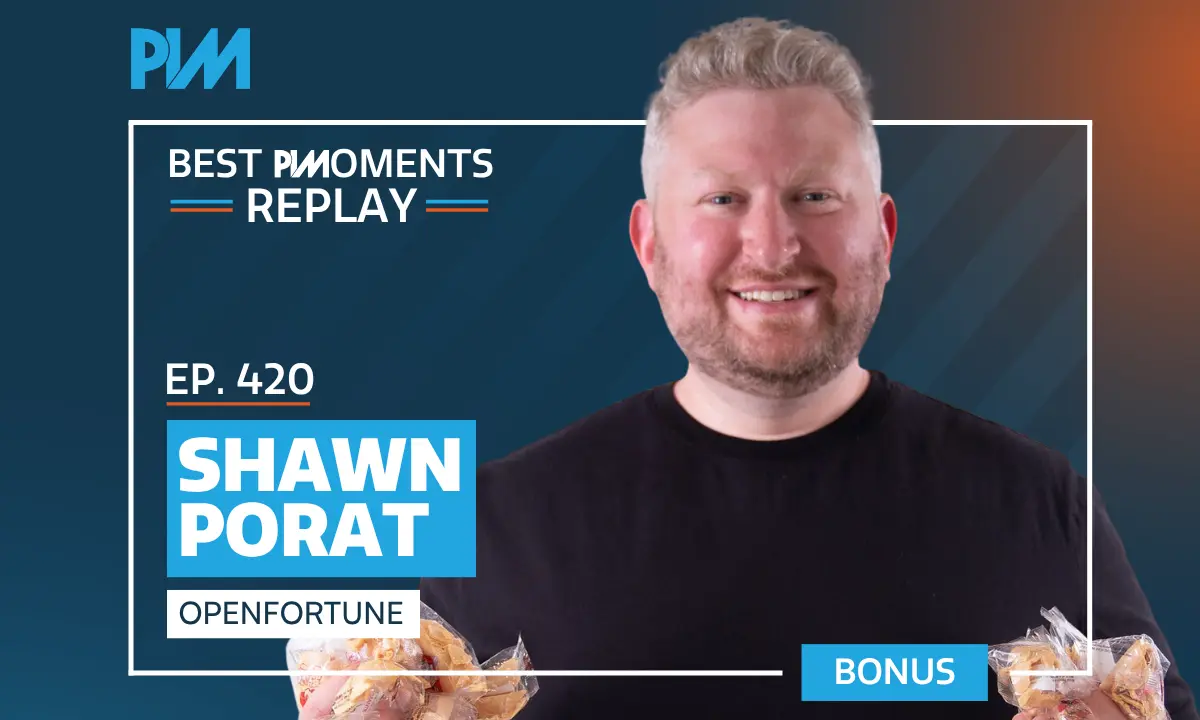
I'm Chris Dreyer. Let's get into it. This episode, we're talking to Shawn from OpenFortune, and he's doing something entirely outside of the box, or should I say inside of the box? Go puns, early. Shawn, welcome to the show.
Shawn Porat:
Thank you. Thank you. Glad to be on.
Chris Dreyer:
I guess just out of the gate, can you explain what OpenFortune is and just maybe a brief story of one of the success stories you've had out of the gate?
Shawn Porat:
Sure. To sum it up, we own the fortune cookie that you receive at the end of your meal in Asian restaurants across 30 countries. So we're reaching 300 million people every single month across the world inside fortune cookies, and we inject brands into that experience via sponsorships.
Chris Dreyer:
I'm not going to lie, I was a little ... Now that I've ordered my local Chinese and I've started looking at the fortune cookies ever since we talked a little bit differently. I'm like, "Am I being manipulated here?"
Shawn Porat:
Oh yeah. Oh yeah. We do have rules. By the way, we're not going to say X brand is in your future on the fortune side. We will keep the fortunes traditional and we will never take that away. It's more on the other side that we place the brand into that experience.
Chris Dreyer:
Yeah. So let's just talk about a few of these. I want to call out one of the ads. I think you did a this too shall pass, and it was an ad for DUDE Wipes. So talk to me about that campaign.
Shawn Porat:
Oh yeah, it was so much fun. So again, DUDE Wipes is in your future will never be on the front, but we will change the fortune to kind of speak in the brand tone and have fun with it and kind of transition into the brand side. So the whole idea is get people into the mindset that the brand wants you in. So when this too shall pass, again, you're thinking about something, passing in your life, et cetera, and then you see the brand and you laugh, you have fun at the table. That was a really, really fun partnership, still working together and went viral many times.
So a lot of people don't realize this, but six out of every 100 fortune cookies get posted to social media. So when you put 10 million cookies out there, you're getting 600,000 organic. No incentive, organic social posts from people, which is just insane. And when you have 600,000, a lot of them go viral. And that's what happens with each of our partnerships.
Chris Dreyer:
So I guess the audience is listening, "Chris, why the hell do you have Shawn on the show?" And for me, look, it's like a billboard in the fortune cookie. We're trying to be persuasive. We're trying to stand out and be different. I've seen the billboards on the side of the road a million times. You've seen people just copy idea and idea over and over, but just from a distribution perspective, it's amazing what you guys do.
Shawn Porat:
Yeah. No, it's incredible. And even besides the social piece, people keep these as collectibles. It's not just getting into that moment at the dinner table around family and friends during conversation, but it kind of leaves that experience, goes onto social, goes on your wallet, goes on your fridge. It's an incredible, incredible platform. And the reason why it works so well is that you have to ask yourself, what state of mind are people in when they see that billboard, when they see that bus shelter ad? They're running to something. They're on a call. They don't care. There's no relationship. There's no intimacy between that experience. Well, here, when you get your fortune cookie, you feel like there's a one in a billion chance that came into your hands, one in a billion chance.
And that's where the superstition comes in. 72% of America feels like they have to compare their life to this fortune and it's some way meaningful for them. And that's why it works so well and that's why people are open to suggestion at that moment when there's nothing else like it in the world, out of home, sports sponsorship, nothing compares to it.
Chris Dreyer:
What are some of the things that you do where you can actually measure the impact? How do you know if it's working?
Shawn Porat:
So after that experience and realizing that 6% of people post on social ... And by the way, that number 6% is based on a 20,000 person panel conducted by Nielsen. That's where we learned six out of 100 people post on average. So after that, we hired a company to build an image recognition tool that scours social media and finds any social posts with our fortunes. And we take screenshots and we send it to our partners every two weeks. So they're getting hundreds of social posts, if not thousands, sent to them and they see them and they're just flabbergast. They're like, "We can't even get one from a billboard we put up. And you guys, every two weeks like clockwork, just sending me tons of social." So that's the first thing that we do.
The second thing that we do, market research studies. We have a partner that goes out to restaurants, they stand outside, and as people exit the restaurant, they're asked questions like, "Do you remember the name of the brand you received in the fortune cookie? Have you heard of them before?" Et cetera. And we do that every quarter during our partnerships.
The third thing that we do is we place QR codes inside the fortune slip. So again, not for performance purposes, we are not a performance platform, but for brand awareness and to check which creative resonated the most with consumers. So unlike a billboard, you're putting up one piece of creative. Here, we could put 20, 30, 40 different messages to see what stands out the most for consumers with different QR codes and see which ones got the most scans.
Chris Dreyer:
That's amazing. I love the kind of the unaided recall, which brands do you remember, as opposed to giving them those types of studies that I guess PI attorneys are very familiar with when they're doing these large TV campaigns. Let's say I'm a PI firm in Austin, Texas, right? They have a targeted DMA, maybe they're not covering the whole state of Texas. What would an engagement look like in terms of like, how would they approach this and working with you? Let's just do like a mock type of thing here.
Shawn Porat:
Yeah. So our structure is set up as a subscription. So you come in and you tell us, "Hey, this is my budget for the month." And it's a month to month agreement. You could cancel any time with notice, but it's a month to month agreement. It's not a standalone transactional type of partnership. All of our partners, we're very close to them. We're kind of an extension of their creative team, ops team marketing. We help them strategize. We put together all the creative for the fortune cookies. We come up with different ideas. We set up landing pages even for them sometimes. We really do a lot for them. We do PR for them. We do pitches. Do everything surrounding the fortune cookie experience. It's kind of a 360 approach.
Chris Dreyer:
Unreal. Unreal.
Let's kind of zoom out just a bit. You've probably thought about this in advance since we talked, but how would you tie this in for an injury firm? They're wanting auto accidents. Have you thought about maybe the language and like what would go in the fortune cookie? How do you tie it back to the firm and get that brand affinity?
Shawn Porat:
I don't think it's about call now. It's not about that kind of a forceful call to action. I think it's about saying, "We're here for you. Here's our success. Keep us in mind. Save this for when you need it. We're leaving you with this piece of paper. Even, put it on your fridge." Those types of messages I think will go a long way and make people feel a lot more comfortable than just that blatant kind of call to action ad.
Chris Dreyer:
Got it. Got it. So not really direct response. Got to imagine too, the cost to acquire a client across the nation, I heard a stat lately for auto where it's risen to about 3,200 bucks. So I imagine there could be significant lift and significant opportunity there.
Shawn Porat:
Oh, yeah. Definitely.
Chris Dreyer:
Every market would be different from a pricing perspective, but a lot of the firms listening are accustomed to, if it's an awareness campaign, it's priced like on a CPM, cost per thousand, but it's a bit different because you have their attention. That cost per thousand, it's like out of the thousand, who's actually paying attention to the TV commercial? So without giving details on your pricing, because every market would be different from a distribution perspective, what's that look like?
Shawn Porat:
So we price on a CPC, cost per cookie.
Chris Dreyer:
That's good.
Shawn Porat:
And it's really each of these cookies, impressions kind of don't even fall into this world. It's truly an experience, an engagement. It's very, very different. You're really inserting yourself into a century old tradition. And as I said earlier in the conversation, when people are open to suggestion, you could hit somebody with 5,000 impressions, and if they're not open to suggestion and their guardrails are up, it's all a waste of money. It's not going anywhere. So we look at it as, "Hey, you're completely paying attention." Not just paying attention, you're also open-minded to change. You're open-minded to, "What's next for me? What's next to my life?" You're in that state of mind. It's very, very, very rare to get people into that state of mind. So yes, sum it up, we price per cookie for this.
Chris Dreyer:
Yeah. I love it from the earned media capacity component too. It's those viral moments where they share it on social and kind of complimenting those other channels. And Chris Walker, there's a marketer talks about it, I hate this phrase, but he calls it dark social. It's like the conversations and the DMs and the re-shares through the text messages. How often do you rotate the messages? How do you track decision fatigue or like when something gets stale?
Shawn Porat:
Great, great, great point. So we change creative every quarter for our partners at a minimum. And then during each of those quarters, there are many different messages. So it's not usually one brand message, usually there's at least two or three. So if you're going back to the same restaurant, you're not getting the same brand message on the back. And on the front, there's usually over 100 fortunes. So everyone at the table is getting a different fortune experience each time.
You should have seen it in the beginning when we didn't know any better and we just put like four or five fortunes and people would get the same fortune at the table, all hell will break loose. They would complain to the managers of the restaurant. Managers would call the distributors. Distributors would call the factories. Factories call us and say, "You're ruining the experience. People's fortunes. They're getting the same ones as others at the table. It's not unique to them." And that's when we learned our lesson.
Chris Dreyer:
That's funny. That's frustrating. I've had that experience happen, so nobody likes that. What questions didn't I ask in regards to this? I think kind of to summarize for me is like, look, this is a unique way to stand out. Every time I hear the next turkey giveaway or backpack giveaway, I'm like, "Yeah, you're doing some goodwill, but everybody in your market does that." This is something unique where you stand out. What questions didn't I ask that you think would be important for the audience?
Shawn Porat:
So I think that people overcomplicated sometimes when it comes to this. I think you have to ask yourself, when you're around family and you're at a restaurant and you're opening the cookies and you're reading it aloud, put yourself into that experience and think about kind of humanity in its most basic form. We're all looking for guidance on where we're going in the future, what's next for us. That's really what we're all yearning for. We want that good, nice, warm feeling of like, "Okay, this is your path. This is what's next for you." That's what this is giving people. That's what a lot of people kind of don't get to in that partnership conversation with us, but if they really dig deep, they truly understand that's what you're buying into here.
Chris Dreyer:
Incredible. Shawn, one final question for our audience that wants to get in touch with you and learn more about this. What's the best way to get in touch with you?
Shawn Porat:
So if you want to reach out to my team, openfortune.com and you could schedule a call there. If you want to reach out to me, it's Shawn@openfortune.com, S-H-A-W-N, @openfortune.com.
Chris Dreyer:
If you're looking for a way to stand out, not just show up, this might be the move. Shawn's offering an exclusive discount just for PIM listeners, head to openfortune.com/pim to start the conversation and see how your brand fits inside 300 million dinner tables. That's openfortune.com/pim. Check it out.