Chris Dreyer:
The traditional law firm model is under attack.
Brian LaBovick:
I know a business model that has over 2,000 cases in-house. They have three lawyers.
Chris Dreyer:
Wow.
Brian LaBovick:
And they roll, right? Client success manager, he handles 500 cases.
Chris Dreyer:
If you think your only competition is the firm down the street, think again. The game is shifting and overhead is getting slashed by new tech-enabled players.
Brian LaBovick:
Like two or three paralegals that are all overseas, by the way, and they all run the paperwork just to get them to settlement. And now they're using AI so that they have the demands redone for them. They don't have to worry about that.
Chris Dreyer:
If artificial intelligence and overseas talent can't process a case for a fraction of the cost, how does your firm stay competitive? To stay highly profitable, you have to prove why a human lawyer is worth paying for. Today, we're diving into how to protect your margins and prove your true usefulness by delivering an experience that machines can't touch.
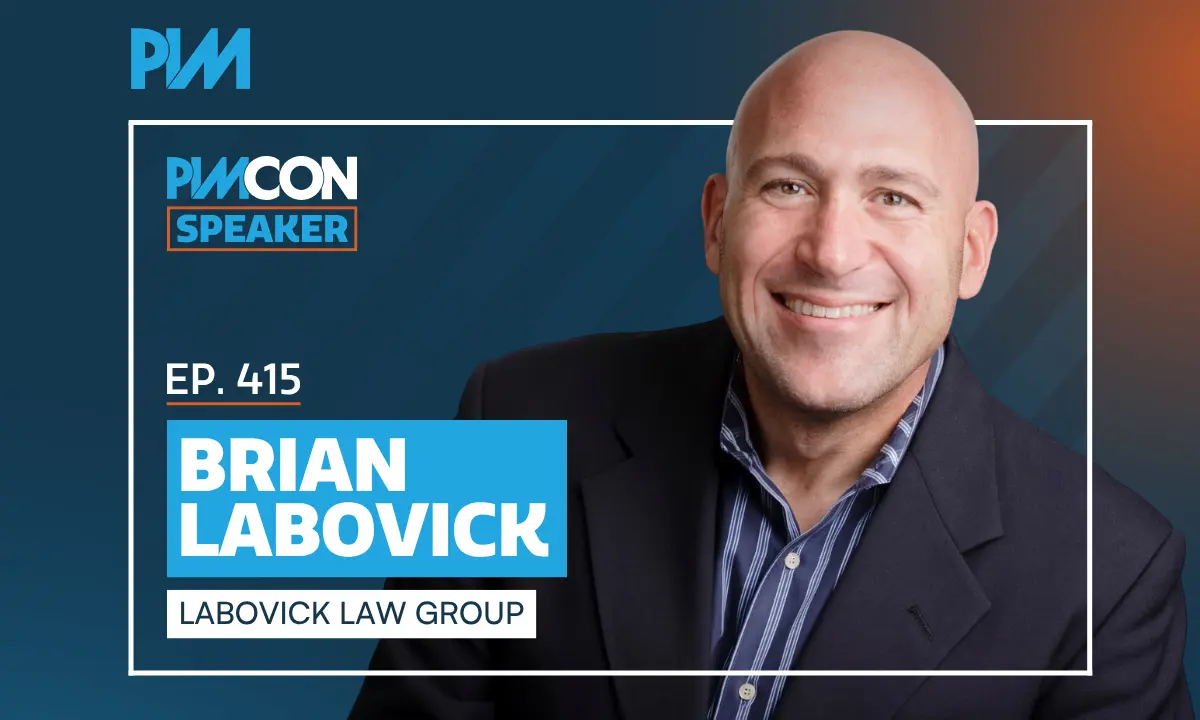
This is Personal Injury Mastermind. I'm Chris Dreyer, founder and CEO of Rankings.io, the elite performance marketing agency for personal injury law firms. Rankings get you cases. Today, we're joined by Brian LaBovick, who is doing incredible work over at the LaBovick Law Group. Brian is thriving in the hyper-competitive Florida market. He's here to give us a masterclass on future-proofing your firm. We're breaking down the massive attrition rates of third-party lead gen, why brand equity is your ultimate insurance policy, and how to use tech to keep your attorneys strictly accountable to the client experience.
I'm also beyond pumped to announce Brian is speaking live at PIMCON this year. He'll be talking all about getting those pivotal five-star reviews for your practice. You're absolutely not going to want to miss that, so grab your tickets to hear him drop gems just like he does today. Let's get into it.
We got to start with a win. What's a win, something you're fired up about for the biz?
Brian LaBovick:
I'll tell you a win. So I brought in my lawyers the other day, my personal injury team. So we've got a bunch of lawyers in the firm. And previous to that, I had gone to AI and I had gotten a prompt that gave me 15 causes of action in a 15-sentence fact pattern. And I gave it to them, and I said, "You guys have four minutes and 10 seconds to tell me all the things that we can sue on, every cause of action in that fact pattern." And I let them all sit there and read it, right? And they read it and I said, "Okay guys, now tell me all the things that are there." And they got collectively 11 of the 15 after we talked about it. I let them have time and all of that.
I said, "Okay, I want you to see something. In the four minutes that it took you to read it, and then the 10 minutes that we had to talk about flushing out the issues, I got this fact pattern from AI. I got 15, not 11 causes of action out of it, and I printed 15 complaints, 15 sets of interrogatories, 15 sets of requests for production, 15 sets of requests for admission, 15 summonses and 15 notice of depositions." I said, "I did my whole case on all 15 causes of actions, better than you guys got 11 in the same time period. I don't need you. Why do I need you? Why do I need you? You all need jobs and I don't need you to do this much work in four minutes. I can do that alone. I don't want to do it, but I only need one of you to do it. What am I going to do?"
And they looked at me and they were like, "Client contact?" And I said, "Bingo, you hit the nail on the head. So now I want to ask you a second question. I did your case reviews last week." And I don't do case reviews, but twice a year. I have other people that do the case reviews. So every once in a while I pop in. And the reason I pop in is that I know that it gets them honest on client contact. So we use Litify, and Litify lets me see how many client calls they make, right? They were collectively 175 calls behind on their client calls. When I did the case review and I looked at it that day, they were 42 calls behind.
So I said, "I want to know something. If client contact is the key to your job security, why were you guys 175 calls behind the day before I asked you to do case reviews, and then you had to call your clients and come in and talk to me about what you knew about the case?" I said, "I don't want to have to go and make you call your clients. You need to step up. If you don't want to step up, I'll find people that can step up. Because we have two things. We have two things we're going to do in the future, talk to human beings and try cases because they're not going to let AI try the cases for a long time. So if you can't do those two things, this is the wrong space for you, and I'm not going to hire you." It was a shocking moment for these people.
Chris Dreyer:
My man. That reminds me of Dan Kennedy's the No BS People and Profits book where he's like, "Hey, it's not my job."
Brian LaBovick:
I love Dan Kennedy too.
Chris Dreyer:
Yeah. It's like, "It's your job to make sure that you're indispensable, not my job." And it's like, "You got to continue to elevate." Why not case manager? Why not a director of client success, maybe client success team? Why the lawyers? Because the lawyer's highest hourly rate. What are these other individuals doing? What's just your thought process behind that? And maybe it's, "Hey, I want to keep my people. I like my people and now I need them to do this thing."
Brian LaBovick:
No, I think if we're talking straight business, we're going to see lawyers needed less if you can't get your cases to trial. If you're a settlement mill... I know a business model that has over 2,000 cases in-house. They have three lawyers.
Chris Dreyer:
Wow.
Brian LaBovick:
They roll, right? They roll those cases. And they roll them with a client success manager who handles 500 cases and all they do is make sure people are happy, just client communication. So that's one job, one lawyer, 500 cases, and then a paralegal, like two or three paralegals that are all overseas, by the way, and they all run the paperwork just to get them to settlement. And now they're using AI so that they have the demands redone for them. They don't have to worry about that. They just roll the work. And we're going to see efficiencies like that. I mean, when you look at the P&L of a law firm, it used to be that you would put 20% in the attorney bucket, 20% in the support staff bucket, 20% in the other administrative stuff bucket and want to get 20% of profit out of this thing, or 20% in marketing and 20% profit.
So you would have that kind of divisional layout. And people would do different things, right? And as advertisers have gotten crazy over the moon like money into advertising, it's like 30% into your advertising bucket. So something's got to give. So that means it's 15 or 10% goes to the lawyers. 15 or 10% goes to the support staff. And there's some people running on 15% human capital costs, an entire law firm. Ah, that's really thin, but if they can make it work on the back of technology, that's where we're headed.
Chris Dreyer:
Yeah. Transparently, I've seen, I think Finch... There's a few of these companies, right? And they kind of tech enable, run it through... And then they take over all that. So now you can outsource the pre-lit stuff.
Brian LaBovick:
Yep. We were just contacted by some people, and they'll do it... they were talking about.
Chris Dreyer:
Torticity.
Brian LaBovick:
Torticity. Yeah, yeah. I've talked to Torticity. Yeah, that's exactly right. It's like, yeah, this is a really great model if the client experience isn't what you're after. It matters what your core values are, what your vision is, what your mission is. I go back to that all the time. There are things that people do in the world that aren't as profitable as other things. And if your vision and mission isn't to be the most profitable, tech enabled, no human being law firm in the world, and you want to give good service, and you believe in the justice system and you believe in getting people to maximum justice by aggressively fighting for your client's rights, which is our mission statement, by the way, then you have to do things that comport with those core values. And I think that it would be antithetical to my core values to take the lawyers out of the mix.
Chris Dreyer:
I love that mission. I mean, that resonates with me. I think a lot of consumers that hear that would love that.
Staying true to your core values and keeping lawyers at the center of the client experience sounds great on paper, but to make that work financially without your overhead eating you alive, you have to be wildly efficient everywhere else. For Brian, that means turning his intake department into a well-oiled machine. He's testing everything from AI listening agents to parallel dialers that can make 200 calls at once. Here's a look under the hood at the exact tech stack Brian is using to qualify leads faster and chase down every single opportunity.
Talk to me about what you've seen on the intake side. You said you use Litify. Have you tried out Neto or CaptureNow?
Brian LaBovick:
We're in the process of trying to get Neto in. We've done CaptureNow. We are doing Speed.ai as a listening agent for our intake agents, and it's been good. It's a post-event warning system. So it's a training event. You can get back on the phone and try to call people if there's... But it's not a real-time thing for us. I think there are some real-time AI agents that could help us if we step into them and lean into them more. It's just bandwidth. I know that we use RingCentral. We used to use NICE inContact, which is the step-up call center version of RingCentral because we're doing so many outbound calls on the SSD practice, and we killed that entire business model of chasing SSD that way. But they had the agent inside the NICE inContact model. I think that it's now available in the lower level RingCentral model, and I would like to see us move into that.
But there are some great AI alternative SaaS companies that kind of are the plug and play companies like Eve and Supio, and they're leaning into that, EvenUp. I don't think EvenUp's doing the intake side yet, but Eve is looking at the intake side. There's another one that was the counter to Case Status that we looked at seriously, which was Ona, and they are leaning into the intake side of it. So where Case Status isn't leaning into intake yet, Ona started to lean into intake, which honestly was the reason that I didn't choose Ona over Case Status. I thought they were comparable products. I liked both teams a lot. I think they both have smart platforms. I wanted people not to concentrate on intake. I wanted them to concentrate on client experience. So when they started to go in that direction, I thought their focus was off of the ball that I wanted to pay attention to.
Chris Dreyer:
Interesting. Yeah, that makes sense. What about staffing? How do you think about intake? Are you a, "Hey, I'm manning my nine to five and then I third-party it. Are you workforce management on the weekends?" How do you think about just the staffing and set up on the intake?
Brian LaBovick:
We're in transition. I mean, I felt like I've always been in transition because I'm always looking to that next best step in intake. But I started with legal intake professionals ages ago and at one point we had outsourced nighttime calls. We were nine to five-ing it. And then we outsourced everything because I thought they were better than my intake people, and we just didn't want to have all of that drain because we didn't have an intake team. We were small. We were 15 people, 12 people. So you have people jumping on the intakes as the receptionist finds real cases. So she's the triage. Now I'm thinking that Neto or some of the AI intake products can, through natural language, be the receptionist that directs the call in the most appropriate way possible. And so I think if we can get that and people accept it, which I don't know if they will yet or not, but I think they will. I go by what I would do, right? We think we're normal.
So my normal is that if I get an AI bot agent, and it's a triage agent like, "Hi, my name is Brian the Warrior Robot, and I want to get you to the right person at the LaBovick Law Group. Please let me know, are you calling about a new case or do you want to speak to someone in particular?" And then you say, "No, I'm calling about a new case." "I understand. Is it an accident case or is it an injury case? Is it a Social Security case? Which division is best for me to get you to?" "Oh, it's a personal injury case. I got hit by a truck." "Oh my goodness, let me get you to the right person right now." If you go that far with it, I think people are good. Just that qualify fast, get you a human being. I hope so because that's the direction I want to head with my INR.
Chris Dreyer:
Yeah. You could have your value props on the waiting and stuff like that, that's consistent for your script side. I guess for the Neto stuff, the best application I've seen on the chase side is the 30-day plus because a lot of times people do a 14-day chase or then maybe-
Brian LaBovick:
We have a 21-day chase.
Chris Dreyer:
- And then it's like, after 30, it's kind of like, "Ah," and throw them in an email nurture or something, but if you got still somebody-
Brian LaBovick:
That's what we do. We throw them an email or two. You hit it. You nailed it.
Chris Dreyer:
Yeah. I think that 30-day plus Neto in parallel with the email nurtures, it's going to draw some cases out.
Brian LaBovick:
At almost no cost. At almost no cost, right? The relative cost of doing a 30-day chase or a 50-day chase or a 90-day chase is allowing a computer to do work that it doesn't charge you for.
Chris Dreyer:
Yeah. I think the other thing that I like about these, and I like having the conversation because you're in the mix of all this stuff that I love too, is I think the cool thing about the AI is the parallel dialers, right? So it's like, I don't know, the cost of labor, even if you do nearshore is going to be so much. And if you're doing, let's say. A practice area that's just super high volume, and you can have an AI agent do 200 calls at the same time... You just can't do that with a human.
Brian LaBovick:
100%. No, and we can't keep up with the industry that's out there. So if you're not going to do it, you might as well go work for somebody. You're just not going to keep up. So this is not the right type of law for you to be in. I have a very, very close friend of mine. He has a very high end, very only-referral based practice. He chases no one. He advertises nowhere. He does nothing except be a great lawyer to people, and it has served him incredibly well. And that's a great business model, you know?
Chris Dreyer:
Yeah. Lean and mean. You don't got a bunch of mouths to feed, and you can take care of yourself really well.
Brian LaBovick:
Yeah. Oh, he's got a good-sized staff. I mean, they're not a small office. He has a lot of people.
Chris Dreyer:
Okay. Intake is dialed in. Now you want to pour gas on the fire, but acquiring cases in a market like Florida is getting expensive fast. If your whole strategy is to buy unvetted third-party leads, you could be finding yourself playing a shell game. The attrition rate will bleed you dry. Listen to how Brian learned this the hard way, and why building an organic brand moat is the only real way to protect your firm.
How are you thinking about attracting cases right now with all the competition? You know what I've been telling people, and you could push back on me, especially in Florida, people forever used to say, "If you can get an auto case below 2K, rock and roll. That's a good cat." That's not what I'm seeing today. I'm seeing if you can get it below 3K and you're in the business and in Florida, maybe four, and in California, maybe five.
Brian LaBovick:
If you're getting cases in Florida under 3K, you're crushing it now. And I used to say... Because I used to bring them in for 1,800. I remember I was at a KRIF seminar ages ago, like seven years ago, eight years ago, and they were talking about relative cost of bringing in cases. And they were talking about 1,000 to $2,000 to bring them in if you're really good at whatever that thing is you're doing. And I was thinking, I think we're about 1,800 or 1,850 per case at the time, and I wasn't shoveling enough money into that. So at one point in my life, I owned a Tropical Smoothie Cafe. And if there's a business that you can't make money in, it's a fast food business when you don't know what you're doing. If you know what you're doing, I think that they probably churn money, but I did not, and we did not.
But at one point we were asked, "Okay, you have three items on the menu, a sandwich that costs $7.40, and you have $3.12 of profit, a smoothie that costs $6.20, that you have $2.40 in profit, and a soda that costs $1.27 and has $1.20 in profit, whatever it is. What do you want to sell somebody?" And people were like, "Oh, the sandwich, it has the most profit." What do you want to sell somebody? All three.
Chris Dreyer:
Yeah.
Brian LaBovick:
You want them to buy all three, right? Because you're selling all three, you want the profit, you want them to buy as much shit as you can because the more you sell, the more profit you get, right? So if you find something that's doing $1,800, shovel everything in there. If you've got something's doing 1,800 and something's doing 22 and something's doing 27 and something's doing 3,500, but you're profitable bringing them in under 4,000, do them all. Do as much as you can, as long as you're profitable, to bring in the stuff that brings in the best work. Just bring in the cases.
Chris Dreyer:
I think that's great. I had a conversation with the president of a firm recently. And owning a marketing company, we get this a lot. There's always these conversations of rob Peter to pay Paul. Let's say you have someone that's 3,900 and some-
Brian LaBovick:
Limited resources.
Chris Dreyer:
I'm not take away from the 39 because it's still where you're at. I'm saying when you have more capital to allocate, then go add to the ones that are cheaper, that are getting the better cases. And it always drives me nuts. It's like, "Okay, well, we're going to shut down this, and then we're going to take that money and we're going to put..." No, it doesn't function like that. And in fact, they actually benefit a lot of times with the omnipresence.
Brian LaBovick:
Let me admit something to you here. Just since you're on that whole omnipresence where things go, if you have a business in a marketplace and you want to sustain that business over time, unless you can bring in cases forever from some non-branded way, brand and brand equity within a certain geographic market is where you create your insurance that another person can't come in and invade your market easily with their brand equity and kill it without spending tons and tons and tons of money. And I never really appreciated how important that website brand equity would be over time by developing that. I really didn't see the future well coming full circle back to that because of mass media advertising and the money that was put into new methods of bringing cases in, and people are pay per click and LSAs and Google Maps and there's all this stuff out there, right?
And I think what is happening, especially in the age of AI is that your website, your presence in the world, your brand equity in the world as a consumer lawyer is going to come back and be the thing that insulates you from all the other things that are out there, which means that having great web in the long run, SEO, SEM, is really like your best play and you can't forsake it to get on TV or buy more LSAs or do PPC. I mean, it's just a bad deal for you in the long run.
Chris Dreyer:
I couldn't agree more. The thing that I see a lot of these different firms that use heavy lead gen is they can get the cases, they might get the initial CAC, but when you start factoring in attrition rate or fall off rate, however you want to define it, then it's like, okay, the numbers change quite a bit. And then you factor in, "Hey, I should have a commercial accident if I advertise myself X every X number and then it's less through the lead gen play."
Brian LaBovick:
When we did this, we were losing up to 80% of our cases at the end of, I think it was a 60-day review backwards. We were losing 80%. We were bringing in all these cases, over a hundred cases a month, PI cases. And then the next thing you know, you're like at 22 and you're like, "What happened? 60 days later there's no business, what happened?" And it's just awful. You have to really pay attention to how you're bringing those cases in.
Chris Dreyer:
Do you think it's just a big shell game where they're all just-
Brian LaBovick:
I don't know.
Chris Dreyer:
... selling the same lead to 10 companies?
Brian LaBovick:
I think so. I think at some level that that was what was happening. I mean, I'm sure that I got some of that. I was getting other people's leads. And people were like, "Oh, you'll try another lawyer for me. Thanks." They're happy to go 14 different lawyers deep to find the right guy that would take the case.
Chris Dreyer:
Yeah. So interesting. I agree with the mind share and the brand and the best cases. And you want people like they're coming and looking for you and then they're not going to drop. They're going to stick with you. They're the bigger, higher value cases. So I agree with all of that. What do you think about the op side, the legal side? Tech, we touched on this. Client service is so incredibly important. Does your criteria of what cases go to trial, has that expanded because the cost to acquire a case is higher and you need to lit more? How do you think about that dynamic?
Brian LaBovick:
It's an increasing reliance on litigation to maximize the value to get to the client to the point of justice that's reasonable. We watch annually our case value, our average case value, fee value, go in directions. So many years ago, I was doing it and we had an $8,000 per case average value, and we kept driving toward greater points of justice until two years ago, we were at 26,000 per case, average case value. Now that's fallen back to 24 in higher case costs two years ago or last year. And now this year, this past annual year, I think we were at 22.7 or something. So I've watched it get to 26 and now fall back. And we kick out the bottom three and the top three outliers so that we get a real better average. So like one $10 million, $14 million, $20 million verdict or collection settlement doesn't affect your whole bottom line.
Chris Dreyer:
Average-wise.
Brian LaBovick:
Average-wise.
Chris Dreyer:
Being in Florida, did you see the the tort reform stuff, did that impact it?
Brian LaBovick:
Tremendously, in my opinion. I didn't think it did for about two years. So now we're almost three years out. And now looking backwards, watching it, I think that part of my issue is slip and falls have gone down in value because of the 50% comparative rule. I think that makes them more risky. I think clients get more edgy. I think they're willing to take less money to feel like they got the maximum value. So I think that has happened to a degree. And then for my particular practice, we did a lot of PIP claims for doctors and hospitals, and they took attorney's fees away. And so that has tremendously affected the practice as well.
Chris Dreyer:
Brian, this has been amazing. For audience that wants to talk shop, has a case for you, wants to talk about case status or anything that we discuss, what's the best way to get in touch with you?
Brian LaBovick:
Easiest way is my name, LaBovick, L-A-B-O-V-I-C-K. You look it up online, I'm the only person that'll probably pop up, LaBovick Law, www.LaBovick.com. We have the eights. So my area code is 561-888-8888, so that's easy too, or 866-LaBovick. So call or click LaBovick used to be the tagline.
Chris Dreyer:
Amazing. Brian, thanks for coming on the show.
Brian LaBovick:
Peace, Chris. Awesome. Appreciate it.
Chris Dreyer:
Brand equity is an unshakable SEO foundation and a relentless focus on human connection. That is how you future-proof your law firm. A huge thank you to Brian LaBovick for pulling back the curtain on his operations today. And remember, Brian is bringing even more heat on stage as an official speaker at PIMCON this year. He'll be breaking down exactly how to secure those pivotal five-star reviews for your practice. If you want to dominate your market, you need to be in that room. Grab your tickets now at PIMCON.org. Thanks for listening to Personal Injury Mastermind. We'll catch you next time.