Chris Dreyer:
There are two ways to win in a saturated market. You can outspend the competition or you can outmaneuver them. James Tawney is doing the second one. While other firms are outsourcing intake to call centers, James's actual attorneys answering the phone at 2 A.M.
James Tawney:
The associates take home the phone every single night or have the calls transferred to their phone. So, we answer the phone 24 hours a day.
Chris Dreyer:
While other firms are running generic iFy for you ads. James rebranded his firm around a cultural icon of the Southwest.
James Tawney:
So, I had this concept where we are going to go to court and try a case and our car breaks down and we call a rideshare. And what picks us up is a lowrider and we go to the courthouse in a lowrider.
Chris Dreyer:
Today, we discuss how James cracked the case on a recent $30 million truck accident, why he still uses his own attorneys for intake and how to build a brand that makes you a local legend.
James Tawney:
And after we shot that commercial, Chris, I'm not exaggerating, we get a letter a day about how much they love our commercial.
How James’s Team Built and Proved Liability in a $30 Million Trucking Accident Case
Chris Dreyer:
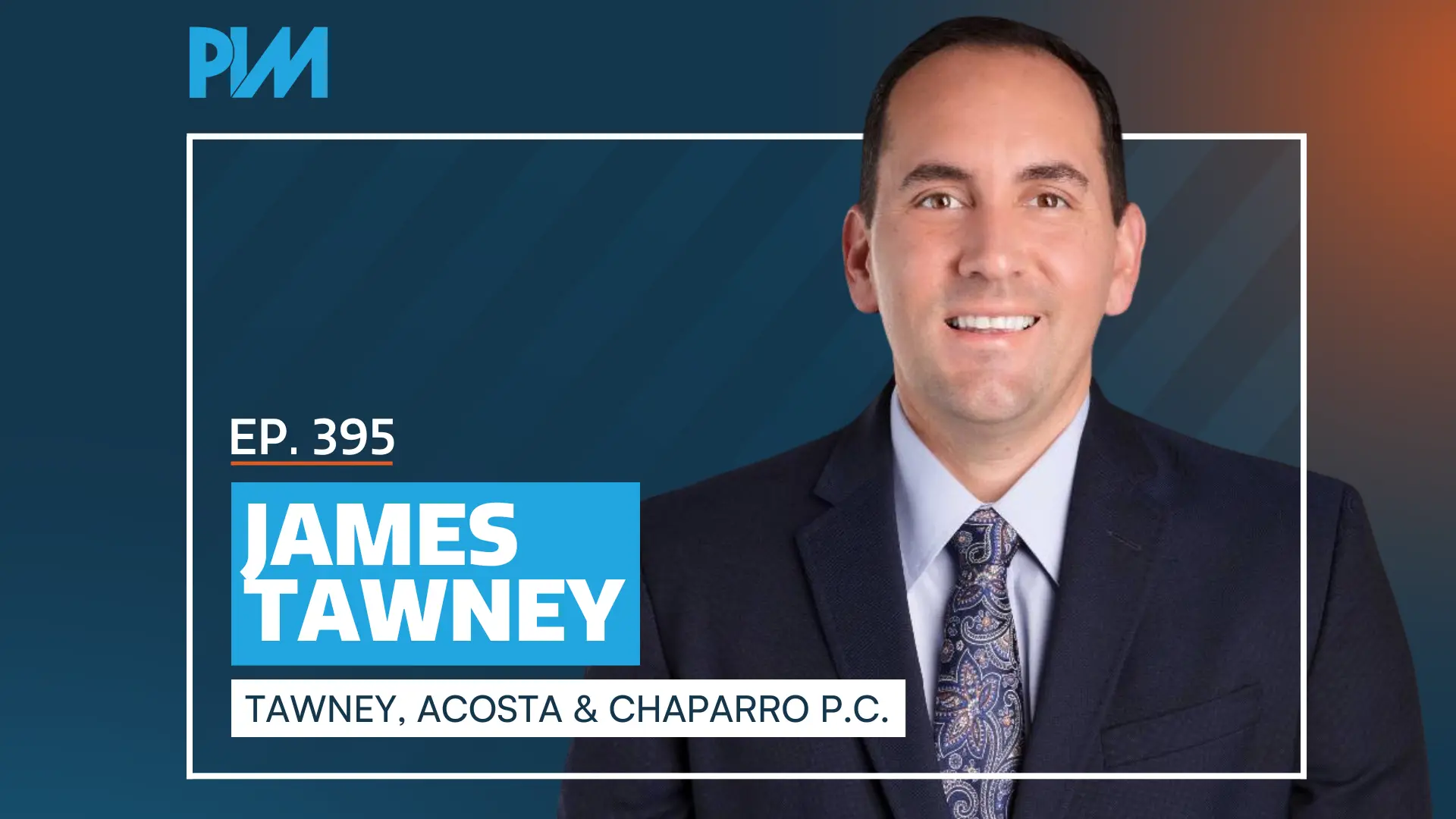
This is Personal Injury Mastermind. I'm Chris Dreyer, founder and CEO of Rankings.io, the elite performance marketing agency for personal injury law firms. Today we're speaking with James Tawney from Tawney, Acosta, and Chaparro. James and his firm specialize in truck accidents with offices in New Mexico, Texas, and Arizona. As a national board certified truck accident attorney, James is at the forefront of both litigation and marketing in this complex field. We start the conversation by discussing a tragic $30 million case James handled involving two intoxicated 22-year-olds.
After running out of gas on the highway, their vehicle was stalled with hazard lights on when it was struck at a full speed by a truck. One passenger was killed and the other suffered catastrophic injuries. While injury reports may have faulted, the young driver James explains how his experience allowed him to dig deeper and uncover the full story.
James Tawney:
We first get the dash cam and we find out that the guy never hit his brakes. And this is a big red flag, right? Why wouldn't you hit your brakes if there's hazard lights on flashing? And it seems like you would see it and he gave some reasons why he said there was a car in another lane that he couldn't change lanes. But if you wish to watch the video carefully, you see that there's no headlights indicating that there was another car in a different lane.
So, long story short, we did some digging, went into the whole telematics system, Samsara system, phone records for the driver, and pretty much through circumstantial evidence and some actual still images that the camera inside shot reflected off the windshield that the defense that he wasn't even aware of the system did that. We learned that he was driving with his phone like this on the steering wheel, watching a video based on the data download. That's what it shows us.
So, we have a driver from a major trucking company who's been in several preventable crashes before this had only been driving for a year and the company determined this crash, a serious preventable crash, now crashes in the back of a guy stalled on the road because he was watching his phone, as opposed to paying attention to the road. So, it's a very contested case and that's why it's going to trial for the remaining party because I have a client that's deceased, but he was highly intoxicated. But then we have a truck driver that was watching his phone while he was driving. So, we'll see what the jury does with that.
Chris Dreyer:
On that, how does that type of case come to the firm? Was it a pure referral? Was it a B2C play? I think a lot of the audience listening was like, well, how do I get the opportunity to get a case like that? Because a lot of these listeners, that's like a once in a lifetime type of case.
Why James Built His Firm Around Trucking Injury Cases Instead of General Personal Injury Work
James Tawney:
Well, that's kind of a long answer. I mean, how do we get to that point where we get those type of cases? Now we get them not every day, but we get them enough where it's like, hey, there's some opportunities here to swing from the fences and have a decent recovery. But I think that it starts with identifying who you are and what your strengths are. And we believe in niche marketing. We believe in letting people know we are the trucking firm. And now when we started doing it, we were probably the first people in our region to do it or do it well, I should say now everybody's doing it, so it's a little bit tougher.
But if you have verdicts and you are willing to try cases and those cases are trucking cases and you've worked on trucking cases and you show to defense lawyers particularly that you're good at them, defense lawyers talk. And so, that case, the way it eventually ended up with us is as a baby lawyer, tried a case against a very, very skilled defense lawyer. And when I left the firm that I was previously at to start our own firm, that defense lawyer recommended me to another plaintiff lawyer who started sending me cases, then years later sends me this monster case just based on what I did as a small young associate against a senior partner defense lawyer back two, three years in my career.
Chris Dreyer:
That's incredible. So, that individual saw something in you, the grit, the determination, and you got that opportunity later. So, that's amazing. Let's talk about the firm and what's happening right now. You had a big year, new board certification in trucking law and you were appointed the Board of Regents at the Academy of Truck Accident Attorney. So, talk to me about that.
James Tawney:
Yeah, we had a phenomenal year, started off the year with a good verdict in El Paso that always helps. Had some good appointments, some big settlements, 8-figure settlements, and we're working up for a big trial in February. So, I mean, it's just been a record year, nominated and appointed El Paso Lawyer of the year for our El Paso office, and just a lot of great things have happened this year. It's been really a monumental year for the firm.
Chris Dreyer:
Heck yeah. That's amazing. Congrats. I've had a couple of the trucking experts in the show in the past, but I've always wanted to know, and I'm sure our listeners want to know, what's it take to be board certified in trucking law? How rigorous is the process? Take me through that.
James Tawney:
Yeah, so I mean it kind of starts with your background. I had the fortunate chance to work with some big trucking lawyers down in El Paso right out of law school. So, I mean within three months out of law school, I was trying or participating in a federal court death case trucking case down in El Paso. And I've been doing that since I basically started practicing law. So, I was sat sometimes third chair, sometimes briefing attorneys, sometimes whatever it took. I was there watching these big dogs go and swing for the fences. And by my fourth or fifth year, I had seen a major amount of trucking work.
So, I got a chance to see some things that were truly different and then you start looking into the regulation, you start understanding how trucking cases are different than other cases. So, stumbled upon eventually ATAA, which is a great organization, really took that to heart, make sure our firm was heavily involved with that organization and just started working toward being better at what we're doing.
And because we felt that eventually we want to change our marketing technique to really just specialize in trucking work, we went to every seminar, went to every CLE, watched all the online stuff during COVID, really spent the time reading things, and then just started pushing trucking work and the trucking cases started coming in because we were getting good results, better results than your average car accident lawyer. So, eventually I had enough kind of street cred to kind of be recognized by some other trucking lawyers, some national trucking lawyers, and geared up for the test and took the test. It was brutal.
Most of the stuff I had dealt with at some point in my career where there's some things that I had not, but yeah, studied pretty hard and it was a long day, but got it done. And shortly after, they appointed me to the Board of Regents, which I was super excited about and grateful for.
Chris Dreyer:
That's amazing. One of the things I thought that was kind of interesting that I haven't seen a lot of and is your site has the CDL manuals by state on the website. It's kind of interesting. I'm trying to think. Is it to be helpful? What's the purpose of the manuals on the site?
James Tawney:
Yeah, so we're not the first one to come up with that. I'm not going to say we are. There are other lawyers that have adopted that, but we use the CDL manual for every truck driver debt, every safety guy's debt at a trucking company, every authorized rep debt. I mean we're tracking down where they got their CDL, we're looking for the current version. I mean, it's something that we spend a lot of time looking for. So, number one, it's for us, it's the database for us. So, for anybody have any associate at my firm or partner at my firm that wants to use it, but also other lawyers are decent or know what they're doing at trucking need the same thing. So, it's driving traffic to our website and I mean I do it all the time.
I need a CDL manual from Wisconsin. I would have to go search online for it everywhere. And most of the time where I found it was on another lawyer's website. And so, now we have generated a lot of SEO juice because we have some good authority based on other lawyers coming to pull those CDL manuals off of our website, and I make sure my SEO team is keeping that up to date so that we don't fall behind on that.
Chris Dreyer:
That's very smart, and I love the nod of the old SEO there. You have these relationships, you're doing the CLEs, that's a lot of B2B advertising, but then you mentioned, "Hey, we're doing the SEO." What kind of percent, is it mostly these types of cases from referrals or is the firm attracting and you've got the recipe to do the B2C advertising to get them?
James Tawney:
Yeah, we're firing on all cylinders finally, and now I'm trying to take it to the next level. We started our firm in El Paso, Texas and Las Cruces, New Mexico. At the same time, we opened up two offices. We had no cases, I think we took maybe 50 cases from our old firm to kickstart us. We had to pay them referral fees or co-counsel fees. We had nothing. It was three lawyers, five to six years experience. That's it. But when I was at my whole firm, these guys had tons of resources, but I felt that they were marketing in an antiquated way and nobody, at least in our region, was doing anything Google or SEO at all at the time. Okay. They were just billboards, some radio commercials, that's it.
So, we were really the first ones to do it well in our area, and it didn't last long. I mean, people caught on, right? How are these guys getting these cases? How are these guys getting these cases? But we got two or three years of a jumpstart I feel like. Then we built some inventory, built some AdWords, then we hit the billboards, then we hit TV, then all the traditional outdoor marketing stuff, those things all work for us. So, now we get calls based on Google reviews and SEO rankings and AI stuff. We spent some time looking at how do we get ranked at the top of AI suggestions, but we're already popping up, which is great.
That's fantastic. We spent tons of money on lawyer listings, the ones that matter, and then we try to do some innovative and different commercials, which I could talk about in a little bit. But the cases are coming in from everywhere now, referrals, we'd be good to our referral people. We make sure that we let them know we're the ones you want to send your trucking case to because we're going to give you the best return at the end of the day and don't keep it because you're going to make more money with us if you send it to us, even though that's probably sounds crazy at first.
Chris Dreyer:
Thank you for sharing all that. I would love to hear the innovative, you said the commercials and things. I always think of the cheesy stuff, the Jim Adler, Texas standing in front of the truck or the Gordon McKernan standing on the truck or there's a lot of those.
Speaker 3:
It ain't pretty when you face a bad truck wreck. Greedy insurance companies play dirty, bring it on.
Chris Dreyer:
I guess they work, right?
James Tawney:
Yeah, they work. How do you cut through all that? Because there's a lot of that, right? There's a lot of animals out there and you got a lot of big spenders. How do you cut through all that? I mean, I think it's all about innovation and relating with your audience and so that your brand stays on top of the mind. So, we found a good production company that was relatively cheap that shot some very visceral commercials. And so, we would come up with the concept, say, "This is what we want to do." And we actually would use some of our former clients in the commercial, and we got some high level production out of these guys that, and when the commercials aired, I mean you could tell it was like a movie trailer.
It was like a Michael Mann movie trailer, not like what you would see from these other guys on the TV in our neck of the woods. So, we started with that and that started helping. But then I had been thinking about this concept for a while that we're now building off of, but I had been thinking about this concept for a while about the Southwest and the people we represent and the community we represent. I grew up in Arizona, moved to West Texas for law school, ended up in El Paso, been living in New Mexico for a little while. My wife's from California my last time. My family's from California, everywhere from California to South Texas. We're all very similar. We like the same things. We like the same kind of music.
I mean that is how we grew up. That's our Southwest region. Our west coast region is very similar. So, one of the things that's very popular in our communities are lowriders. So, I had this concept where we are going to go to court and try a case and our car breaks down and we call a rideshare. And what picks us up is a lowrider and we go to the courthouse in a lowrider. Okay. And so, we shot a commercial like that. And after we shot that commercial, Chris, I'm not exaggerating, you get a letter a day, a handwritten letter or a submission online about how much they love our commercial and it's their favorite commercial and they love watching it. The kids dance to the music.
They just appreciate it so much that we are so Albuquerque are so El Paso are so everybody looks at the commercial and says, this is unique to my city when in reality it's just unique to our culture in the Southwest, but everybody feels like we are the hometown guys because we shot a commercial with the lowrider in it and we're now one of them and our business starts skyrocketing after that. So, now we've taken that concept and we've finally, after frankly going to MCON trade, named ourselves as the lowrider lawyers for Arizona and we're opening our new branch, our new office in Phoenix, Arizona as the lowrider lawyers.
They have a whole marketing plan set forth on that to do things differently, but now we'll be operating as the lowrider lawyers in Phoenix, Arizona.
Chris Dreyer:
I absolutely love that. The trade name, it's easier to remember. There's an association. It has a feeling associated to it too. I think that's super smart. So, congrats on that. That's amazing. I want to pause here because we're about to shift gears in intake and James is going to say something that seemingly goes against almost every best practice in high volume personal injury. The standard advice is to scale your intake, hire specialists, build a call center, get the attorneys off the phone so they can work the cases. But James argues that when you're hunting seven and eight figure trucking cases, efficiency on the front end can actually cost you the case before it even starts.
He takes on an approach that most business consultants would call unscalable, but he swears it's the only way to win in this niche. Let's talk about the intake side. So, trucking cases, a lot of times, clearly I'm not an expert, but a lot of times it's like this trigger, this race for evidence, right? How do you treat these cases when they come in, whether it's a referral or just a pure inbound lead?
What Changes When Lawyers Answer Intake Calls Themselves Instead of Using Call Centers
James Tawney:
Like they're my family's case, literally every single one of them, we get a call. There's a lawyer that answers the phone at my firm 24 hours. So, for a long time, not anymore, I finally can sleep, but the partners took home a cellphone every single night, not an answering service, us. We would answer the phone call at 2 in the morning. Now the associates take home the phone every single night, or have the calls transferred to their phone. So, we answer the phone 24 hours a day. Okay. If a trucking case calls comes in, my intake team sends a text, our message to the partners first on every trucking case and say, is this a case?
The partner should interview our associate interview and we handpick which ones we talk to and which ones we send to senior associates or new associates based on kind of the level of severity. Once we get them on the phone, we are done with the days of sending 50 forms to the client over DocuSign to sign because they just get frustrated with it. They eventually not sign it, so we just send them one thing, the contract, that's it, and that has simplified our intake process so much and they just sign the contract. As soon as they sign that contract, we are sending out letters of preservation. We are deploying accident reconstructionists.
We are downloading everything we need to download off of the safer websites before it disappears. We are doing our research into the motor carrier. We are doing all of our FOIA or New Mexico, they call them IPRA requests to get documents that are available to us. We're sending our FOIA requests to the Department of Transportation. I mean, we have a whole package, a whole process outlined for every lawyer in the office and everybody on our staff is trained to do these things specialized for trucking. And we do other cases too. We don't just do trucking, but that's what we're really good at trucking.
So, even to the point we're in discovery, we produce the same authorities that we can rely upon in our depositions, like the HRER goals and the on guard one pager, which you may not even know what that means, but we have all these documents, CDL manuals, they automatically produce them in every single case our team does, so that we have them ready to go and there's no chance of missing them on an exhibit list.
Chris Dreyer:
Fantastic. I love the attention to detail and how you're deploying all these resources. That's incredible. I got to ask because our audiences, you've probably heard this, the lawyer intake, right? As opposed to hiring the dedicated intake specialist that just answers the phone, for you, what made you make that decision that no, we were going to have an attorney answer the phone?
James Tawney:
That's why I want to talk to you. If I want to send a case to somebody and I can't get to the lawyer, then I'm going to call the next lawyer that I've been thinking about. So, I mean, we do have staff that will answer the call and take down the information real time, but then it gets kicked out right away to a lawyer. There's no lapse in that time. We kick it right away unless the client specifically says, "Call me back at this time. Call me back at that time." I mean, they want to talk to a lawyer, that's why they're calling a law firm.
They don't want to talk to a paralegal or an intake specialist because to me what that signals to them is that this is who's going to do all the work at this firm and you're never going to talk to the lawyer. And that's not the kind of representation we want to show our clients.
Chris Dreyer:
So, you've secured the case. Now, how do you maximize the value without burning out your staff? Trucking litigation involves a massive amount of data and motion practice. If you treat it like a standard auto case, you will lose. James realized that the traditional associate model wasn't enough to handle the pressure. He had to fundamentally restructure how the law firm operates, moving away from the generalist model to something that looks a lot more like a specialized assembly line. Here's how he breaks down this litigation machine. Talk to me about working up the case.
You already use a lot of technical explanation that I didn't, but I'm sure audience will understand, but how are you structured? You do like a pod? Do you do top-down hierarchies where you got people that just do a certain thing? Talk to me about how you work these cases up.
James Tawney:
Yeah, for me, I always have a big team. I never do anything by myself. I don't deserve any credit by myself. There's me and another partner, at least one partner helping me, filling in on debts, things like that. But we have our firms for litigation on major litigation separated in a few ways. We have dedicated medicals team that is just focused purely on getting the medical records and reading the medical records, pointing out problems for us, summarizing things, getting the billing, getting all that stuff ready to go.
We have a team solely dedicated to discovery responses who is just updating the exhibit trial list, making sure we have everything we need, checking over the answers, responding to interrogatories, things like that. We have associates that help us push smaller issues. We have a dedicated briefing attorney, one of the best appellate attorneys in New Mexico and Texas that helps us. And that's all he does all day long, doesn't have any cases of his own. He's just there making the defense lawyer's life hell by pumping out briefing nonstop, nonstop, nonstop anything they file against us. We have a response done within a day or two to pump back at them.
And then we have animations, people that we work with all the time shout out to focus Graphics. I mean, they work with us on a lot of their cases. We have our whole medical work of people that we use. We have a stable of experts. We have a kind of bible full of experts that we use that we're comfortable with. And when we're working the case, we just push, push, push. So, they never answer discovery. So, we file our motions to compel. We take them to the mat on other similar incidents because we think that's always generates value and most people, when they file a question reduction on other similar incidents to get an objection back, and that's the end of the day.
We push on it. We push against protective orders, we push on every little thing. After every single deposition I take, I make a list of all the requests for reduction that I need to send and I send them out right then and there because if I don't, I'll forget about it. And so, I hit them with that and we just push steps, we push steps, push those steps. And I think probably the biggest thing I think between successful attorneys, trial attorneys and ones that are just kind of getting the case ready for settlement is experts. I mean, you have to know when you need to reach out to your experts, how to help your experts do a good job having good conversation.
With our accident reconstruction, we have a dialogue. We toss things back to each other. I don't just send them the file and say, "Generate me a report." We talk about it. We go through it, we talk about what issues there may be. What's the answer to this, what do you think about this? I call them before depositions, ask them what their thoughts are. They're the expert. But by this point in time though, we have some knowledge and education to have an educated conversation with them. So, I think that by the time experts are disclosed, we have it all packaged up really nice that the case should settle if it's going to settle and if it's going to go to trial, we're ready. That's the difference.
Chris Dreyer:
The expert witnesses, I guess too from the niche focus over time, you understand which ones that you like to work with and you probably have worked with other trucking attorneys across the country and then they can make a recommendation when needed
James Tawney:
For sure. ATAA is great about that and so is AAJA, even the local trial lawyers organizations. But I mean there's such unique issues now in trucking. I mean there's always one guy that's had this case where they've done a full deep dive on Samsara, like this case I was talking to you about earlier involves a Samsara telematic system. So, I've done a full deep dive in Samsara system, but I may not be as knowledgeable as on the SystemLytics, which is a different type of telematic system. And so, I may call another lawyer and say, "Hey, tell me what you know, tell me what to look for." And they'll give me the rundown of what they know and I'll tell them what I know. Same thing about motor carriers.
I mean there's a major motor carrier in the US that will tell you that they don't have any information past 12 months that they've recorded or collected. And so, I did a deep dive on that case and I found out that they have an IT department that doesn't talk to safety, doesn't talk to anybody else that stores everything on the truck for 10 years. And so, all this nonsense about they don't have it after 12 months and they get rid of it and they don't have access to it. It was just all BS. So, now anytime I see any lawyer that has a case against this motor carrier post something on one of the Listservs, I say, "Hey, you need to depose this guy. Here's the deposition.
Talk to the IT department because they have all the Easter eggs that you need to find."
Chris Dreyer:
That's amazing. That's so much value there. And that could be the difference between winning the case and losing the case or maximizing the value on the maximizing the value. And maybe it depends. Are you a multiple focus groups individual? Are you a big data? Do you have a different approach to trying to understand the value of the case? How do you think about that component of it?
James Tawney:
I think that I'm still trying to figure that out. For a long time I was scared to ask for big money. Now I think that the case is worth what I think it's worth. Why not? Why is anybody to tell me otherwise? And so, I've done big data and I think it's very, very, very helpful and I highly recommend it. John and Alicia Campbell particularly, I've used and they're great, but even with big data, you write this presentation defense skewed so that you have somewhat results that are in case you have a bad day in court, it's defense skewed. It's against not in your favor, and you get this data kicked back to you and you kind of rely upon it to make decisions. Should I settle, should I try the case?
But I don't know that the numbers generated are always a hundred percent reliable because, and it's not a hundred percent thing. I know it's not a hundred percent thing, but I don't even know that that means you should not try the case because in those presentations they're not using, even though I wrote them, you're not using the damages model that you would use at trial. You're writing it and skewed in favor of the defense. So, the way what we would present damages at trial is totally different. And we would do a much better job than we would do on those presentations and connect with the jury and explain to them and have a chance to articulate to them.
So, I'm curious using that big data or even focus groups for that matter, how it plays out in real life. For example, we use big data, but we also run focus groups and we have a separate focus group company. And usually on my cases, I run the focus group two or three or four of them before trial under a pseudonym. And so, when I ask the focus group, what would you award in this case? And I just kind of start with that and then I see what they say. The numbers are always low, but then I say, "Okay, well what if we do it like a per diem and this is the reason why we're doing it this way, then the numbers jump up."
And so, we test how to talk to the jurors, how to communicate to them, and I think that those things are important, but I'm still not sure yet on where is the ceiling on damages? Why is someone's life not worth a billion dollars? I don't know that it's not, in fact, I believe it is. It's just does the jury believe it is? I don't know if I could communicate that to them to the point where they do believe it is. But I'm going to try and I'm going to keep trying.
Chris Dreyer:
A couple final questions. This has been fantastic, very, very informative for me. I've learned a ton. As a member of the ATAA, the Board of Regents, you got this front row seat where the field is headed, right? There's more competition. Now you've mentioned that technology's changing with the telematics, the dash cams, the trucking industry. Where do you see it shaping for PI work?
James Tawney:
There's a lot of talk and a lot of fear about driverless trucks right now. I don't think those are going to be an issue. I don't think the affordability is there. I that, I honestly think that a lot of these mom and pop trucking companies that are not following the regulations are still going to exist and it's still going to be out there. I think there's always going to be a lot of work. Unfortunately, I wish that our roads were safer and that was not the case. I don't like that there's crashes and there's lots of work. I'd rather have no work, and there'd be lives out there instead. But I don't think it's going anywhere.
I think that with all the stuff we see on the border going through over and over that in El Paso, we see that all the time. That's part of the reason why we decided to specialize in trucking, because there's so much cross border traffic with construction, just logistics changing. The roads are busier, more people are moving to the cities. I mean, it's just prone for more and more opportunities for crashes. And I don't see that changing even with telematics, even with for crash avoidance technology, different kinds of crash avoidance technology. The reality is the government is not going to mandate those things because there's a big pushback against that, because it costs money and it's business and dollar bottom line kind of stuff.
So, even on the cases where I see that technology exists, there's no oversight to make sure that it's actually being used or that they have these telematic systems with all these options that they can do to do things like track a driver's eyes to make sure they're not distracted, while the company can just turn off and toggle that feature. And most of the times, they do. So, I don't know that it's going to change all that much in the next 10, 15 years.
Chris Dreyer:
James, this has been very informative. I've really enjoyed the conversation. For our audience listening, that has a trucking case that has some questions based upon this podcast, what's the best way to get in touch with you?
James Tawney:
Just call our law firm. Tawney, Acosta, and Chaparro is our law firm. You call the lowrider lawyers too. I think our number is 1-877-TAC-WINS is our 1-800 number. You can call us. We have multiple offices throughout the Southwest.
Chris Dreyer:
Amazing. James, thanks for coming on the show.
James Tawney:
Thank you.
Chris Dreyer:
Whether it's digging deep into telematics data to find the driver watching movies on the road or branding this firm around the lowrider lifestyle, James Tawney goes all in and the results speak for themselves. If you're listening to this and thinking, I need to own my market like James owns the Southwest, that's where we come in. At Rankings.io, we don't guess. We help elite personal injury firms dominate the search results to sign more high value cases. Go to Rankings.io to see the proof. I'm Chris Dreyer.
Thanks for listening to Personal Injury Mastermind. As a bit of inspiration for you, I'm going to let the lowrider lawyer have the last word today.
James Tawney:
You good? You good? All right, let's go win this thing.