Chris Dreyer:
Scaling a personal injury firm usually means doing the things the hard way, throwing massive amounts of cash at expensive B2C marketing. Everyone knows referrals are great, but most firms treat them as happy accidents. What if instead of waiting for the phone to ring, you actively engineered a massive nationwide B2B referral ecosystem?
Ilana Reeser:
My nationwide relationships have been the bread and butter to my existence and I am so thankful that I've met so many people and it's really fun.
Chris Dreyer:
But here's the catch. When you crack the code on B2B volume, you instantly create a massive operational bottleneck. You can't just throw more bodies at hundreds of new cases a month without blowing up your overhead. You have to completely rethink the way you operate and that's exactly what today's guest did.
Anthony Lopez:
So, we've been working on for the last 15 months our own proprietary AI software. This system literally takes calls from our call center. It does the intake of the clients, reports the claims and literally handles everything in between.
Chris Dreyer:
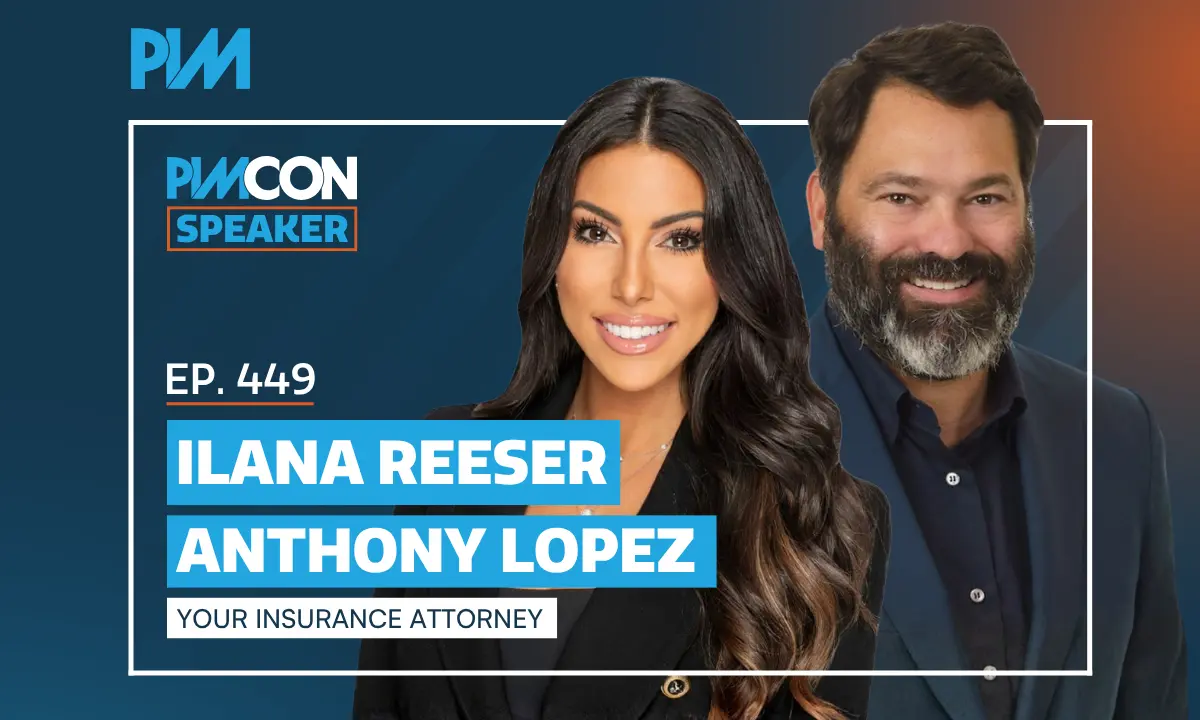
When you pair that level of automation with a nationwide referral network, you don't just scale your firm, you build a powerhouse that does more with less. This is Personal Injury Mastermind. I'm Chris Dreyer, founder and CEO of Rankings.io, the elite performance marketing agency for personal injury law firms. Today we have a true one, two punch join the show. We're sitting down with Anthony Lopez, the CEO of Your Insurance Attorney and Ilana Reeser, the firm's chief growth officer. Today, they've scaled their operation into an absolute powerhouse equipped with 50 attorneys and a staff of over 300. We're getting highly tactical today.
We dig into the exact metrics you need to track to ensure you're actually profitable, how to build a medical provider network in a brand new market and why holding your referrals to strict data standards elevates everyone's game. I'm incredibly pumped about this episode and even more excited to announce that Anthony and Ilana will be hitting the stage to speak live at PIMCON 2026 this October. They'll be breaking down their exact strategies for Facebook ads and building a massive referral infrastructure. Make sure to get your tickets at pemcon.org. Let's get into it.
So, I like to start off with a win and what's something top of the dome for Your Insurance Attorney that you're really excited about that you'd like to share with the audience?
Anthony Lopez:
So, we've been working on for the last 15 months our own proprietary AI software. We are at the two yard line of launching that in our personal injury practice and we're really, really excited about how productive that's going to make our team, how many more clients we're going to be able to help and how quickly we're going to be able to help them. This system literally takes calls from our call center. It does the intake of the clients, reports the claims and literally handles everything in between all the way to prepping a demand letter and letting the lawyer know like, "Hey, treatment's done, case is ready to either get settled pre-suit or go to litigation." It's taken almost two years.
We're about 15, 16 months into this, but we're really excited about launching that. And funny enough, we named her Jenna after my two-year-old daughter, who's Genevieve. So, we love this. We're really excited.
Chris Dreyer:
So, I'm excited. We're going to dig into this and talk a lot about it. So, my wife's name's Jenna. So, I was like, "Okay, yeah."
Anthony Lopez:
But is it Jenna or Genevieve?
Chris Dreyer:
Just Jenna, right? Yeah.
Anthony Lopez:
Okay, got it. Well, by the way, so that's my name for AI. You can't take it. Do your own thing.
Chris Dreyer:
Perfect. Perfect. Ilana, what about you? What comes top of the dome for you?
Ilana Reeser:
Super excited. We've really honed in on the process of getting cases in the door, signed with our intake team into the right hands, really strong case managers. I think it's been a really smooth process that we've seen grow on the inbound and outbound front. And we've been able to send out nationwide a bunch of referrals to a lot of our referral partners and friends. So, it's been really fun having a two-way reciprocal relationship with a lot of awesome firms.
Anthony Lopez:
Yeah. Big shout out to Ilana because let me tell you, she's literally boots on the ground, developed our national referral network platform. It's something that frankly didn't exist until she existed with us. It's really opened up our opportunities all over the state and it's created really nice partnerships with law firms that we didn't have a relationship until we met them through Ilana. So, big shout out to you for crushing that.
Ilana Reeser:
Thank you so much.
Chris Dreyer:
We're talking, I believe, 400 plus cases coming in, not even without saying what you're also sending out. Let's talk about that from a lot of our audience listening with the case costs, all the consolidation. There was just a post yesterday, Amaro and another MSOs coming into the fray. You've got Dudley DeBosier and I don't know what's going on with Hughes & Coleman. I've heard some rumors on the West Coast, I'll keep to myself too. And you got Fortress plan. So, these case costs are increasing. So, talk to me about just maybe some business development strategies, the boots on the ground, just what comes to mind I guess first there.
Ilana Reeser:
So, we've definitely seen the lay of the land change drastically over the past few years. And I feel like once upon a time, whereas firms were able to generate work on their own organically, billboards, radio, TV, anything of that sort. The dynamic has vastly shifted into more of a lead generated and organic and social media. You kind of have to have those strengths to be able to generate work to your firm these days. I'm seeing some people do really amazing things with social media. Anthony, I'm sure will want to touch more on this, but we've been into giveaways and bringing more presence to the firm. There's some great lead gen out there, not much though.
We're seeing it shift and a lot of over-promising and under-delivering from many. So, I think people have had to figure out how else that they can generate work. And for me, my nationwide relationships have been the bread and butter to my existence and I am so thankful that I've met so many people and it's really fun, like I was mentioning, to be able to send out cases now and share the love.
Chris Dreyer:
I had Sam Pond Lehocky on recently. They have their case exchange. They do a lot of volume on the referral side too. And he was, I guess, had a strategy with the labor unions. So, I guess there's a lot of ways to build these different relationships. Now that's more, I guess, on the work comp side.
Ilana Reeser:
That's very heavy in the Northeast, especially with New York labor law cases. They're in Philadelphia, Love Pond Lehocky, shout out. They're great friends of mine and I've seen what they've done and how they do their nationwide referral network. And it's very interesting because we don't really dabble on the side of the unions or anything like that with the case types and the states that we're in.
Chris Dreyer:
Got it. Got it. So, we're going to dig into Jenna and its capabilities. Have you thought about as part of this strategy being like, "Hey, send us your turndowns"? Maybe you could use AI to help facilitate that?
Anthony Lopez:
Yeah. So, we're always happy to look at other lawyers' turndowns because sometimes law firms aren't built for smaller cases or sometimes they don't have the ability to sift through all of the data to see if there is indeed a case. So, we never say no to taking a look at someone else's turndowns. And we actually work with a lot of different law firms throughout the country. Some of them like to pride themselves on being the biggest in the universe. We look at a lot of their turndowns in a lot of different states that we work in and there are sometimes gems in those.
We always look at that and AI absolutely is going to make us a lot more effective and efficient at being able to do that and do it better and faster. But yes, it's definitely something we're looking at.
Chris Dreyer:
Last time you were on the show, really I was really intrigued by the weathering patterns and your go-to-market strategies in terms of the weather patterns. Have you taken that to another level with AI and is there any capabilities with predictive analysis for weather? Have you explored any of those types of things?
Anthony Lopez:
So, we use AI in our office throughout the country every single day. We have multiple enterprise solutions for AI in every single office. And as a matter of fact, I get a report from our CTO every week and I look at everybody's usage of AI. And if you're not using it, you actually get an email from us asking why not and is there something that you need to be trained on? How could we help you be better at your job?
So, we've actually also developed a very specific AI platform for our property and casualty practice, which the moment a case is put on someone's team, it automatically looks at satellite images of the property so we can get an idea of the roof and any prior losses or current damage on the roof system. It automatically pulls permit history for the property so we can see everything that was ever done to the home. It automatically looks at all of the pictures that we have in the file from the client and/or our experts and identifies damage related to the reported loss because it also reviews the insurance policy to make a determination on whether or not the policy provides coverage for the loss.
And then after all of that, it will help the lawyer draft a civil remedy notice or a bad faith letter depending on the state that the claim is in. So, we love AI. We're utilizing it very heavily in our PNC practice. We love property and casualty from the standpoint of it's a very niche practice, but we do it really, really well and we handle thousands and thousands of those cases annually. And it's a really nice way for Ilana to walk into a PI firm that doesn't do PNC because most firms don't and that's a really nice two-way street to automatically develop.
So, PNC's amazing and AI is definitely changing the face of how that practice is being handled.
Chris Dreyer:
What Anthony just described is a massive competitive moat. While other firms manually dig through property records, their AI, it's instantly pulling satellite imagery and drafting bad faith letters the second a case lands on the desk. But handling that kind of volume across multiple markets can create a huge bottleneck at intake where speed to lead is everything. I want to know how they evolve their intake process to protect that speed. When a news case comes in, is it AI first or does a human still take the lead?
Anthony Lopez:
So, this is a pain point for a lot of offices where they don't necessarily have the ability or the manpower to handle their own call center and their own intake internally. We've built Jenna in a way to handle intake, but we pride ourselves on having our call center in-house and our folks in our call center are trained really, really well by two people that oversee the sales floor there. So, we will always handle inbound calls and referrals live.
Once the client has been signed up though, that's where Jenna takes over and then she gets all the detailed and all the nuances because frankly, she can stay on the phone with a client for an infinite amount of time and it doesn't bog down our business and there's no worrying about spending too much time and not being able to help other people. And really that is the advantage that AI is providing is that it allows us to really pinpoint pain points in the process and she takes over where frankly it's not practical for a person to.
Chris Dreyer:
That's super interesting. I literally, yesterday I spoke with Lorelei from Angel Reyes's office, their chief intake officer, and they do a lot of volume and they were talking about that challenge of the call reps being on the phone too long. So, they went to a pre-qual and then a closer model to try to solve that problem, and you're solving it in a different manner with technology. I guess on my side, on the agency side, I'm a little gun shy about just ... So, I've got all of our account managers from a strategy perspective, our managers, but I'm a little gun shy on deploying it 200 people and just letting the tokens go nuts.
How do you think about that? Or is it just like, "Hey, I'm going to get so much more output, it's going to be worth it and all this."
Anthony Lopez:
Well, it's funny you bring that up because the first time I emailed our CTO after we went live with our two enterprise solutions, I emailed them at, I think it was like 10:00 or 11:00 on a Friday morning and I said, "Hey buddy, send me a list of everybody's usage." And I think he thought kind of like where you're at, he's like, "Oh man, Lopez is upset about how much we're spending." So, he sent me the usage along with a long email about, "Don't worry, we can curb spending, we can cap amounts." And I was like, "No, no, no, no, no, no. I don't want to cap it. It's infinite right now. I actually just want to see who's not utilizing it." And then he was like, "Oh."
So, I'm sympathetic to that, I guess, that cost, but it's not something that we are curbing at all at this point. It's like, go for it, use it. Our trial teams love it. We're prepping for trial so much more efficiently than we were able to before. And we're also able to really sift through all kinds of data and pre-suit cases and really get granular on some of these cases in a way that it was never practical to do so before. So, we're really proud of how we're crushing insurance companies right now.
Chris Dreyer:
That's incredible. And I got so many more follow-up questions just on the AI side. And I guess one of the things is like, why did you choose to build it in house when you've got there's the control and the data components of maybe that's the answer versus you've got some really funded series A, B, C, D, E, F, I don't know what series they're on in the space, what did you see that there was just a gap in how they were building it from an application perspective? Why in-house?
Anthony Lopez:
So, because I feel like frankly, we do it better and we do it faster when we can control the process and kind of getting back to your other comment about a lot of private equity money coming into the legal space and buying up law firms and all this mass consolidation, I don't necessarily always agree. And John Morgan may take issue with this, but I don't always agree bigger is better and having more money isn't always better either. Maybe you just have a higher burn rate and you're pissing it away faster.
I think when you're very laser focused on a specific task like we were with our AI and we got a great partner out of New York that developed this technology for us, we were able to develop something that wasn't an out of the box solution. It was tailored to exactly what we needed, exactly where our pain points were so that we could create something that would make us better at doing our current jobs. A lot of the other companies, and I don't have to name them because you all know who they are, I've seen all of the pitch decks and they all talk a great game, but I have not found a solution that is start to finish. Jenna will literally pick up the phone, call the client and ask them how treatment's going.
"When is the last time you treated? Is there anything that we can do to help you in your process? Are you in pain still? How is your pain? Can you rank it on to 10? Would you like to speak to a lawyer? Let's get that scheduled right now." And she can do that all day, every day, a million times a day. We're really proud of what we've built. And by the way, we're so proud of it that we're coming out with a out of the box solution that we'll be providing to other law firms across the country. It's called Auto Council and it's basically Jenn 2.0. And I say out of the box, basically we've designed it based on almost every law firm's typical flow.
So, it should work for just about everybody, but then once it comes to implementation, obviously there's always nuances to everybody's practice and there will be a solution for that as well and a team that helps integrate with your current technology. And what I do like about what we've developed, because it was important to me, is Jenna works on top of your current system. So, if you're on a Litify or a Filevine or one of these other platforms, Jenna will work on top of that like an employee. She will input the data like an employee. She doesn't necessarily have to get tapped into your backend data, which makes her very fluid and very easy to plug and play.
Chris Dreyer:
That's incredible. And I got to add on to loop you in, Ilana, is developing referral relationships, one of the challenges is if their intake's not good, if they don't have the processes to identify cases or maybe their fall off rate's bad and it's like, "Hey, you got a great case and you want to send it," but you want them to capture that case, right? Is this maybe a means to say, "Hey, I noticed your wanted conversions is 60% and you're dropping the ball on you're not getting full value because you're not calling the client about their treatment? Is this something that you're like, "Hey, not only can we handle these cases that you don't do, but here's this thing that can actually make you better"?
Ilana Reeser:
Absolutely. I think that to begin with, you're not going to be in my referral network if your intake team can't handle it, if you're not going to be on top of the case, I'm very, very particular about who I'll send to because at the end of the day, your reputation is what you have and us making a referral to someone is on us to ensure that we're putting a client in good hands elsewhere. So, if we're not handling it, we do have those expectations, but if these firms can adapt to our systems and kind of benefit from the AI or any other systems that we're building, that's huge.
Not to mention API integrations and everything else to boot for easy communication, tracking the case, making sure that we're up-to-date when the settlement comes through and anything in between.
Chris Dreyer:
Just on the tech side, I know Anthony, you said that Jenna overlays CRM agnostic, so to speak. And I'd like to push back and just hear your opinion on this. This is what I say. I say like, "Look, if you're a smaller firm, lead docket out of the box, pretty good. But if you're a big enterprise firm, you need to have the flexibility to just connect to everything." So, I'm pushing more Salesforce Litify. Would you agree to that or is it, are you going a different direction?
Anthony Lopez:
So, yeah, I mean, I would probably do a Salesforce platform as opposed to a Litify platform because Litify has its own constraints built in. Salesforce, you can build out everything Litify has plus, plus plus. So, if you're a big law firm or you want to be a big law firm, I can't emphasize enough how important it is to lay the groundwork early, spend more than you probably want on tech because you'll be so happy you did later on down the road when you're bringing in a thousand cases a month and you have all of the technology and safeguards in place where you can really see what's happening.
Because I talk to a lot of folks that own law firms and people don't realize how complicated it is to run a law firm that has a marketing engine because you could be spending a million bucks a month and generating X amount of dollars a year or a month and spending a certain amount to bring in cases, but you could still be losing money. You could think you're making money, but if you're not tracking your actual kept case acquisition costs, not your CAC, your kept CAC and looking at how long it takes to monetize these cases, like what is your internal rate of return on these cases?
What cities work for you? What states are better? What practices areas in each city? It's so complicated. So, if you don't have the correct infrastructure in place, you can really just be pissing money away and losing your ass where you think you're making money.
Chris Dreyer:
I've seen that firsthand, especially with the lead gen companies, right? You're like, "Oh, I'm getting a less than 3000. I'm getting a $2,000 CAC." And I'm like, "Okay, well, let's add in the attrition and the fall off rate." And then some of these, the fall off rates like 60%, 70% or higher and it's like, whoa, whoa, whoa. Now you're way higher on the metric, especially when they start playing the affiliate game and get loose with the shared lead scenario that's going around.
Anthony Lopez:
Well, yeah. And then people, it's very easy to look at, "Oh, I only spent $2,000 bringing in a case and I netted X," but did you really? Because what did it cost to handle that case? How many people touched that case? How long was that case sitting in your office? These things you need to look at because like I said, you think you're making money because, oh, I made 10 grand minus two grand is eight grand. Did you really make eight grand if it took 24 months? I don't know. I don't think so. That's not how I do my math. So, we are very sensitive to what cases cost, what cases generate gross net. And we look at internal rate of return, like what was the cost of that money for holding that case for 24 months?
We factor all of that in plus a spend on how many seats it took to get it resolved and then that's what my net is.
Chris Dreyer:
Anthony just dropped a masterclass on unit economics. If you aren't tracking your kept CAC, factoring in the drop-off rate, time on desk, and the human capital it takes to resolve, then you might actually be bleeding cash. Because they're so dialed into their numbers, I wanted to know if Ilana forces our referral partners to play by those same strict rules.
Ilana Reeser:
A lot of them don't. However, the ones who play ball and who understand how to take in a case, do a good job with it, the firms that I'm targeting to work with us typically do understand what I'm asking. They have settlement data to provide. They have conversion rates, they have everything. And if they don't, it's something I give them homework and if they can get back to me and we can get on the same page, they're in. But a lot of them don't and you can tell who wants the cases and who's ready to run with them and who doesn't. So, many people reach out to me for referral relationships and then disappear when they understand the expectations that we have the same way we deliver for other firms sending to us.
If you want to get in the network of some of these big guys, and I'm not going to name names right now, but there's some firms who are sending out nationwide referrals and if you want to be in their arsenal for them to be able to share cases with you, we had certain expectations that we're willing to meet. So, now I've replicated that and I expect the same thing from other firms on the outbound.
Chris Dreyer:
Let's shift back over to the efficiency. So, I want to talk like numbers. Look, clearly I'm not an attorney, but I hear these numbers thrown around like a case manager, I hear a low volume 75 cases. I'm talking like traditional auto practice, right? And then up to 150. What type of efficiency have you seen in how you're structuring your pods with combining the tool, the Jenna, the Claude, the tokens? How has that changed the efficiency in their utilization?
Anthony Lopez:
So, that's a great question. So, let's call it a hundred cases per case manager is like probably a standard average on a practice that focuses on MVA stuff and trying to get those cases settled pre-suit. So, with Jenna, you can 10X that easy because the way we've actually created the interface with Jenna is she does everything until she gets stuck. And if she gets stuck trying to do a task, basically what she does is she notifies the case manager and the team saying, "Hey, by the way, trying to do so and X, Y, Z. I couldn't get it done. Please look at it. Click on the link, see where she stuck, get her unstuck."
In other words, fulfill, complete the task, whatever it is, was scheduling something, following up on medical records, whatever it was. And then once that task is unstuck, you basically hit play again and she picks up right where she left off. So, now it's less case managers doing case manager duties. It's more looking over an interface to make sure that all of your agents are doing what they're supposed to be doing. I'm very excited about the efficiencies that we've created and it's going to allow us to scale, I think infinitely.
Chris Dreyer:
You guys have headquarters in Florida, but you have operations in Georgia, Colorado, Texas-
Anthony Lopez:
North Carolina.
Chris Dreyer:
... North Carolina. That's a lot of markets. How are you thinking about continuing to expand? There's the tort reform hit Florida, Texas kind of going back and forth. And so, talk to me about expansion and how you choose to expand and when to expand.
Anthony Lopez:
Yeah. So, we've got another three states on our hit list for this year that will be open by the end of the year. We do a lot of analytical analysis before we open up in any state to make sure that it's a market that can handle another law firm that does what we do. And we look at what is it going to cost to bring in the cases? What is our digital marketing team showing us in terms of cost per lead? We look at all of this data and we analyze it with almost every state that we think makes sense for us. We're always looking at least at 10 to 15 states that we think are good high value targets.
So, there's a lot of analysis that's happening before we ever get into a state because once we open, we usually hit the ground running. In other words, we already have referral partners. Ilana's already done her thing there. Our medical network is built out. We hit the ground running in all of the states that we open up, but we're really pleased with our growth and sky's really the limit for us as we sit here today.
Chris Dreyer:
Yeah. And then just to add on that, that's incredible, Anthony. And just to add on that, Ilana, so you got the relationships with the lawyers and the peers. If you're going to choose a new market, how do you approach the providers? Is it just because you have the relationships with the attorneys and you can say, "Hey, who's the best providers?" And you kind of start there. What goes into that side of the business?
Ilana Reeser:
This is a wild process. I'm going to speak specifically on Colorado. That was our first state that we expanded to when I joined the firm, and I spoke to a very good friend of mine who lives out there who is very embedded in the medical space and it was funny because he was like, "We have expectations, be prepared, some reciprocating business, things like that." And I was like, "Buddy, you don't understand. I'm about to be your biggest referral source out here. Give me a few months." And to this day he's one of my besties. We talk almost every day and we are his biggest referral source.
We're able to generate and he single-handedly got a bunch of our business and was so thankful for that that he opened ... I don't come empty-handed. So, when I ask for favors, I'm like, "I'm going to load you up with business, but I do need all of your relationships and contacts out here." I'll fly out for like 72 hours, sometimes not even, and I'll back-to-back meetings. I'll set up, I'll stay at a nice hotel, sit in the lobby and I'll literally have 40 meetings back to back in a day, like 30 minutes and they're in and out. And then it's like a interview process and they come in, I have a bunch of questions and then the next day my favorite ones I'll touch base with.
Sometimes, I do a lunch with them or sometimes, I'll pop out to their office. A lot of them are very prideful on what they've built. So, they like to show off their office and I can do a tour and see where our clients will be in their full facility. So, that's been really fun and I do that in all of our different states. Some are easier than others. I'll give you an example. North Carolina has been an absolute zoo. There's clients we get in the middle of nowhere mountains and the closest provider, not even just that I know, but that like exists there is an hour away.
So, we've really had to be particular about making sure that these different providers are able to accommodate our Spanish speakers, transportation as needed, communication. We want to know if a client is not showing up for treatment because that's crucial to a case. And so, how many times does a client just stop showing up and the provider doesn't communicate with the law firm that they are not in attendance for their treatment and then the whole case has gone to shit. So, I think with that being said, it's been really awesome having these providers know that they can call me and my entire team at any day, anytime, text me, let us know.
And that has strengthened our cases and our settlements so much because we're in the loop and we can help get in touch with them, push them, have them understand the importance of the treatment so that they can feel better and so that we can have a great case.
Chris Dreyer:
Guys, this has been amazing. I'm really excited to see you both at PIMCON. You're going to be speaking at PIMCON, sharing your wisdom further. Final question, when can we expect, or I'm not holding you to it in terms of the Jenna launch and then the best way to get in touch with you, Ilana, if someone's listening maybe has a case to referral, maybe they want to establish a relationship. So, Anthony first on Jenna and then Ilana.
Anthony Lopez:
So, Jenna is expected to launch, I think in the next 30 to 45 days. At that point, I think by the end of the summer, Auto Council, which will be our out of the box solution for all the other law firms that want to use her will be available and hopefully we can share that at PIMCON and talk about it and show it.
Chris Dreyer:
Amazing. Amazing. And Ilana, best way to get in touch with you.
Ilana Reeser:
Would be honored to start a referral relationship with anyone who's open to having a conversation and meeting our expectations. You can reach out to me via email at Ilana@yourinsuranceattorney.com. Happy to share my cell or we can set up a Zoom call and we'll take it from there.
Chris Dreyer:
Amazing. Guys, thanks for coming on the show.
Anthony Lopez:
Thanks, Chris. Thank you.
Ilana Reeser:
Thanks so much for having us.
Chris Dreyer:
If you want to handle massive volume, you have to operate with absolute precision. By pairing custom AI with an engineered referral network, Anthony, Ilana didn't just scale, they built an incredibly profitable powerhouse. If you want to hear more from them, then you're in luck. They'll be speaking live at PIMCON 2026 this October in Scottsdale. Head it over to pimcon.org to grab your tickets. I'm Chris Dreyer and this has been Personal Injury Mastermind. Catch you next time.