Chris Dreyer:
Imagine going from a team of one to over 80 employees in just five years. No outside debt, no massive lines of credit. You're doing it in California, one of the most ruthless competitive personal injury markets in the entire country. Most firm owners would say that kind of hypergrowth requires a war chest of marketing dollars, but today's guest did it by outhustling the competition, leveraging referral networks, and yes, personally taking intake calls at 2:00 in the morning. If you want to know what absolute unrelenting dedication to your law firm looks like, you're in the right place.
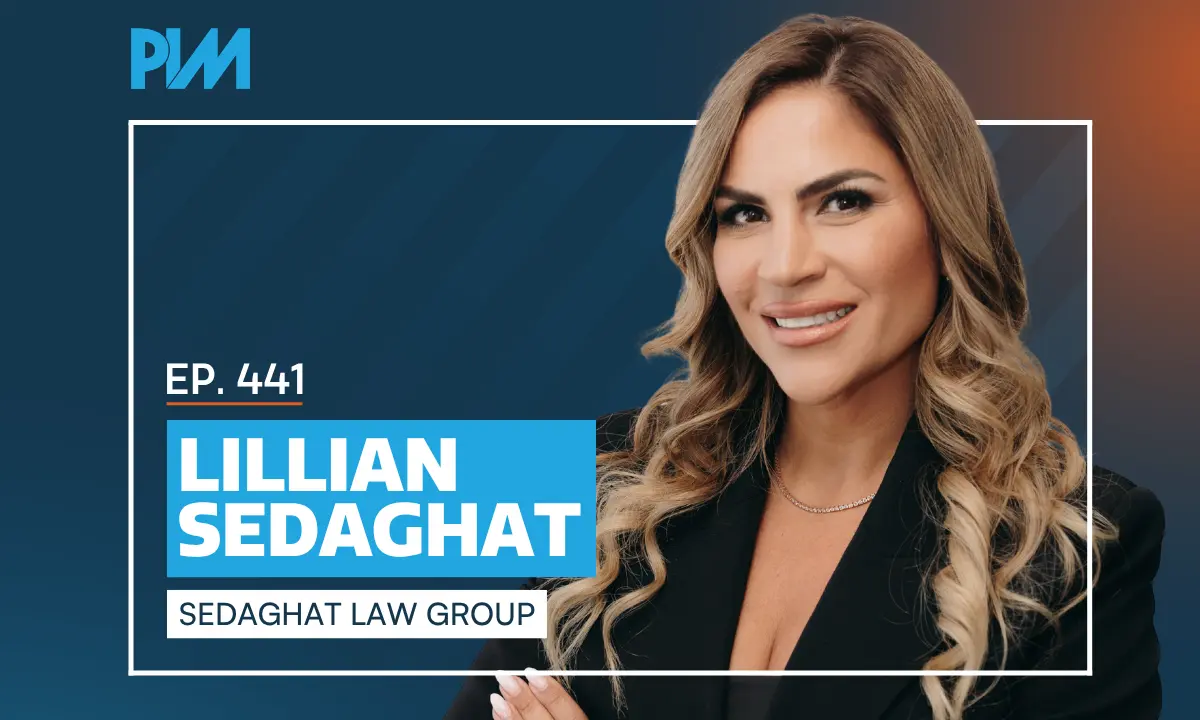
This is Personal Injury Mastermind. I'm Chris Dreyer, founder and CEO of Rankings.io, the elite performance marketing agency for personal injury law firms. Today I'm sitting down with Lilian Sedaghat, founder of Sedaghat Law Group and the LadyLegal brand. She's been an attorney for two decades and she entered the PI space less than five years ago. In that short amount of time, she has grown her firm to over 80 team members. Lillian recently set her sites on markets outside of California, and we started our conversation by discussing exactly why she's so interested in expansion. Let's get into it.
So other states. So what made you make that decision? Is it like, hey, I found a channel, a way to get cases. Let me go to this market. What made you want to go to another state?
Lillian Sedaghat:
I mean, a little bit of both. So I'm sure you know California for personal injuries, it's a very difficult market. I mean, there's more than enough cases to go around, but to compete, and I'm not big on competing with my competitors because I'm so new. I've been an attorney for 20 years, but I've only been in this space for less than five years. I have friends that have firms with 6 to 800 people, spending over a million dollars a month on marketing, things that I'm not doing.
So it only makes logical sense for me to want to go into another state, especially, and I'm sure you've spoken to people and have heard about the whole Uber initiative right now. You just have to make sure that you're protecting yourself and looking ahead. But even prior to the Uber initiative, we were looking into doing these two other states. It's just been now we're at the point that a lot of the things that we do with the programs that we're using, it's a lot easier to go into other states, where it's been a building project for the last four or five years.
Chris Dreyer:
Yeah. It seems like California, I mean, first of all, the CAC, the cost to acquire a case, so much higher. Good market, huge TAM of course. You got the SB37, you got them kind of battling the ABS, and all kinds of things. So yeah, I don't blame you in wanting to go to another state. If I was in Texas too, that's another state that's all their tort reform and stuff they're going, I would be looking at at least another one to hedge my bet.
Lillian Sedaghat:
Yeah. I mean, as we've scaled, and now I have eight attorneys in house, some have licenses in other states, and there's no reason not to utilize that. It just is, on a marketing standpoint, it doesn't make sense not to. And if you can acquire cases in other states, there's no reason not to. So for our formula, the same way that we've acquired cases here initially as a startup is the way we would be planning to do it in the other two states where we have other referral partners that we work with.
Chris Dreyer:
Yeah. So that was kind of the next section here is everybody listening wants to know the secret sauce to getting cases. So you're saying, hey, it's belly to belly referral relationships. Is that like the primary driver? Is it layered on top of the B2C strategies? How do you think about generating cases?
Lillian Sedaghat:
So for us it was. That's how my firm started. And then I talk to a lot of younger attorneys, and I mentor a lot of younger attorneys. That's literally how I started. I went to some friends that I knew in the industry that have very successful practices, and I know that they would refer out the bottom barrel for them. Which someone else's trash is your luxury.
So I started taking on very small cases, lower policy limit cases, and I built my practice from that. And instead of paying the marketing dollars upfront, I would just give them a piece of the pie, a referral fee at the end of the case. Which for me, it worked out great and it allowed me to scale. We ended up scaling a lot quicker than I thought. But the formula worked for me, and I don't see why it wouldn't work for any other younger attorney that's starting off or an attorney that's leaving their firm and wants to start off on their own.
Chris Dreyer:
It's interesting. We've had a ton of guests mention this strategy, but this is like, hey, we're implemented and it worked. So that's amazing. Talk to me about how it's evolved though. You've got through that cycle of the 12 to 18 month paying, or whatever it is, before the cash starts coming in. Is it like, hey, continue to lean into the relationships, or is it now are you thinking about deploying to broadcast or boards, or anything like that?
Lillian Sedaghat:
I mean, it's both. There's no reason for me to pull back on those referral relationships as long as it makes sense for both parties. So at this point, because we've grown, and we have more in-house attorneys and now we have a full litigation department, I also get a lot of litigation referrals from other firms that don't want to do , for example, they wouldn't take a case to trial that's worth less than a million. My firm would. Even us, before I had my own litigation team, I would refer cases out to litigation. There's a lot of firms that are pre-lit firms. They don't touch litigation. So a lot of the business we're getting in now is from the pre-lit firms that don't want to do litigation. Or it's not a case that a much larger firm than mine that's just known as a trial firm would take on.
Chris Dreyer:
Shifting from pre-lit to full litigation isn't just a strategy change. It's a massive financial hurdle. As a marketer, I know that PI firms already deal with a notoriously poor cash conversion cycle. When you start trying cases, your costs skyrocket, with expert witnesses, investigations, and trial prep. You're carrying heavy expenses for 12 to 24 months before seeing a dime. Most firms have to finance this growth. So I had to ask Lillian how she floats those massive costs.
You mentioned employment. It's a great area for California. I've seen it. How are you thinking about market because it's different than PI. So are there any nuances, that marketing to employment versus standard PI?
Lillian Sedaghat:
I mean, I'll be honest. Bringing in an employment case is much easier because, one, you don't have the same competition around you. And two, the people that you're catering to is obviously different. So let's say we get 10 referrals for PI, we'll probably sign up eight of those. In employment, we'll get 10 referrals. We'll only sign up on. So everyone wants to bring you an employment case. We do some marketing for it and we get tons of calls, but the filtering is a lot harder because it's not like, oh, I got here, here's a photo of the back of my car. It's very different. It's very case specific. You need to see what they put in writing. Everyone has a story, but what comes out of that story. So we do a lot of employment intakes before we take a case on. So that's why it's a lot harder to sign up an employment case.
Chris Dreyer:
That makes sense. One of the things that I was doing in advance for, I always like to look at LinkedIn, look at the talent, because it kind of tells its own story. And one of the things I noticed, you've got a decent size intake team. Everyone I saw is bilingual. So how does that differ on the intake? Is there like, hey, it's an employment, it goes to this individual, or is it just part of the CRM, and they just have a different script is loaded?
Lillian Sedaghat:
I mean, it is a script and it's not. So everyone's been trained for employment because we are taking on more employment cases. So everyone in my office gets trained for everything. So my entire intake department does know how to take an employment intake, sexual assault intake, a dog bite intake. You get trained on everything. Because people are in and out of the office all the time. I can't depend on, oh, this is my employment intake person. If this person's out for a few days, then what do I do? It doesn't work like that. So everyone has to be trained to the T.
Chris Dreyer:
There's a lot of tech emerging particularly on intake, and then you've got the AI driven demands, and many companies there, and EvenUp, and how are you thinking about the future technology and implementing that into your organization?
Lillian Sedaghat:
So we've already started using a lot of these different platforms, and the AIs and whatnot. As far as intake, I'm very old school. So I've only been in this field for the last almost five years, but I've been an attorney for 20 years. So I am very old school. Even when we went to a paperless office, I was like, oh, this is new. This is different. So I know you have to implement the AI. There's no way you can't not do it because you're hurting the client, you're hurting your practice. But as far as intake, we haven't done intake via AI yet. I'm not comfortable with it. I've tested multiple products, and I have not found one yet that I'm 100% set on. But I'm sure they're going to tweak it, and if we had this conversation a year from now, it would probably be a completely different conversation.
Chris Dreyer:
Yeah, that's fair. And look, I've seen CaptureNow and other organizations and I think there's a place for them in different businesses, especially if you got extreme volume, you can have parallel dialing, parallel answering, even on the outbound side, and there's a lot of advantages there. But I do see the advantage of someone that can read a cue and actually implement true empathy, and maybe take a little bit longer and deviate from the standard just in the box framework. How do you think about the cases that come in at night, over the weekends? Does that go to a third party, or hey, you're staffing-
Lillian Sedaghat:
No, we still don't utilize outside third party. I like everything to be done in my office. I mean, when I say I still feel like we're a newer office, I know when we're like, oh, 80 people and we have a crazy case count. But to me, we're still a newer office. So I don't let any case fall through the cracks. So if I get an email, I mean, I'm CC'd on everything. So if I see an email come through with an intake that looks like a good call at 2:00 in the morning, and no one's available, I'll call. I'm okay making that call.
Chris Dreyer:
And I imagine your conversion, they're speaking to an attorney, which isn't common, especially at 2:00 in the morning, and I've got to imagine that conversions on that are significantly higher.
Lillian Sedaghat:
Yeah, of course. So it's really what you're willing to put in. And I'm still at the point, and I don't know if that would ever change, because our case count's really high. It's not that I need the one case, but I think that's just my mentality. And I've always, I don't know if hustler's a good word, I've always liked working. I've always been in the front. Even though I went from having one staff member five years ago to having 80, I still do everything within every department. So I'll still go to all my department head meetings. I'll still structure different things for the minute things like something in records. Whatever I can do to make anything better in my firm, at the end of the day, it's my firm. It only benefits me.
Chris Dreyer:
I hate the phrase that gets thrown out as like micromanaging, but I'm like the same way. If there's an issue in any part of the company, and I'm the owner, that's the constraint that I'm trying to solve. And I like to know, that way I know if there's a constraint or a bottleneck or an issue.
Lillian Sedaghat:
I mean, I know it's impossible to know everything that goes on, but I do a pretty good job of, I don't want to say micromanaging, but I do a pretty good job of kind of overseeing everything. I have a COO that does my daily, but even with that, every day it's like looking at reports, what can we do better? Where can we tighten up? What training do we need to provide? We've had departments that we've dismantled and completely changed overnight. I mean, you just have to do what's... And try things until it works.
Chris Dreyer:
Well, talk to me about that transition too, where it's like from pre-lit to lit, and now you have the lit team. Talk to me about that evolution. And not just that evolution, but also you've got multiple case types, right? It's not just auto rear end collisions. Talk to me about your delivery and your operations.
Lillian Sedaghat:
So initially, I thought we were just going to be a pre-lit firm too, had no desire to become a full-blown litigation team. I've done a trial many, many years ago. I haven't been in court myself for quite some time. So having the right people in play is obviously very important. And as we grew, and I didn't want to have to refer my own cases out to other litigation departments and other litigation firms. So we brought on one attorney to help assist. And as we grew, then we brought on a second, and it just kind of gradually happened. And now, as I said, we get cases from other firms to do their litigation. So before our ratio was maybe 10% litigation, and now we're at about 35% cases go to lit that we handle in-house ourself. So it's a very big transition and very big difference from where we were two, three years ago.
Chris Dreyer:
So I'm not an attorney, so I may ask a really ignorant question here. And I was like putting myself in a firm's shoes, like the pre-lit, well, you don't have the case costs, the expert witnesses, and carrying those for so long. You already have the poor cash acceleration cycle with everything, with the settlements. And now it's like now you got these added costs to carry for the expert witnesses and everything and the investigation. And I don't even know the nuances to it. So is it, do you go to an Esquire Bank and get a line of credit? Is it just like, hey, I got enough dry powder after the third year that now is the time. Talk to me about carrying those costs and how you tackle them.
Lillian Sedaghat:
So this is actually a very interesting conversation because this is where things are. I'm actually in talks with different groups about this right now. I have funded everything myself until this point. So every dollar I make goes back into the firm, and that's how we've been able to scale and grow and get our case counts up, up until today. All of the costs for our litigation cases, we've never gotten a loan for the company. No debt. I mean, I was really big on that. But recently we started working with a company that they advanced the cost per filing, and then you have 30 days to pay it or something like that. But I mean, even that, we're still paying it. So as of now, we're paying everything ourselves. There's no line of credit, there's no Esquire Bank, there's none of that.
Chris Dreyer:
You're in this space, and many of the audience listening is in this space, and it's like, oh, it's just common, the cashflow challenge as a PI, but it's so unique to someone like myself where it's like, we charge retainers and we get paid upfront, and you just have cash flow. It's a whole different game when you got to wait 12 to 24 months to maybe get a check. Or you fund it all, and then no one bats 1,000, and then you occasionally get the zero. And that's just part of the game. Nobody wants a zero, but-
Lillian Sedaghat:
No, it's definitely, it's part of the game. And I'm not the first person that's done it, but it works. I really, for me, one part of our business is the getting referrals from other firms from our referral partners. Another thing is we're very big on trying to get cases from our existing clients. So I try to keep their case costs down. If I was to go get a loan or get a loan from Esquire Bank, or one of these banks that give funding on these, the client ends up paying that interest.
So for me, getting referral business is very big, and I don't want the client to have to pay these high costs. Because then the chances are if they're not, and walking away with a third of their settlement, they're not going to come back to me. They're not going to send their friends and family to me. So that's really important for me. I mean, luckily we've been able to do it without getting outside loans and not affecting the clients' cases with that. So as long as I could do it, I would like to do it that way.
Chris Dreyer:
You simply can't scale a law firm to 80 employees in five years without being absolutely obsessed with your intake and operations. As the owner, your job is to find the constraints and fix them. And Lillian is proof of what happens when a founder refuses to let a single opportunity slip through the cracks. When we started talking about tech, AI, and after hours coverage, I learned just how hands-on she really is.
So talk to me about the team. You've got women driven team. You're very vocal and public about that. Talk to me about the day-to-day culture, your team, how you attract and retain these A players.
Lillian Sedaghat:
So about two years ago we started a brand called LadyLegal, and that's what we do our branding under. That's what our marketing is under. I have a lot of females in the firm, but I also have a lot of men working for me as well. There is no, oh, you have to be a woman to work here. Absolutely not. For some reason, I do have more female attorneys working for me than male attorneys. But yeah, I really do.
One of the big things we do here is we do a lot of internships and mentoring for kids from high school to law school. At all times, I have a few, at least four interns, whether it's high school students, college students, people that want to go to law school, or people that are in law school and they're doing their two year summer internship with us and whatnot. Then I have law clerks that have become lawyers in this office.
So for me, it's really important to give back. I love teaching. I was teaching business law at one point. And because I don't have the time to do that anymore, I try to teach as much as I can within my office, and I love mentoring younger individuals. Because my whole thing is if I can do it, you can do it, right? I really am big on that. I didn't start my practice until after I got a divorce, had two kids, and had no money.
So I always tell anyone that walks into my door that really wants to be an attorney, and I have people that come to me and tell me, "I want to end up going out on my own." I'm like, "That's fine. You can still work here. No problem. Get the training you need and go." You know the people that are going to stay with you and you know the people that are going to leave you. Kind of know that from when you initially meet them. I mean, if you are a decent or a good attorney, you should be able to read people pretty well.
Chris Dreyer:
I 1,000% agree. And we've had that same situation where an individual wants to open an agency. And it's like, hey, I could look at these two ways. I could just get rid of the good talent and create an enemy. Or it's like, hey, maybe they have a client that they don't want to work with, or maybe they can help me in some other capacity. So I love that mindset because, at the end of the day, it's good that you know and you could plan for it.
Lillian Sedaghat:
Yeah. I'm okay with it. And I appreciate the honesty more than I do people that are not upfront about things, but I really do know from when I meet the person.
Chris Dreyer:
Talk to me about the growth, 80 plus people in five years. Do you have like dedicated recruiters? Are you working with third party? Is that just something else that you and the team are doing? It's like, hey, it's-
Lillian Sedaghat:
So I'll tell you, I did the recruiter route two times, and I got burned two times. And I'm like, I am never doing... It's not a good feeling to feel stupid. So I'm like, okay, they bring you these attorneys that are great on paper, you hire them, and then they're gone within two, three months and you're out, whatever, 30, 40, 50, $100,000, and whatever it is. And I was like, there's no point. I mean, the talent is the talent. So you could find that talent on Indeed. I get attorneys referred to me by other firms that, for whatever reason, they're not bringing on an attorney at that time. So there's a lot of talent out there. It's just meeting the ones that vibe with your firm, and it makes sense for both parties and you go from there.
But the recruiter doesn't work for me. I won't do that again. So everyone we've hired, outside of those two people that are no longer here, are people that we've interviewed ourselves. Up until maybe a year ago, I was doing interviews myself. And now, I mean, I've had an HR, but now I don't sit through every interview. Now I'll sit only through a second interview.
Chris Dreyer:
So with the growth that you've had, you've already kind of hinted like, hey, we're looking at a couple other states, looking at the expansion. If you had to paint a picture, like the next three to five years, what does that look like? What's some ideas that you're wanting to initiate?
Lillian Sedaghat:
I don't really have a number as far as how big I want to grow. For me, I'm content with the number that we are. I'm not trying to grow into this huge firm. For me, this is great. I can sleep at night. I know how many mouths I have to feed. But it's really the growth for me is getting more employment and going into the two other states. So that's where I see for the next three years is the two other states. And we're doing Arizona and Nevada just because those are the bordering states to us, and it's I would want to open offices in both states and be able to be there myself. So Arizona and Nevada offices, hopefully within the next three years, and growing our employment division, which I really am enjoying.
Chris Dreyer:
Fantastic. Lillian, this has been amazing. For our audience that maybe has a question about the pod, maybe has a case they want to refer to you. What's the best way to get in touch?
Lillian Sedaghat:
You can always email me. It's Lillian, L-I-L-L-I-A-N, at sedlawgroup.com. You can call our offices, 424-777-0078. And if it's just a question, or someone that wants to do something together, or I have people that call me, and was like, "Can I have my son come intern for you?" Absolutely. Any way that I can help someone else, it inspires me to do more and to be better. So as much as I can do, I like to do.
Chris Dreyer:
Amazing. Lillian, thank you for coming on the show.
Lillian Sedaghat:
Thank you so much, Chris. It was so nice chatting with you.
Chris Dreyer:
Lillian's trajectory proves that pure execution, strategic referral networks, and a relentless focus on the details helps you build an absolute powerhouse, even in the most competitive markets in the country. But as you scale, you can't rely on referrals and hustle alone. If you're ready to turn your online presence into a predictable engine for high value cases, you need a marketing partner that operates with the exact same obsession as you do. Head on over to Rankings.io. We are the elite performance marking agency for personal injury law firms. And our standard is simple, proof over promises. Visit Rankings.io and see the proof for yourself. Thanks for tuning in to Personal Injury Mastermind. I'm Chris Dreyer, and I'll catch you next time.